





 Delaware (USA)
  Vietnam
  Singapore
  Hong Kong
  United Kingdom
 E-commerce in Vietnam is currently witnessing an unprecedented trajectory of growth, evolving from a burgeoning digital niche into a fundamental pillar of the national economy. For foreign investors and international brands, this market represents a lucrative yet legally complex landscape. Navigating the regulatory maze of the Ministry of Industry and Trade (MoIT) requires precise knowledge of investment laws, licensing procedures, and compliance mandates.
The landscape of E-commerce in Vietnam
To invest successfully, one must first understand the market mechanics. Vietnam is not merely adopting online shopping; it is integrating it into the fabric of daily life.
Market size & growth potential
The Vietnamese e-commerce market is projected to reach approximately $36.3 billion USD by 2025, solidifying its position as one of the top two fastest-growing digital economies in Southeast Asia (behind Indonesia but ahead of Thailand and the Philippines). This growth is driven by a young, tech-savvy population, high smartphone penetration, and rapidly improving logistics infrastructure.
Key market players
The current ecosystem is dominated by four major E-commerce trading floors:
- Shopee: The current market leader in terms of traffic and Gross Merchandise Value (GMV).
- Lazada: Backed by Alibaba, holding a strong infrastructure and logistics network.
- Tiki: A domestic success story known for high trust and fast delivery (TikiNOW).
- TikTok Shop: The emerging disruptor, capitalizing on "Shoppertainment" and live-stream commerce.
Consumer behavior
While COD (Cash on Delivery) remains a dominant payment method due to historical trust issues, there is a significant regulatory and behavioral shift toward cashless payments. The government’s push for digital transformation has accelerated the adoption of e-wallets (Momo, ZaloPay) and banking apps, which investors must integrate into their platforms.
Legal framework for E-commerce in Vietnam
Foreign investors must adhere to a specific hierarchy of laws. The Ministry of Industry and Trade (MoIT) serves as the primary regulator, enforcing rules to ensure fair competition and consumer protection.
The legal backbone of e-commerce includes:
- Decree No. 52/2013/ND-CP: The foundational decree regarding e-commerce, defining basic responsibilities for sellers and platform operators.
- Decree No. 85/2021/ND-CP: A critical update to Decree 52. This is the most important document for foreign investors, as it specifically regulates cross-border e-commerce and foreign merchants operating in Vietnam.
- Law on investment 2020: Classifies e-commerce as a "conditional business line" for foreign investors.
- Law on electronic transactions: Governs the validity of digital contracts, digital signatures, and electronic evidence.
- Decree No. 13/2023/ND-CP: The Personal Data Protection (PDP) decree, imposing strict liabilities on how data is collected and processed.
Classification of E-commerce activities
Under Vietnamese law, not all websites are treated equally. The MoIT classifies e-commerce operations into two distinct entities with different licensing requirements.
1. E-commerce sales website
This is a website setup by a merchant to sell their own goods or services.
- Example: A Samsung Vietnam website selling Samsung phones, or a Zara Vietnam site selling Zara clothing.
- Legal implication: The owner has full control over the inventory and pricing. The licensing procedure is generally the Notification process.
2. E-commerce trading floor (marketplace)
This is a website or application that allows other traders, organizations, or individuals to conduct part or all of the process of buying and selling goods or services.
- Example: Shopee, Amazon, or a specialized B2B platform connecting suppliers with buyers.
- Legal implication: This requires a stricter registration process. Platforms must vet sellers, manage dispute resolution mechanisms, and report periodically to the MoIT.
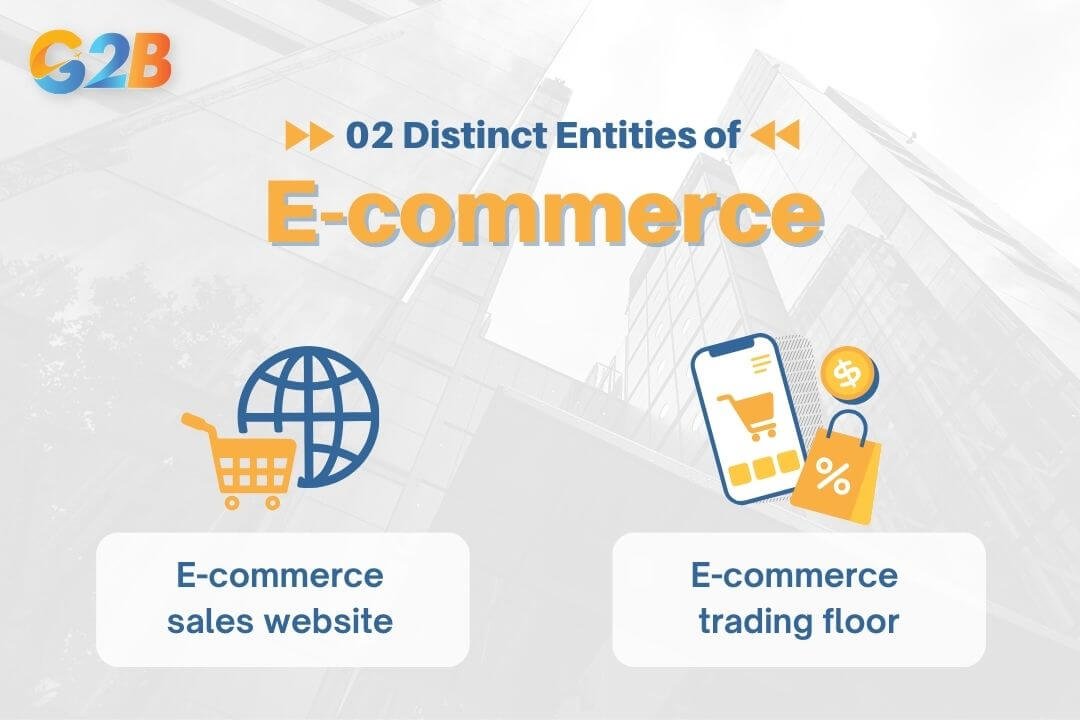
The MoIT classifies e-commerce operations into 2 distinct entities
Market entry conditions for foreign investors
Can a foreign investor own 100% of an e-commerce company in Vietnam? Yes. However, because e-commerce retail and services are subject to inter-sectoral conditions under the Law on Investment 2020 (not strictly limited ownership but requiring specific approvals), specific market access conditions apply.
Foreign ownership limits
Unlike some protected sectors (e.g., logistics or telecommunications), Vietnam generally allows 100% foreign ownership in e-commerce retail activities, subject to WTO commitments and local law.
The trading license requirement
Foreign-invested enterprises (FIEs) engaging in retail distribution (selling to end consumers) and e-commerce services must obtain a trading license (also known as a Business License) from the Department of Industry and trade (DoIT).
- This is distinct from the standard company incorporation certificates.
- It serves as the government’s approval for a foreign entity to engage in direct trading activities.
Financial capacity & tax compliance
Investors must prove financial capacity (via bank statements) to execute the project. Furthermore, if the entity has operated previously, it must be in good standing regarding tax obligations.
Step-by-step guide to registration and licensing
Navigating the registration and licensing process is a critical first step for launching a compliant e-commerce business in Vietnam. A clear, step-by-step approach helps investors streamline approvals, avoid regulatory delays, and ensure full alignment with Vietnam’s evolving digital commerce framework.
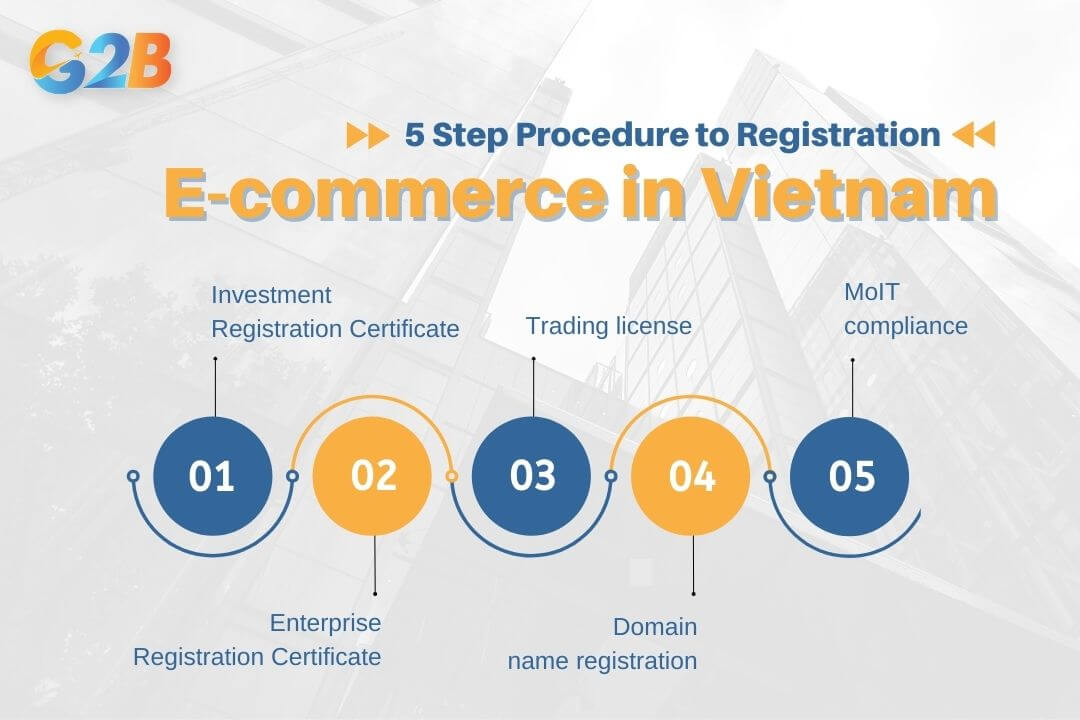
Step-by-step approach helps investors streamline approvals and avoid regulatory delays
Step 1: Investment Registration Certificate (IRC)
- Authority: Department of Planning and Investment (DPI).
- Purpose: Approves the foreign project in Vietnam.
- Timeline: 15-20 working days.
- Key requirement: Proof of funds and a clear proposal of business scale.
Step 2: Enterprise Registration Certificate (ERC)
- Authority: DPI.
- Purpose: Legally establishes the company (Tax ID issuance).
- Timeline: 3-5 working days after IRC issuance.
- Outcome: The foreign investor now has a legal entity in Vietnam.
Step 3: Trading license
- Authority: Department of Industry and Trade (DoIT), with consultation from the MoIT.
- Purpose: Grants the right to conduct retail and e-commerce services.
- Timeline: 1-3 months (This is the most time-consuming step).
- Why it matters: Without this, an FDI company cannot legally invoice for retail sales.
Step 4: Domain name registration
- While international domains (.com) are allowed, using a .vn domain is highly recommended for SEO and consumer trust.
- Entity: Administered by the Vietnam Internet Network Information Center (VNNIC).
Step 5: MoIT compliance
- Once the website/app is live, the company must submit its dossier via the MoIT Online management portal.
MoIT notification vs. registration
Misunderstanding the difference between "Notification" and "Registration" is a common compliance failure.
| Criteria | Notification | Registration |
|---|---|---|
| Applicable entity | E-commerce sales websites (Selling own goods). | E-commerce trading floors (Marketplaces/apps). |
| Who files? | Traders or organizations with a Tax ID. | Traders or organizations providing e-commerce services. |
| Complexity | Low. Online submission of basic info. | High. Requires scheme of operation, terms of service, and seller vetting policies. |
| Visual badge | Green MoIT verification badge. | Orange/Red MoIT registration badge. |
| Review time | 3-5 working days (up to 10). | Approx. 15-30 working days. |
Important note: If a website has both functions (selling own goods AND allowing 3rd parties), it must proceed with registration.
Specific provisions for foreign E-commerce activities (Decree 85/2021)
Decree 85/2021/ND-CP introduced strict regulations for foreign merchants who do not have a physical presence in Vietnam but conduct significant business there.
Who is affected?
Foreign traders who maintain an e-commerce website that meets any of the following criteria:
- Uses a Vietnamese domain name (Example.vn).
- The display language is Vietnamese.
- The number of transactions from Vietnam exceeds a specific threshold (as determined by the MoIT).
Representative office requirement
If a foreign merchant meets the above criteria, they are legally required to:
- Register e-commerce activities with the MoIT.
- Establish a representative office in Vietnam or designate an authorized representative in Vietnam to handle consumer disputes and regulatory compliance.
- Coordinate with customs for the clearance of goods sold via cross-border e-commerce.
Tax obligations & compliance for E-commerce in Vietnam
Operating an e-commerce business triggers specific tax liabilities that must be managed precisely to avoid penalties.
1. Value added tax (VAT) & Corporate income tax (CIT)
- CIT: The standard rate is 20% on net profits.
- VAT: The standard rate is 10% (subject to temporary reductions by government policy). E-commerce businesses must issue e-invoices for transactions.
2. Foreign contractor tax (FCT)
For cross-border platforms (like Facebook, Google, or foreign sellers drop-shipping into Vietnam), FCT applies. This usually comprises a VAT and CIT component withheld at the source.
3. Personal data protection (PDP)
Under Decree 13/2023/ND-CP, e-commerce entities are classified as "Data Controllers" and "Data Processors."
- Requirement: You must obtain explicit consent from users before collecting data.
- Impact: Privacy policies must be updated, and high-impact data processing requires an impact assessment dossier submitted to the Ministry of Public Security.
Challenges and future outlook
- Logistics costs: Last-mile delivery in rural areas remains expensive.
- Price wars: The market is price-sensitive, with platforms burning cash to acquire users.
- Regulatory evolution: The government is tightening rules on "fake goods" and digital tax collection.
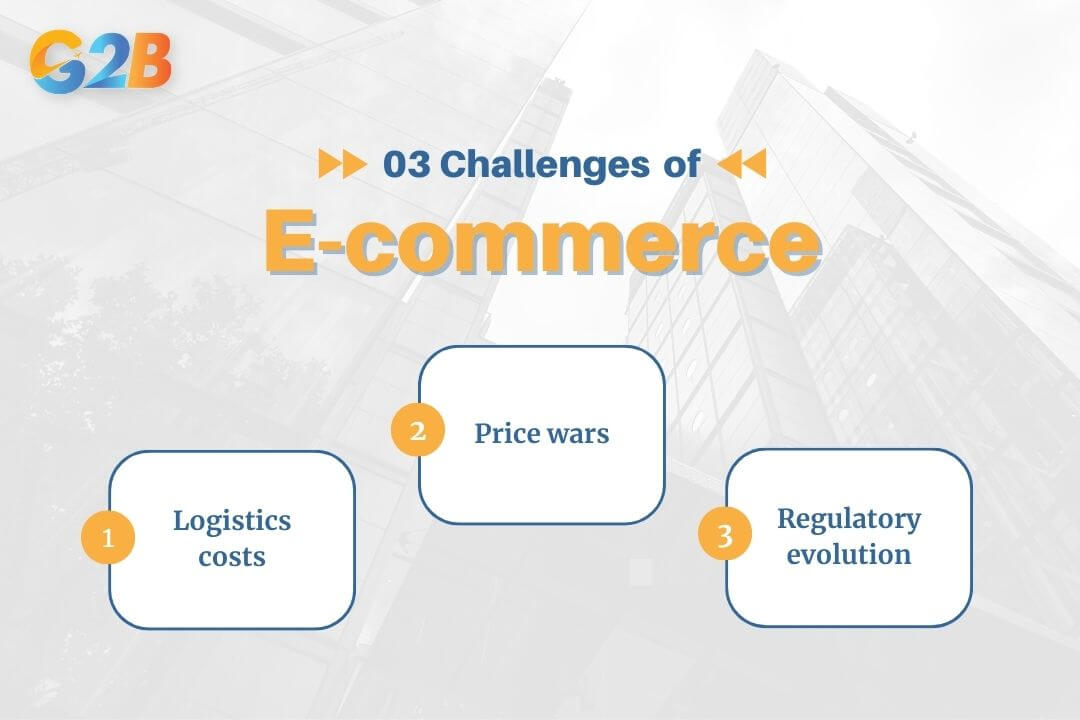
There are 3 challenges that investors should consider
However, the future is bright. The integration of AI, Big Data, and 5G is expected to streamline logistics and personalize the customer experience, making Vietnam a prime destination for long-term digital investment.
Frequently asked questions
To address common concerns from investors and online sellers, this section compiles the most frequently asked questions about e-commerce operations in Vietnam. These answers clarify key regulatory, licensing, and operational issues, helping businesses navigate the market with confidence.
1. Does a foreign investor need a trading license for E-commerce in Vietnam?
Yes. If the foreign-invested enterprise engages in retail distribution (selling to end consumers) or provides e-commerce intermediary services, a trading rights license issued by the Department of Industry and Trade (DoIT) is mandatory.
2. How long does it take to obtain an e-commerce license?
The timeline varies based on the structure.
- IRC & ERC (Company formation): ~1 month.
- Trading license: ~1 to 3 months.
- MoIT website registration: ~2 to 4 weeks. Total estimated time for full compliance is typically 4 to 6 months.
3. What is the difference between MoIT notification and registration?
Notification is for websites selling the owner's own goods. Registration is for "Trading Floors" (Marketplaces) that allow third-party sellers. Registration requires stricter vetting and operational protocols.
4. Can I operate a cross-border E-commerce site without a company in Vietnam?
Yes, but under Decree 85, if you use a .vn domain, display Vietnamese language, or have high traffic from Vietnam, you must register with the MoIT and appoint a representative office or authorized agent in Vietnam.
Vietnam’s e-commerce sector presents significant growth opportunities; however, it operates within a tightly regulated legal framework rather than an unregulated market. Market entry and sustainable operations depend on full compliance with investment regulations, Decree 85, and the Ministry of Industry and Trade (MoIT) requirements. Failure to secure the appropriate licenses or to comply with data protection obligations may result in substantial administrative penalties and potential suspension of business activities.
Planning to launch your business in Vietnam? Get in touch with G2B for expert guidance on setting up a company in Vietnam and ongoing annual compliance. We will take care of the regulatory procedures, so you can concentrate on growing your business.
