




 Delaware (USA)
  Vietnam
  Singapore
  Hong Kong
  United Kingdom
 An urgent Vietnam visa helps travelers enter the country quickly when they face sudden travel requirements. Vietnam processes urgent visas through eVisa expedited services, visa-on-arrival approval letters, and embassy rush visas. Processing ranges from 2 - 24 hours depending on service level and nationality. This allows foreign citizens to receive their travel documents in a few hours instead of several days. This article explains the types, costs, requirements, and application steps for fast visa processing in Vietnam.
Which urgent Vietnam visa types exist?
Vietnam offers three urgent visa types with different speeds and entry methods. These include the urgent electronic visa, the visa on arrival, and the embassy rush visa. The Vietnamese government designs different visa systems for different travel needs. Each visa type requires a specific application method and allows entry through specific border gates.
How does the urgent electronic visa work?
The electronic visa (eVisa) operates entirely online. The Vietnam Immigration Department issues this digital visa directly to the traveler. Applicants upload their information to the official government portal or use a trusted agency for urgent processing. The system generates a PDF document with a barcode. Travelers print this document and show it to the immigration officer at the entry port. As of 2026, eVisas are valid at 13 international airports (e.g., Noi Bai, Tan Son Nhat), 13 seaports (e.g., Hai Phong), and 13 land borders (e.g., Moc Bai, Lao Bao).
What is the visa on arrival approval letter?
The Visa on Arrival (VOA) requires a two-step process. First, the immigration authority issues an approval letter before the traveler enters the country. Agencies process this letter urgently within a few hours. Second, the traveler flies to Vietnam and presents the letter at the airport visa counter. The immigration officer stamps the physical visa into the passport. Travelers can only use the VOA system when they arrive by air at an international airport in Vietnam.
How does the embassy rush visa function?
The embassy rush visa involves a physical application at a Vietnamese embassy or consulate in a foreign country. The traveler visits the diplomatic office, submits their passport, and requests expedited processing. The embassy staff processes the application and stamps the visa directly into the passport book. This method takes longer than online options, but it provides a guaranteed visa before the traveler boards their flight or crosses a land border.
How fast can you get a Vietnam visa urgently?
Processing time depends on the service tier and the provider. Standard processing takes up to seven days, while urgent options take between two and twenty-four hours. Different situations require different processing speeds. Agencies and government offices classify visa speeds into standard, urgent, and fastest emergency options.
| Visa type | Standard time | Urgent time | Fastest option |
|---|---|---|---|
| eVisa | 3-5 days | 1-2 days | 4-8 hours |
| VOA (Approval letter) | 2-3 days | 4-8 hours | ~4 hours |
| Embassy visa | 5-7 days | 1-2 days | 1 day |
How do business hours affect visa processing?
The Vietnam Immigration Department operates during standard government business hours. Officers process applications from Monday to Friday. The online eVisa system runs 24/7, but manual reviews occur during business hours. Travelers must calculate the time difference between their home country and Vietnam. Submitting an urgent request outside of these hours delays the approval until the next working shift begins.
Can you get an urgent Vietnam visa on weekends?
Weekend processing requires special emergency services. The standard government system shuts down on Saturdays and Sundays. However, specific travel agencies maintain connections with immigration officers for extreme emergencies. These emergency weekend services process approval letters for flights arriving on weekends. Travelers pay much higher fees for weekend processing. The eVisa system usually does not process applications on weekends, making the Visa on Arrival the only viable option for a Saturday or Sunday emergency flight.
How do public holidays impact visa speeds?
Vietnam celebrates several long public holidays. The most significant holiday is Tet (Lunar New Year), which closes government offices for up to seven days. Other major holidays include Independence Day (September 2) and Reunification Day (April 30). During these periods, standard visa processing stops completely. Travelers must use specialized holiday emergency services if they need an urgent Vietnam visa during these specific dates.
What documents do urgent Vietnam visas require?
Applicants submit identity, travel, and payment data. The main requirements include a valid passport, a standardized portrait photo, entry details, and an expedited processing fee. Providing accurate documents ensures fast processing. Immigration officers reject applications with blurry photos or incorrect passport details. This rejection destroys the urgent timeline. Required actions for preparing documents include:
- Scan the passport data page clearly
- Take a recent portrait photograph
- Confirm the exact arrival date and entry port
- Prepare an international credit card for fee payment
What are the passport requirements?
The passport must remain valid for at least six months from the planned date of entry into Vietnam. The document must also have at least two blank pages for immigration stamps. Travelers upload a digital scan of the passport data page for eVisas and VOA approval letters. The scan must show all four corners of the page. The text, photo, and machine-readable zone at the bottom must be clear and readable. Glare from camera flashes causes immediate application rejection.
What are the portrait photo rules?
The Vietnam Immigration Department enforces strict rules for the applicant's photo. The photo must measure 4x6 centimeters. The applicant must use a plain white background. The traveler must face the camera directly with a neutral expression. Applicants cannot wear glasses, hats, or head coverings unless they wear them for religious purposes. The digital file should be in JPG or PNG format.
Which entry details must you provide?
Urgent visa applications require exact travel details. The traveler must declare their date of entry. The visa validity begins on this declared date, even if the traveler arrives later. The applicant must also specify their exact entry port. For example, a traveler must state if they will land at Noi Bai Airport in Hanoi or Tan Son Nhat Airport in Ho Chi Minh City. eVisas link directly to the chosen port. Changing the entry port after the visa approval requires a new visa application.
How much does an urgent Vietnam visa cost?
Urgent processing increases total costs based on speed. Urgent eVisas cost between $50 and $150, while urgent visas on arrival require an approval fee and a separate stamping fee. Costs vary by nationality and agency. Travelers pay for the visa type and the processing speed. Fast emergency processing requires extra manual work from immigration staff, which increases the price significantly.
What are the costs for an urgent eVisa?
The standard government fee for a single-entry eVisa is $25. The multiple-entry eVisa costs $50. When a traveler needs this visa urgently, they use a service agency. The agency charges an additional service fee for expedited processing. A 24-hour urgent eVisa usually costs around $50 to $80 in total. A super-urgent 4-hour eVisa can cost between $100 and $150.
How does visa-on-arrival pricing work?
The Visa on Arrival splits the cost into two separate payments:
- Pay the approval letter fee online: Agencies charge between $30 and $100 for an urgent or emergency approval letter
- Pay the stamping fee at the airport: The government charges $25 for a single-entry visa and $50 for a multiple-entry visa
Travelers must pay the airport stamping fee in cash. The immigration counters accept United States Dollars (USD) or Vietnamese Dong (VND). They do not accept credit cards.
How much is the embassy rush visa?
Embassy fees change depending on the specific location and the local currency. A standard embassy visa usually costs around $50 to $80. Requesting rush processing at the embassy adds an extra fee. The total cost for a same-day or next-day embassy rush visa ranges from $80 to $200. Travelers must contact their local embassy directly to confirm the exact pricing and accepted payment methods.
How do you apply for an urgent Vietnam visa?
Applicants complete an online or embassy-based process. Travelers select their visa type, submit application forms, pay the required fees, and receive their approval documents before travel. Following the correct steps ensures the application moves quickly through the government system. Missing a step stops the process entirely. Required steps include:
- Choose the visa type between eVisa, VOA, or embassy visa.
- Submit the application form with personal and travel details.
- Upload the passport data page and the portrait photo.
- Pay the urgent processing fee using a secure payment gateway.
- Receive the electronic visa or approval letter via email.
- Enter Vietnam and present the documents to border officials.
How do you submit the online application?
Travelers use online platforms to submit their data. They fill out a digital form with their full name, date of birth, nationality, and passport number. They must type this information exactly as it appears in the passport. After completing the form, the applicant selects the desired processing speed. The system redirects the user to a payment page. Once the payment succeeds, the agency or government portal begins processing the file immediately.
How do you complete the entry process at the airport?
The arrival process depends on the visa type. eVisa holders walk directly to the standard immigration passport control line. They hand the printed eVisa and their passport to the officer. The officer scans the barcode and stamps the passport. VOA holders follow a different path. They walk to the specific "Visa on Arrival" or "Landing Visa" counter before passport control. Required steps at the VOA counter include:
- Submit the printed approval letter
- Submit the original passport
- Submit a completed entry and exit form (Form NA1)
- Submit one physical passport photo
- Pay the cash stamping fee
- Wait for the officer to call your name and return the stamped passport
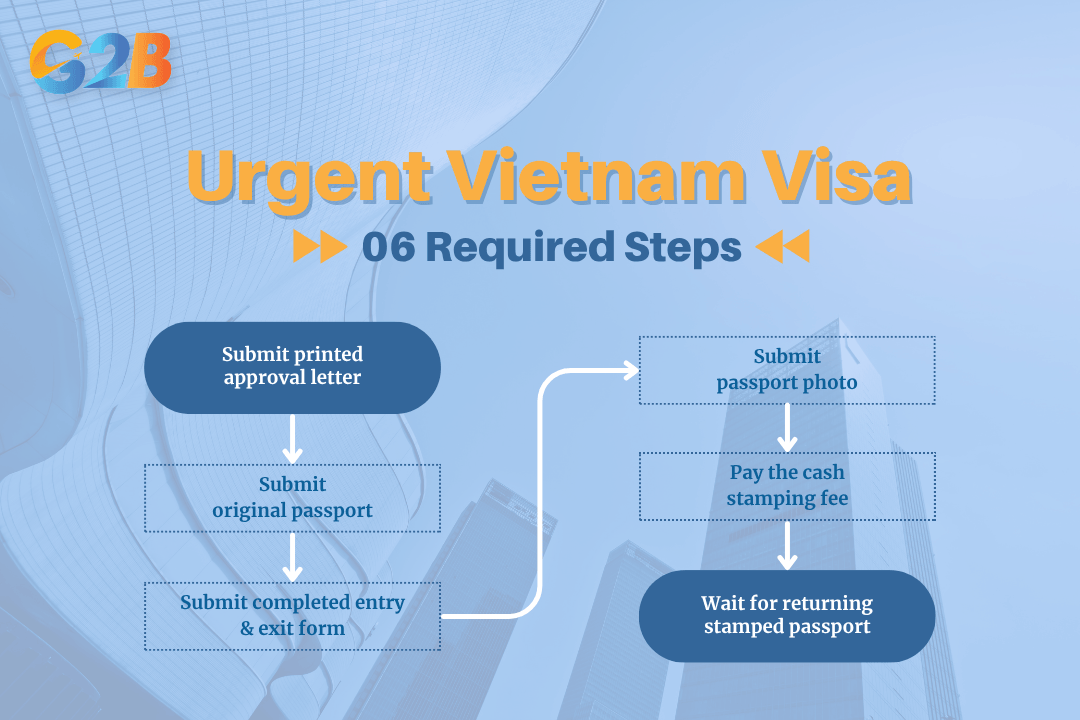
The required steps at the VOA counter
Who can use urgent Vietnam visa services?
Most nationalities qualify for urgent Vietnam visas, but the entry method affects eligibility. The eVisa supports over 94 nationalities and territories, while the visa on arrival mainly serves air travelers. Eligibility rules dictate which urgent option a traveler can choose. The Vietnamese government updates these lists periodically.
Which nationalities qualify for the urgent eVisa?
Vietnam allows citizens from all countries and territories to apply for the electronic visa. This broad eligibility makes the eVisa the most popular choice for urgent travel. Citizens from the United States, the United Kingdom, Australia, India, and European nations frequently use the eVisa system. The urgent eVisa grants the exact same entry rights as a standard eVisa, just at a faster speed.
Does the entry port affect visa eligibility?
The entry port determines if a traveler can use the Visa on Arrival. VOA services only operate at major international airports. These include Noi Bai (Hanoi), Tan Son Nhat (Ho Chi Minh City), Da Nang, Cam Ranh (Nha Trang), and Phu Quoc. If a traveler plans to enter Vietnam through a land border (like the Moc Bai border with Cambodia) or a seaport, they cannot use a Visa on Arrival. They must apply for an urgent eVisa or an embassy rush visa.
Do visa-exempt travelers need urgent visas?
Vietnam offers visa exemptions to citizens of specific countries. For example, citizens of South Korea, Japan, and several European countries can enter Vietnam without a visa for up to 45 days. Citizens of Southeast Asian countries can enter for 14 to 30 days. These travelers do not need an urgent visa unless they plan to stay longer than the exemption period allows. If they need a longer stay, they must apply for an urgent eVisa before arrival.
What mistakes delay urgent Vietnam visas?
Errors in data and timing cause rejections or delays. Common mistakes include incorrect passport numbers, wrong entry ports, late applications, and using unofficial agencies. A single typing error forces the immigration department to reject the application. The applicant must start the process again and pay a new fee.
How do passport data errors cause delays?
Typing the wrong passport details creates the most common delay. The name on the application must match the machine-readable zone of the passport exactly. Travelers often confuse their first, middle, and last names. They also type the letter 'O' instead of the number '0' in their passport number. When the immigration officer spots this mismatch, they halt the urgent processing. If the traveler receives the visa with an error, the airline will deny boarding at the departure airport.
Why does the wrong entry port cause problems?
The eVisa system hardcodes the entry port onto the final document. If an applicant selects Noi Bai Airport in Hanoi but books a flight to Tan Son Nhat Airport in Ho Chi Minh City, the visa becomes invalid for that flight. Immigration officers at the new port will not allow entry. The traveler must purchase a super-urgent VOA at the airport or wait in the transit area while a new eVisa is processed.
How do late applications ruin travel plans?
Many travelers fail to account for time zones and working hours. They submit an urgent 4-hour application at 6:00 PM Vietnam time, expecting to receive it by 10:00 PM. However, the immigration office closes at 5:00 PM. The 4-hour processing time begins at 8:00 AM the next morning. The visa will not arrive until noon the next day. Travelers must calculate processing windows based strictly on Vietnam's official business hours.
What are the risks of unofficial agencies?
The internet contains hundreds of visa service websites. Some are reliable, while others are fraudulent. Fake websites take the payment and never submit the application to the government. Using an untrusted site results in lost money and missed flights. Travelers must use well-reviewed services with clear communication channels. Legitimate agencies provide clear pricing, exact processing timelines, and customer support.
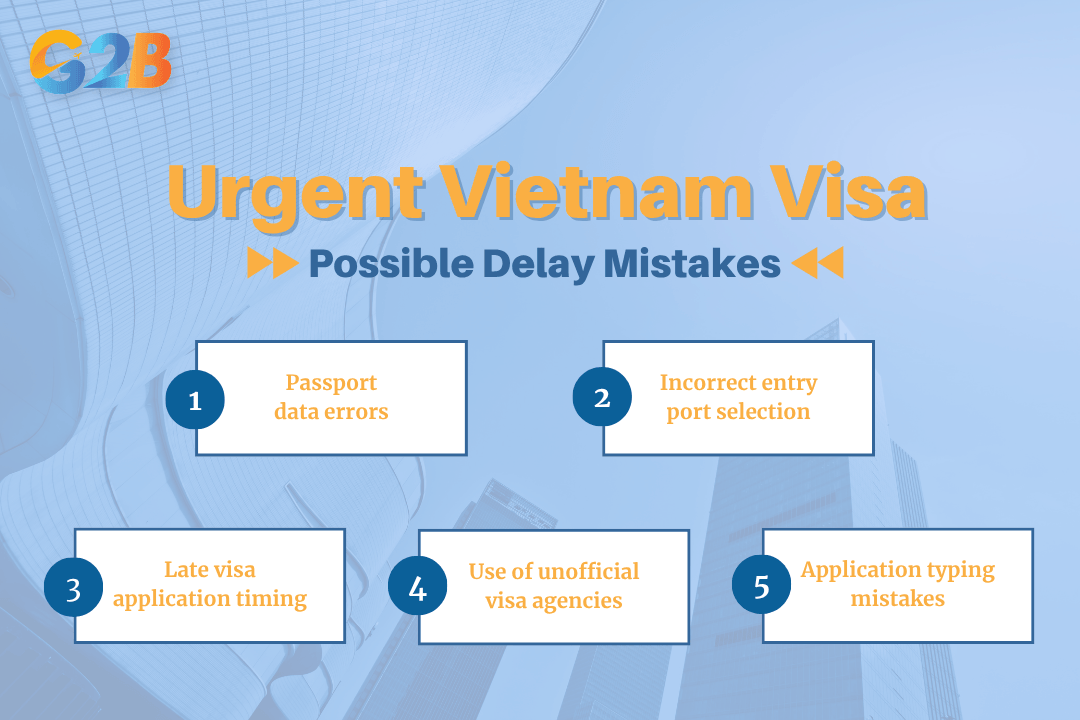
Possible mistakes delay urgent Vietnam visas
Which urgent Vietnam visa is best for you?
The choice depends on travel timing and entry method. Travelers choose eVisas for official simplicity, visas on arrival for the fastest approval, and embassy visas for land entries. Selecting the right urgent option prevents stress and saves money. The traveler must evaluate their specific situation before paying.
When should you choose the urgent eVisa?
Choose the urgent eVisa when you have at least 24 to 48 hours before your flight. The eVisa provides the smoothest entry experience. You skip the long lines at the Visa on Arrival counter. You do not need to prepare physical photos or carry cash for stamping fees. You walk straight to passport control. It also serves as the best option if you plan to cross into Vietnam by bus from Laos, Cambodia, or China.
When is the visa on arrival the best option?
Choose the Visa on Arrival approval letter when you face an extreme emergency. If your flight departs in fewer than 12 hours, the VOA provides the fastest possible processing speed. Agencies can issue a VOA approval letter in just two hours during working days. You also choose this option if you discover a mistake on your eVisa while waiting at the departure airport. The VOA letter allows you to board the flight legally.
When do travelers need the embassy rush visa?
Choose the embassy rush visa if you live close to a Vietnamese embassy and prefer dealing with government officials directly. Some older travelers prefer having the physical visa sticker in their passport before they leave home. The embassy route also works for individuals who have complex immigration histories and need to explain their situation to a consular officer face-to-face.
Obtaining an urgent Vietnam visa requires accurate information, prompt action, and an understanding of government processing rules. The Vietnam Immigration Department offers clear pathways for expedited entry through the digital eVisa system and the traditional Visa on Arrival process. By selecting the correct visa type for their entry port and paying attention to official business hours, foreign visitors can secure their travel documents in just a few hours.
Planning to work or stay in Vietnam? Contact G2B today for a consultation on Work permit/TRC/Business visa services in Vietnam. We assist you throughout the application process, from document preparation to submission and follow-up.
