




 Delaware (USA)
  Vietnam
  Singapore
  Hong Kong
  United Kingdom
 Business visa sponsorship in Vietnam serves as the foundational legal requirement for foreign professionals seeking to conduct commercial activities inside the country. The Vietnam Immigration Department regulates foreign entry tightly. The government requires a local entity to guarantee the foreigner's stay. This mechanism ensures that foreign visitors have legitimate business purposes, such as attending meetings, signing contracts, or providing technical expertise.
The sponsorship process connects three main entities: The Vietnamese sponsoring company, the foreign applicant, and the immigration authority. Understanding this triad helps businesses avoid application delays and legal penalties. This article explains the business visa sponsorship framework, details the DN1 and DN2 visa types, and outlines the exact procedural steps.
What is business visa sponsorship in Vietnam?
Business visa sponsorship in Vietnam means a Vietnamese company legally sponsors a foreigner to obtain a DN1 or DN2 business visa. The Vietnamese company acts as the legal inviting entity. The foreigner acts as the entrant. The Vietnam Immigration Department functions as the regulatory authority. The local company must submit an official request to the government. This request confirms that the company invites the foreigner for specific commercial purposes.
The government does not issue business visas directly to foreigners without local support. The sponsoring entity takes full responsibility for the foreigner. This responsibility begins from the moment of entry and ends when the foreigner leaves the country. Sponsorship builds a legal bridge between international professionals and the domestic market.
What are DN1 and DN2 visas?
DN1 and DN2 are the two main business visa types in Vietnam designed for foreign professionals. The Vietnam Immigration Department categorizes business visas based on the foreigner's specific activities. The classification dictates the required documents and the scope of allowed actions.
| Visa type | Primary purpose | Eligible subjects |
|---|---|---|
| DN1 | Work with Vietnamese companies | Investors, business partners, executives |
| DN2 | Provide services or establish a commercial presence | Technical experts, service suppliers, consultants |
DN1 visas suit foreigners who need to attend meetings, negotiate contracts, or explore market opportunities with local businesses. Foreigners holding DN1 visas interact directly with the Vietnamese company that sponsors them. DN2 visas target foreigners who enter Vietnam to offer specific services. This category includes technical experts repairing factory machinery or legal consultants advising on international law. The DN2 visa also applies to foreigners arriving to establish a commercial presence under international treaties.
How does sponsorship work in Vietnam?
Sponsorship works through a registered Vietnamese company submitting an entry approval application to the immigration authority. The Vietnamese company initiates the process. The company submits Form I.1 to the Vietnam Immigration Department. Form NA2 acts as the official request for foreigner's entry. The immigration officers review the submitted dossier. They verify the company's legal status and the foreigner's background. Upon successful verification, the Immigration Department issues an entry approval letter. The company sends a digital copy of this letter to the foreigner. The foreigner uses this letter to board their flight and collect the physical visa stamp upon arrival.
What is the process for business visa sponsorship in Vietnam?
The process includes four exact steps: Preparation, submission, approval, and visa issuance. Companies must follow a strict sequential order to secure the visa. Missing any step results in application rejection. Required steps include:
- Prepare company documents: The sponsor collects their business registration certificate and prepares the sponsorship forms.
- Submit to immigration: The company files the physical documents at the designated immigration office in Hanoi, Ho Chi Minh City, or Da Nang.
- Receive approval letter: The sponsor collects the official entry approval letter after the government processing period ends.
- Get a visa at the airport or embassy: The foreigner presents the letter to the border authorities to receive the final visa stamp.
During the first step, companies must ensure all signatures match their government records. In the final step, the foreigner must pay a stamping fee directly to the border officers.
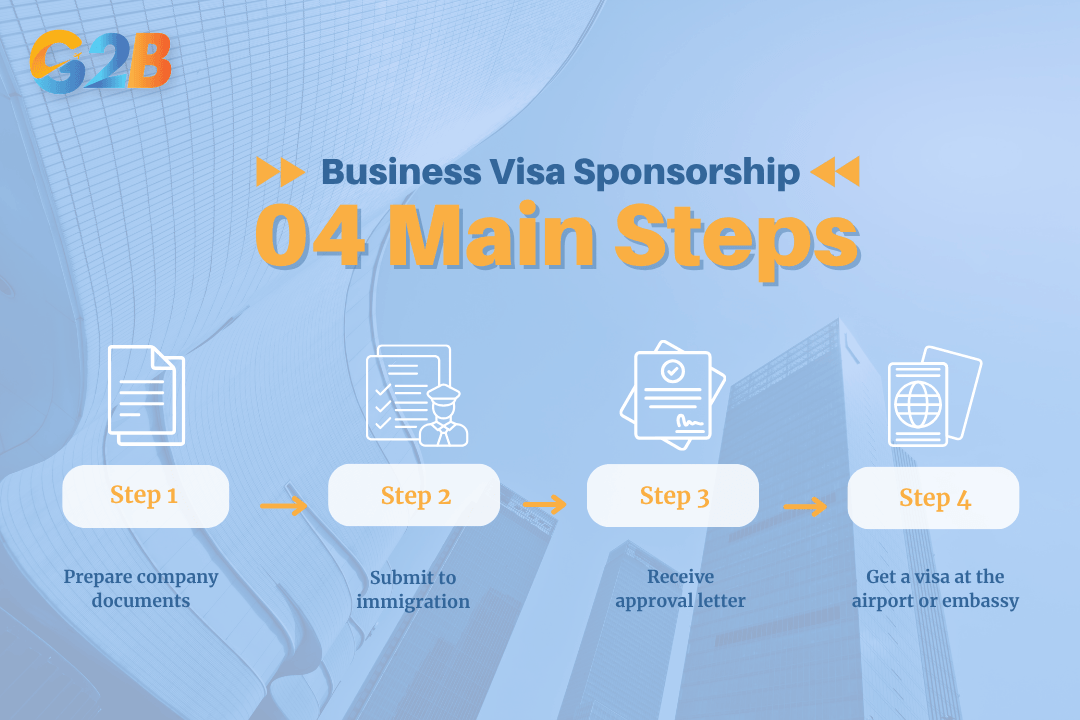
The process for business visa sponsorship includes four steps
Where do companies submit business visa sponsorship applications?
Vietnamese companies submit sponsorship applications directly to the Vietnam Immigration Department offices located in major cities. The government divides jurisdiction based on the geographical location of the sponsoring company's registered headquarters:
- Hanoi office: Handles applications for companies registered in northern provinces (or nationwide via central bureau).
- Da Nang office: Processes dossiers for companies located in central provinces.
- Ho Chi Minh City office: Manages requests for companies based in southern provinces.
Companies cannot submit these applications online. A legal representative or authorized staff member must physically deliver the paper dossier to the correct regional office.
What are the requirements for a Vietnamese sponsoring company?
The sponsoring company must possess a legal operating status and register its signature and seal with immigration authorities. The Vietnam Immigration Department requires strict compliance from local businesses. A company cannot sponsor a foreigner if it fails to meet basic operational standards. Required conditions include:
- Possess a valid Business Registration Certificate (ERC) or Investment Registration Certificate (IRC).
- Register the official company seal and the legal representative's signature using Form NA16.
- Operate strictly within the licensed business scope listed on the registration documents.
- Maintain a clean legal record with no prior immigration law or tax violations.
New companies must complete their initial tax registration before submitting visa sponsorship requests. The government cross-checks corporate tax statuses during the visa review process.
What responsibilities does the sponsoring company have?
The sponsor holds full legal responsibility for the foreigner’s entry purpose, business activities, and stay duration. Sponsorship creates a binding legal obligation between the company and the government. The company guarantees that the foreigner will obey Vietnamese law.
Sponsor obligations include:
- Confirm the legitimate business purpose of the invited foreigner.
- Monitor the foreigner's length of stay to prevent visa overstays.
- Report any immigration or criminal violations to local police immediately.
- Maintain required records of the foreigner's passport and visa for potential audits.
- Ensure the foreigner completes temporary residence registration at the local ward police station.
If the foreigner works illegally or commits a crime, the sponsoring company faces severe administrative fines. In serious cases, the company loses the right to sponsor foreign nationals in the future.
What documents does the foreigner need?
The foreign applicant needs valid personal identification documents, passport photos, and the official entry approval letter from the sponsor. The foreigner must prepare their personal dossier to present at the border gate or embassy.
Required documents include:
- Original passport valid for at least 6 months from the date of entry
- Standard passport photos (4x6cm size, white background, taken recently)
- A printed copy of the entry approval letter provided by the sponsor
- Visa application form (Form NA1) completed and signed
- Cash to pay the government visa stamping fee
The passport must have at least two blank pages for the visa sticker and entry stamps. Authorities deny entry if the passport is damaged or expiring soon.
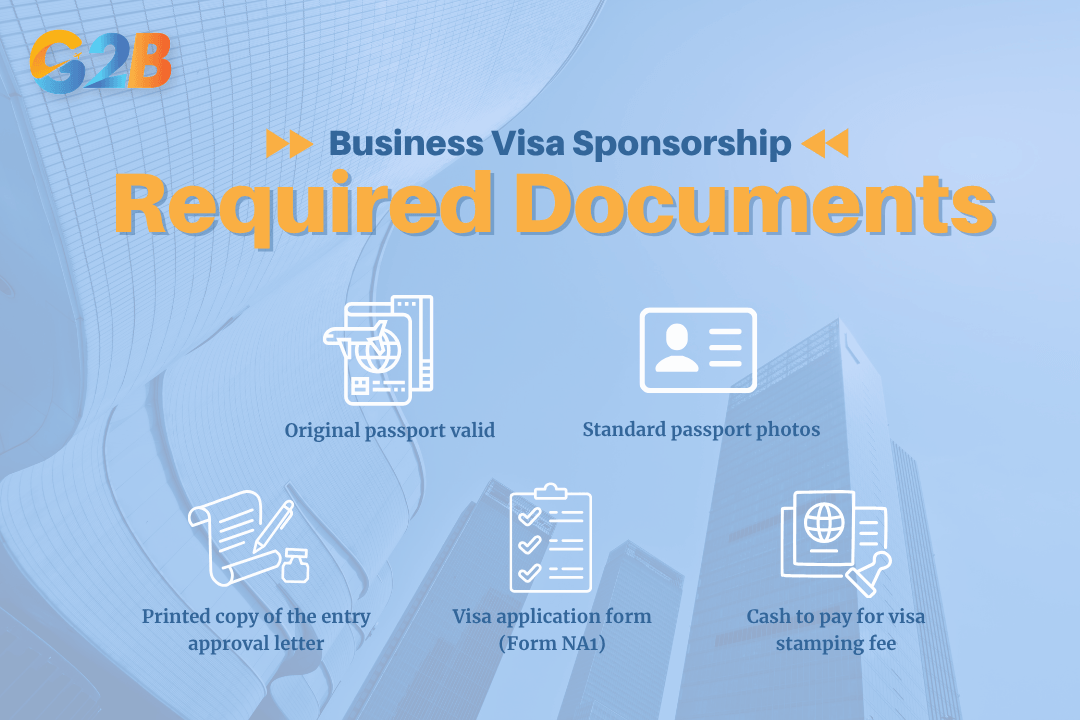
Required documents for Business Visa Sponsorship in Vietnam
How long does business visa sponsorship processing take in Vietnam?
Standard processing usually takes 3 to 7 working days from the date of receiving a complete dossier. The Vietnam Immigration Department processes applications based on specific timeframes. Incomplete documents delay the process significantly.
| Processing type | Estimated time | Conditions |
|---|---|---|
| Standard | 3 - 7 working days | Complete and correct documents |
| Urgent | 1 - 2 working days | Requires special justification and higher service fees |
| Delayed | 10+ working days | Missing documents or verification requirements |
Processing times exclude weekends and Vietnamese public holidays. Companies should submit applications at least two weeks before the foreigner's planned flight to avoid travel disruptions.
How much does business visa sponsorship cost in Vietnam?
The cost includes government stamping fees paid by the foreigner and possible service or consulting fees paid by the sponsor. The financial structure of a business visa involves two separate payment stages.
Government stamping fees paid upon arrival:
- $25-30 USD for a single-entry business visa
- $50-135 USD for a multiple-entry business visa valid up to 3 months
The Vietnamese company does not pay high government fees to submit Form NA2. However, companies often hire professional consulting firms to handle the complex paperwork. These service fees vary depending on the urgency and the consulting agency's pricing model.
What are common misconceptions about business visa sponsorship in Vietnam?
Common misunderstandings usually relate to illegal work rights, salary payments, and incorrect sponsor obligations during the foreigner's stay. Many companies and foreigners confuse business visas with work permits. This confusion leads to serious legal violations.
Common false beliefs include:
- Business visa allows employment: False. A business visa allows short-term commercial activities, not a long-term labor contract
- Sponsor pays a monthly salary: False. The foreigner usually remains on the payroll of their home country's company
- No sponsor needed: Nearly always false. Except for short-term tourist evisas, formal DN1 and DN2 visas require a local sponsor
Foreigners working full-time on a business visa face deportation. Companies hiring foreigners on business visas face heavy financial penalties.
What is a real example of business visa sponsorship in Vietnam?
A real example involves a Vietnamese manufacturing company legally inviting a foreign technical expert for factory machinery inspection. The Vietnamese factory recently purchased equipment from Germany. The factory acts as the sponsoring company. The factory submits Form I.1 to the Immigration Department in Hanoi (after registering seal/signature via Form NA16 previously).
The government reviews the documents and issues the entry approval letter within 5 working days. The factory emails the letter to the German expert. The expert flies to Hanoi, presents the letter, and receives a DN2 visa valid for 30 days. The expert inspects the machinery legally and leaves Vietnam before the visa expires.
What are the benefits of business visa sponsorship in Vietnam?
Sponsorship legalizes the foreigner's entry and significantly increases the probability of visa approval from the government. Having a registered local company back the application provides security to immigration officers. Key benefits include:
- Improves the application credibility before government authorities.
- Reduces the risk of visa rejection at the border or embassy.
- Clarifies the exact legal entry purpose for proper visa categorization.
- Speeds up processing times for urgent commercial trips.
- Allows the foreigner to request multiple-entry visas for frequent travel.
Without a sponsor, foreign professionals often resort to tourist visas. Using a tourist visa for business activities violates Vietnamese immigration laws.
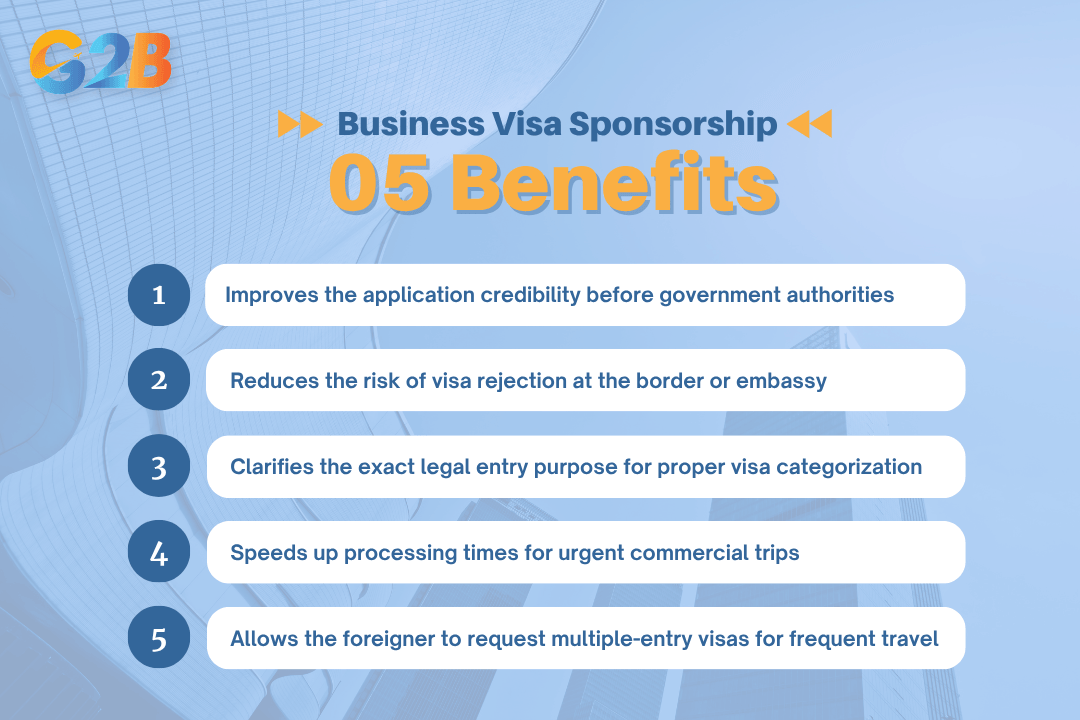
05 top benefits of business visa sponsorship in Vietnam
Is a sponsor required for a business visa in Vietnam?
Yes, most foreign professionals require a legally registered Vietnamese sponsoring company to obtain a formal business visa. The government uses the sponsorship system to track foreign commercial activity. Authorities want to ensure that foreigners entering for business have real local partners. Evisas exist for tourism and very brief business visits, but formal DN1 and DN2 visas with longer validities strictly require a company guarantor.
Can you convert a business visa to a work permit?
Yes, foreigners can convert a business visa to a work permit if they meet strict labor conditions and the company continues sponsorship. The business visa often serves as the first step for foreign employees relocating to Vietnam. The foreigner enters on a DN1 visa to finalize their employment details. To convert the status:
- The sponsoring company must apply for work permit approval from the Department of Labor.
- The foreigner must provide legalized health checks, criminal records, and university degrees.
- The company submits the work permit application.
- After receiving the work permit, the company applies to change the DN1 visa into a Temporary Residence Card (TRC) or an LD (Labor) visa.
The foreigner may not always need to leave Vietnam to complete this conversion, provided the sponsor remains the same and conditions are met.
What is the validity of a business visa in Vietnam?
Business visa validity ranges from 1 to 12 months, depending on the visa type, foreigner's nationality, and specific case details. The Immigration Department grants validity based on the sponsor's request and the actual business need.
Common validity periods include:
- 1 month (Single or Multiple entry)
- 3 months (Single or Multiple entry)
- 6 to 12 months
The sponsor must justify the requested duration. Requesting a 12-month visa for a simple 3-day conference will result in the government reducing the approved validity.
What happens if a sponsored foreigner overstays the business visa?
The Vietnam Immigration Department imposes financial fines and potential deportation on foreigners who overstay their business visa. Overstaying violates the core terms of the sponsorship agreement. The government penalizes both the foreigner and the sponsoring company.
Foreigners must pay fines calculated by the number of overstayed days. For short overstays, the fine ranges from a few million VND. For long overstays, authorities may blacklist the foreigner, banning future entry. The sponsoring company also faces scrutiny. The government may reject the company's future visa sponsorship applications due to poor compliance history.
Navigating the Vietnamese immigration system requires a clear understanding of corporate responsibilities and precise documentation. The business visa sponsorship framework ensures that international trade and foreign expertise integrate safely into the local economy. Companies must maintain strict compliance with the Vietnam Immigration Department, properly utilizing Form I.1.
Securing a DN1 or DN2 visa allows foreign professionals to operate legally, protecting both the individual and the inviting organization from legal penalties. By following the correct procedural steps, preparing accurate dossiers, and managing the foreigner's stay responsibly, local businesses can build strong, legally compliant international partnerships.
Planning to work or stay in Vietnam? Contact G2B today for a consultation on Work permit/TRC/Business visa services in Vietnam. We assist you throughout the application process, from document preparation to submission and follow-up.
