





 Delaware (USA)
  Vietnam
  Singapore
  Hong Kong
  United Kingdom
 Global Macro is an investment strategy that bases decisions on the broad macroeconomic and geopolitical trends shaping our world. It moves beyond the performance of individual companies to analyze the larger forces - such as interest rate shifts, international trade policies, and political events - that dictate the flow of capital across global markets. Let’s demystify global macro, from its core principles and complex strategies to its real-world impact on investment decisions in emerging economies like Vietnam.
This article explains the key concepts of global macro, helping businesses and investors gain a clearer understanding of it. We specialize in company formation and not in macroeconomic forecasting or financial analysis. For technical guidance on macroeconomic strategy, please consult a qualified economist or financial expert.
What is global macro?
Global Macro investing is fundamentally a top-down approach. Instead of starting with the fundamentals of a single company (a bottom-up strategy), macro investors begin their analysis at the highest level. Global Macro investing is fundamentally a top-down approach.economic policies, political shifts, and global trade flows, to predict how different asset classes will perform. This strategy operates across a vast and diverse universe of markets, and often employs both long and short positions, derivatives, and leverage to amplify potential returns, including equities, bonds, currencies, and commodities.
The core idea is to identify and capitalize on large-scale economic trends and market imbalances. The strategy is dynamic and adaptable to various market conditions, including growth or recession, inflationary or deflationary environments. For example, if a global macro manager forecasts that the United States is heading into a global recession, they might short-sell U.S. stock indices or the U.S. dollar. Conversely, if they identify strong growth potential in an emerging market like Singapore, they might take long positions in that country's assets. This unconstrained mandate to invest across various asset classes and geographies is a defining feature of the global macro strategy.
Core principles of global macro investing
The global macro philosophy is built on several foundational pillars that guide investment decisions. These principles distinguish it from more traditional, micro-focused investment strategies.
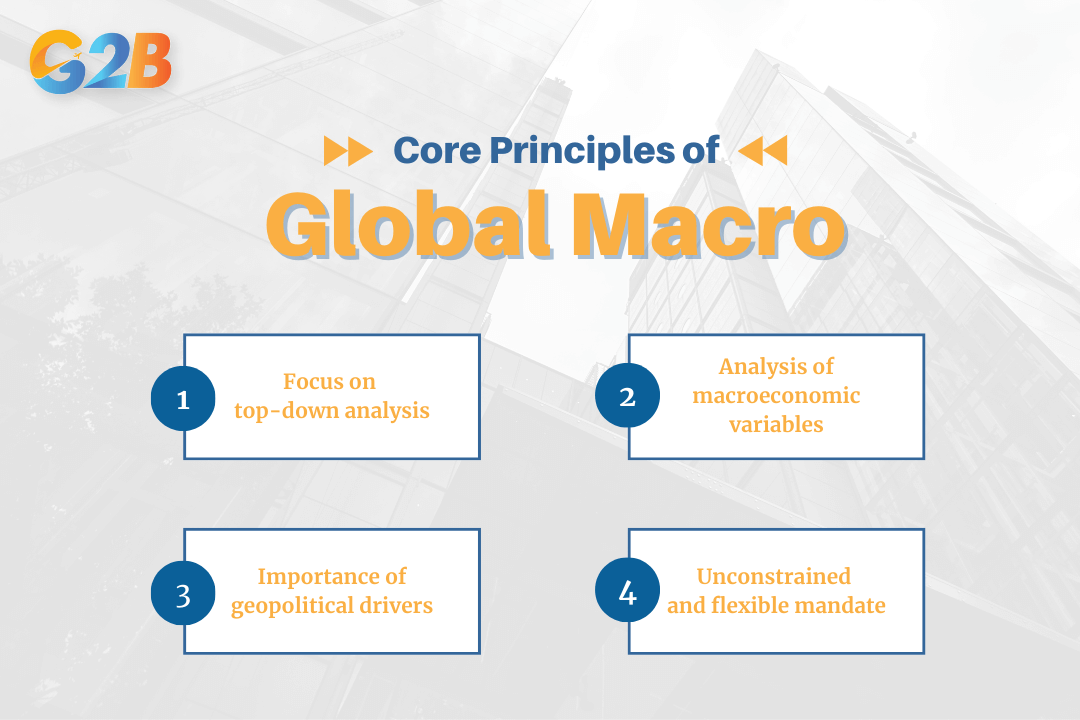
04 Core principles of global macro investing
Focus on top-down analysis: The strategy begins with an assessment of the global economic landscape and then drills down into specific countries, regions, and asset classes to develop investment ideas. This "big picture" perspective is the cornerstone of global macro investing.
Analysis of macroeconomic variables: Decisions are driven by key data points, such as interest rates, inflation, Gross Domestic Product (GDP) growth, and unemployment figures. Global macro managers analyze these variables to forecast the future direction of economies and markets.
Importance of geopolitical drivers: Political events, international relations, and government policies are critical inputs. A shift in political leadership or a change in trade policy can create significant investment opportunities or risks.
Unconstrained and flexible mandate: Global macro funds are among the least restricted investment vehicles. They have the flexibility to invest across a wide range of assets worldwide, taking both long and short positions, and employ derivatives and leverage to capitalize on anticipated market movements.
The global macro analyst's toolkit
To form their investment theses, global macro analysts continuously monitor a specific set of data points and global events. This toolkit allows them to anticipate market shifts and position their portfolios accordingly.
Economic indicators and central bank policies: Key economic indicators provide a snapshot of a country's economic health. Analysts closely watch metrics like GDP growth rates, inflation figures, and employment data. They also scrutinize government budgets and spending, known as fiscal policy, to predict economic stimulation or contraction.
Interest rate differentials and monetary policy: The difference in interest rates between two countries is a primary driver of currency trading. Analysts track central bank actions to anticipate currency and bond price movements, often using interest rate strategies that invest in sovereign debt, and drive common strategies like carry trades.
Inflation trends: Inflation erodes purchasing power and directly impacts central bank policies. Understanding inflation trends is crucial for forecasting interest rate changes and their subsequent effect on bond and currency markets.
Geopolitical landscape and trade policies: International relations, trade agreements, and political instability are major factors in global macro analysis. Events like elections, trade negotiations, or regional conflicts can trigger significant market volatility which adds significant uncertainty and create heightened market volatility and creates opportunities for informed investors.
Effective business forecasting is essential here, as analysts must synthesize these disparate data points to predict future market behaviors rather than just reacting to current news.
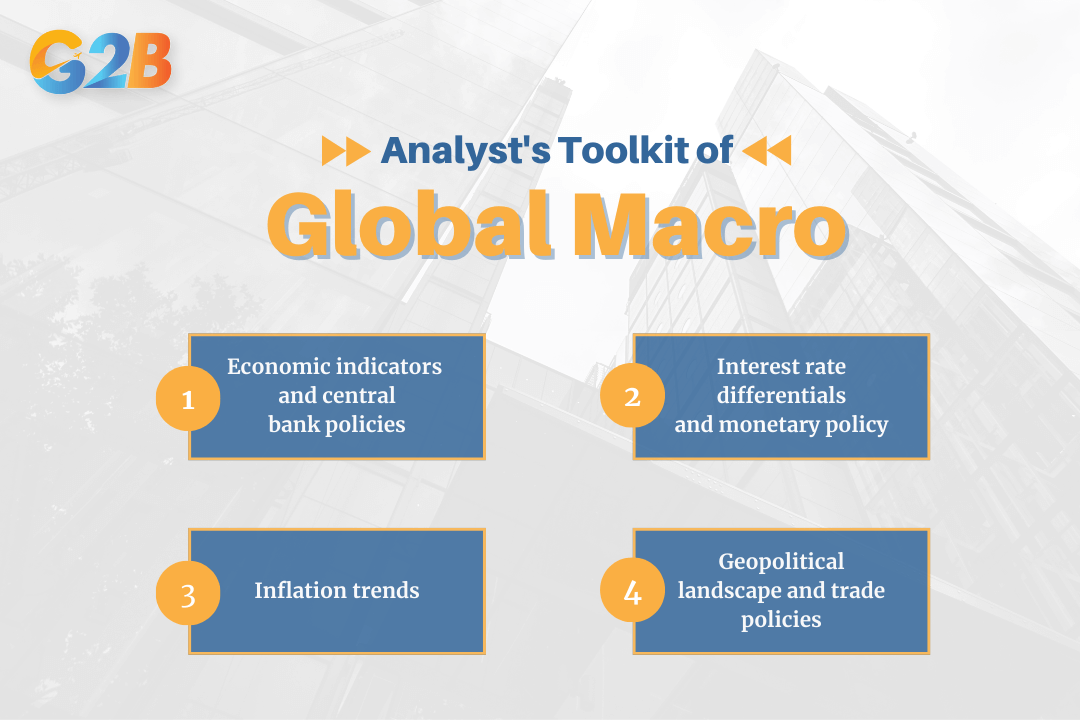
The global macro analyst's toolkit
Strategies in the global macro universe
Global macro is not a monolithic strategy; it encompasses several distinct approaches. The primary division is between discretionary and systematic styles, each with its own methodology for analyzing markets and executing trades.
Discretionary vs. systematic macro
| Approach | Description | Methodology | Best for |
|---|---|---|---|
| Discretionary macro | Relies on the portfolio manager's expertise and judgment to make investment decisions. | Based on fundamental analysis and human insight. Decisions are subjective and often focused on a few major themes. | Navigating unprecedented events or specialized themes where historical data is limited. |
| Systematic macro | Uses algorithms and quantitative models to analyze data and generate trading signals. | Employs price-based and trend-following algorithms to construct portfolios and execute trades. | Handling vast datasets in stable and transparent markets, and managing multiple strategies simultaneously. |
Common trading strategies
Within these broader approaches, macro managers employ several specific trading strategies:
- Currency strategies: These strategies aim to profit from fluctuations in exchange rates. This involves profiting from exchange rate fluctuations, such as going long on the US dollar while shorting the Japanese yen based on differing central bank policies. These movements often involve substantial foreign portfolio investment flows as capital seeks the highest risk-adjusted returns across borders.
- Interest rate strategies: This involves making directional and relative value trades in sovereign debt based on a country's monetary policy and economic outlook.
- Equity index strategies: Managers take long or short positions on stock indices using futures, options, and ETFs to capitalize on their forecasts for a particular country's market.
- Commodity strategies: These strategies involve trading commodities like oil, gold, and agricultural products based on supply and demand forecasts, geopolitical events, and global economic health.
Types of global macro funds
Investors can access global macro strategies through various investment vehicles, each with different structures, levels of accessibility, and risk profiles. These funds are typically managed by a specialized financial institution (FI) that has the resources to execute complex cross-border trades.
Hedge funds
- Discretionary funds: Managed by portfolio managers who make all key investment decisions based on their fundamental analysis. These funds are highly flexible.
- Systematic funds: These funds are a hybrid, using fundamental analysis to build portfolios but relying on algorithms for trade execution.
- Commodity trading advisors (CTAs): Often considered a subset of systematic macro, CTAs use trend-following algorithms to trade in futures markets, including commodities, currencies, and bonds.
Mutual funds and ETFs
- Global macro mutual funds: These offer a more accessible way for retail investors to gain exposure to macro strategies. They are typically more liquid and regulated than hedge funds.
- Macro-themed ETFS: These exchange-traded funds are designed to track specific macroeconomic themes, such as emerging market growth or shifts in interest rates, providing a targeted way to invest in macro trends.
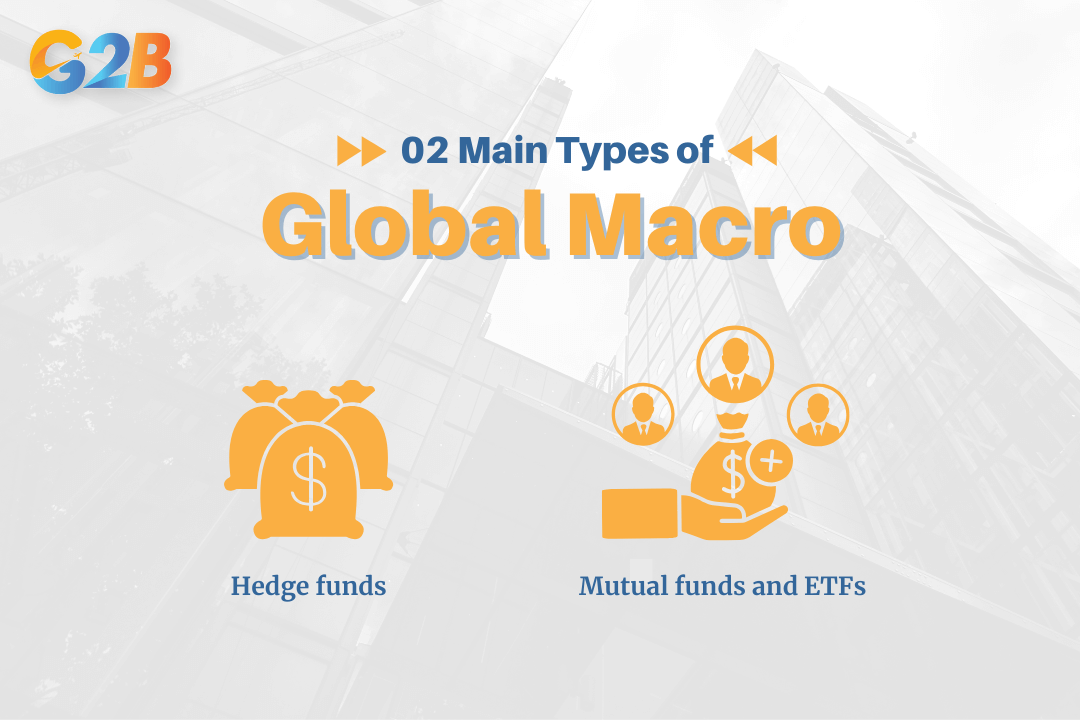
02 Types of global macro funds
Risks and benefits of global macro
Like any investment strategy, global macro offers a unique balance of potential rewards and significant risks. A clear understanding of both is essential for any investor considering this approach.
Potential benefits
- Portfolio diversification: Global macro strategies have historically shown a low correlation to traditional asset classes like stocks and bonds, making them a valuable tool for diversification. This strategy inherently promotes geographical diversification, spreading risk across various national economies rather than relying on a single market.
- Potential for high returns: By capitalizing on major market shifts, these strategies can generate significant returns, particularly during periods of market volatility when other strategies may struggle.
- Flexibility: The unconstrained mandate allows managers to seek opportunities across a wide range of markets and asset classes, adapting to changing economic conditions.
Inherent risks
- Complexity and steep learning curve: Successfully implementing a global macro strategy requires a deep understanding of economics, finance, and geopolitics.
- Leverage can amplify losses: Many macro strategies use leverage to magnify returns, but this is a double-edged sword. Leverage can magnify gains but also exacerbate losses, potentially leading to significant drawdowns.
- Dependence on manager skill: In discretionary macro, returns are heavily reliant on the skill and foresight of the portfolio manager. An incorrect forecast can lead to substantial losses.
- Potential for large drawdowns: The bold, directional bets that characterize some macro strategies can result in significant drawdowns if the market moves unexpectedly.
Impact on investment decisions in Vietnam
Applying the principles of global macro analysis to a specific country like Vietnam provides a tangible example of how these broad trends translate into actionable investment insights. For investors and businesses, understanding Vietnam's position in the global economic landscape is crucial.
Vietnam as a prime destination for foreign investment
Vietnam's political stability is a significant advantage in Southeast Asia, a region where some countries face political and economic instability. This stability, coupled with a commitment to economic growth and reform, makes it an attractive destination for foreign capital. The Vietnamese government's pro-investment policies have cultivated a favorable business environment, further enhancing its appeal to international investors.
Key macroeconomic indicators
Vietnam has demonstrated remarkable economic resilience, maintaining its status as one of the fastest-growing economies in Southeast Asia and a prominent emerging market economy. Recent forecasts project robust Vietnam economic growth for 2025. A key indicator of confidence is the surge in foreign direct investment (FDI). In the first ten months of 2025, FDI disbursement in Vietnam reached approximately $21.3 billion, an 8.8% increase year-over-year and the highest level for that period in the past five years. Total FDI inflows in 2025 may reach between $26 billion and over $31 billion, reflecting optimistic investment momentum. The manufacturing and processing sector continues to be the primary recipient of this investment.
Geopolitical tailwinds: The "China + 1" strategy
Global geopolitical shifts and a desire to diversify supply chains have created significant opportunities for Vietnam. The "China + 1" strategy, where companies avoid investing solely in China and diversify their businesses to other countries, has positioned Vietnam as a leading alternative. Its strategic location, competitive labor costs, and stable political climate make it a preferred destination for manufacturing and investment. This trend is evident in the strong export growth of key sectors like textiles and electronics, with major multinational corporations expanding their supply chain management networks to include facilities in the country.
Global Macro is a powerful and intellectually demanding investment strategy that requires a comprehensive understanding of the world's economic, political, and financial systems. It offers the potential for significant returns and valuable diversification but comes with substantial risks that demand careful management. As we've seen through the lens of Vietnam, these global trends have very real and impactful consequences, creating unique opportunities for those prepared to navigate them. For businesses looking to capitalize on these trends, G2B offers a complete company formation service in Vietnam.
