




 Delaware (USA)
  Vietnam
  Singapore
  Hong Kong
  United Kingdom
 Group of 20 (G-20) functions as the premier international forum for global economic cooperation, acting as the steering committee for the world’s financial architecture. Comprising the world’s largest economies, this bloc determines the regulations and policies that govern 85% of global Gross Domestic Product (GDP), 75% of international trade, and two-thirds of the world’s population. Unlike the more exclusive G-7, the G-20 integrates established industrial powers with emerging market giants to address systemic global risks.
This article explains the key concepts of the Group of 20 (G-20), helping entrepreneurs understand its structure, objectives, and role in global economic governance. We specialize in company formation and not in geopolitical analysis or international relations consulting. For technical guidance on G-20 policies, please consult a qualified economic expert.
What is the group of 20 (G-20)?
The Group of 20 (G-20) is an intergovernmental forum comprising 19 sovereign countries and the European Union (EU) that convenes to coordinate global policy on global economic and financial issues. Founded in 1999 initially as a meeting for Finance Ministers and Central Bank Governors, the forum was elevated to the Leaders’ Summit level in 2008 to unify the global response to the massive financial crisis.
The primary objective of the G-20 is to foster sustainable economic growth and mitigate financial crises that could lead to a global recession. By reforming international financial institutions like the International Monetary Fund (IMF) and the World Bank, the group aims to stabilize the macro-economic environment.
The forum operates without a permanent secretariat or staff. Instead, leadership rotates annually among members, forming a "Troika" consisting of the past, current, and future presidencies to ensure continuity. While the United Nations operates on a "one country, one vote" basis, the G-20 derives its authority from economic weight. Decisions made by the G-20 are not legally binding treaty obligations but function as political commitments that member states ratify through their domestic policy frameworks. The G-20 does not have legislative or enforcement powers, and its outcomes depend on voluntary compliance by member countries.
G-20 vs. G-7
Distinguishing between the G-20 and the G-7 is essential for understanding the nuances of global governance.
Composition and representation
The Group of 7 (G-7) consists exclusively of advanced, industrialized democracies (Canada, France, Germany, Italy, Japan, the United Kingdom, and the United States). These nations share close political, security, and ideological alignments rooted in Western liberal democracy.
Conversely, the G-20 acts as a broader bridge. It incorporates the entire G-7 alongside major countries classified as an emerging market economy from the "Global South," including China, India, Brazil, Indonesia, and Saudi Arabia. This inclusion allows the G-20 to represent a more accurate cross-section of the modern global economy than the G-7, which represents a shrinking share of global GDP.
Strategic focus
The G-7 focuses heavily on security coordination, political solidarity, and normative standards regarding democracy and human rights. The G-20 primarily focuses on financial stability, global market regulation, and development financing. Following the 2008 financial crash, the G-20 effectively superseded the G-7 as the main economic council because a global recovery was impossible without the participation of emerging markets like China and India. While the G-7 coordinates Western geopolitical stances (such as sanctions), the G-20 serves as the pragmatic table where rival nations must convene to prevent global economic collapse.
Membership and participation
The G-20 membership structure has evolved to reflect the shifting balance of geopolitical power.
List of member nations
The 19 sovereign member nations span every continent and represent diverse political and economic models:
- Americas: Argentina, Brazil, Canada, Mexico, United States.
- Asia-Pacific: Australia, China, India, Indonesia, Japan, South Korea.
- Europe: France, Germany, Italy, Russia, Turkey, the United Kingdom.
- Middle East & Africa: Saudi Arabia, South Africa.
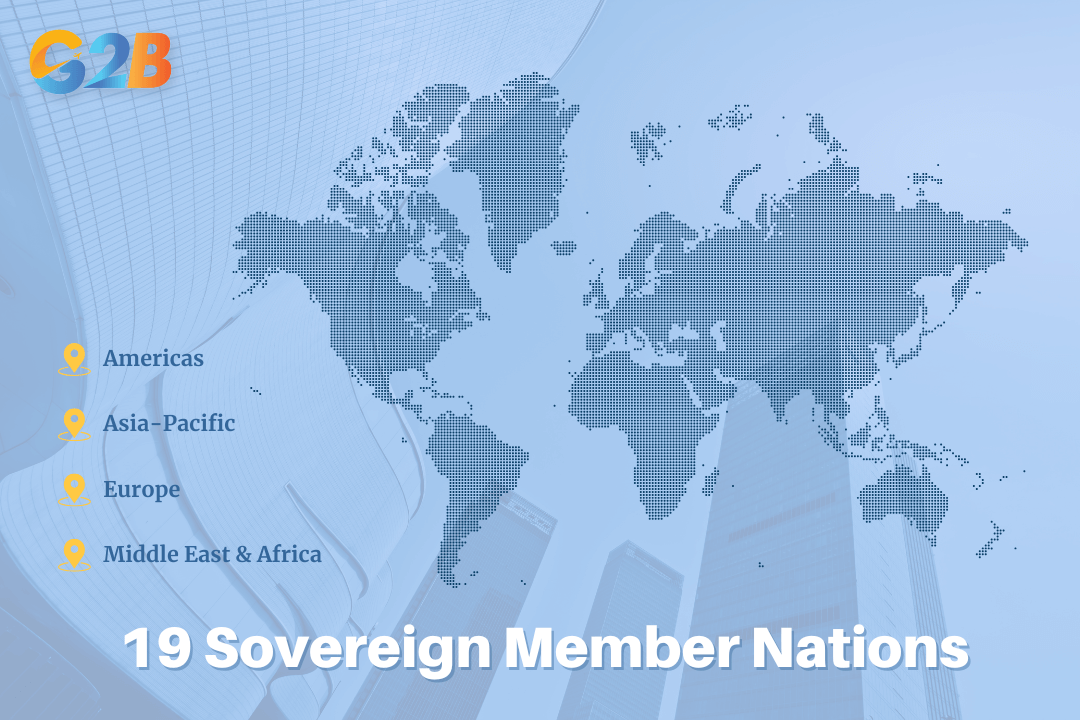
The 19 sovereign member nations span every continent
European Union (EU) and African Union (AU)
For decades, the EU (European Union) was the only regional organization with full membership status. However, the geopolitical landscape shifted significantly in late 2023 when the G-20 agreed to admit the African Union (AU) as a permanent member, a status effectively operationalized during the 2024 and 2025 summits. The admission of the AU allows the G-20 to address the needs of 55 African nations, shifting the forum from a "country club" dynamic to a representative body for regional blocs. This integration ensures that decisions regarding debt restructuring, food security, and climate adaptation financing directly involve the continent most affected by these issues.
Permanent guest countries and invited organizations
The G-20 maintains a tradition of inviting non-member participants to broaden its consensus.
- Permanent guest: Spain holds a unique status as a permanent invitee to all summits.
- International Organizations: The United Nations (UN), IMF, World Bank, World Health Organization (WHO), and World Trade Organization (WTO) participate to provide technical data and implementation support. Discussions often revolve around promoting free trade and reducing barriers to global commerce.
- Rotating guests: The host country typically invites leaders of regional groups, such as the Association of Southeast Asian Nations (ASEAN) and the New Partnership for Africa's Development (NEPAD).
Future of the G-20 in the Global Economy
As of late 2025, the G-20 is navigating a complex era defined by the rise of the "Global South." The consecutive presidencies of India (2023), Brazil (2024), and South Africa (2025) have fundamentally reoriented the forum's agenda away from purely Western priorities toward the needs of developing nations.
The "Global South" troika
The 2025 summit in South Africa marks the culmination of this three-year shift. The agenda now prioritizes democratizing the Bretton Woods institutions (IMF and World Bank) to give developing nations greater voting power. Major policy initiatives currently driving the G-20 include:
- Digital public infrastructure (DPI): Leveraging the success of digital identity and payment systems in India and Brazil to foster financial inclusion in developing markets.
- Green development pacts: Creating mechanisms for wealthy nations to finance the energy transition in the Global South without creating unsustainable debt traps. This includes promoting green tech investments to accelerate decarbonization.
- Supply chain resilience: Shifting from "just-in-time" efficiency to "just-in-case" redundancy. The G-20 emphasizes robust supply chain management to mitigate shocks from geopolitical conflicts.
Navigating geopolitical fragmentation
The G-20 faces the ongoing challenge of internal division. Tensions between the G-7 bloc and the Russia-China axis threaten to paralyze consensus. However, the forum remains the only viable platform where these powers convene. To remain relevant, the G-20 is focusing less on unanimous political communiques and more on sector-specific agreements - such as crypto-asset regulation and pandemic preparedness - where technical consensus is achievable despite political friction.
South African media highlights Vietnam's role with the G20
With South Africa hosting the G-20 in 2025, the synergy between the host nation and Vietnam has garnered significant attention in diplomatic and business circles. Although Vietnam is not a permanent G-20 member, it has become a preferred guest and strategic partner, particularly of South Africa as the G-20 presidency nation.
Vietnam as a model for the global south
South African media and policy analysts highlight Vietnam as a successful case study for economic sovereignty and integration. Vietnam’s transition from a low-income nation to a global manufacturing hub serves as a blueprint for African economies looking to industrialize. This remarkable transformation is evidenced by the consistent Vietnam economic growth, which has outperformed many regional peers.
At the 2025 summit, Vietnam’s participation underscores its role as a critical link in global supply chains. As corporations diversify away from single-source dependencies (China + 1 strategies), Vietnam provides the necessary manufacturing infrastructure and political stability that G-20 investors seek. The country has successfully attracted substantial foreign direct investment (FDI) from G-20 nations like South Korea, Japan, and the US, further cementing its position.
Bamboo diplomacy and strategic alignment
Vietnam’s foreign policy of "Bamboo Diplomacy" - firm roots (national interest) with flexible branches (multilateral relations) - aligns perfectly with the 2025 G-20 theme of bridging divides. South Africa views Vietnam as a key ally in championing fairer trade terms and sustainable development goals for non-aligned nations. During the 2025 proceedings, Vietnam advocates for developing countries' interests, specifically regarding:
- Climate finance: Ensuring developed nations fulfill pledges to fund climate adaptation in the Mekong Delta and similar vulnerable regions.
- Energy transition: promoting the Just Energy Transition Partnership (JETP) model, which Vietnam is implementing to decarbonize its grid with G-7 support.
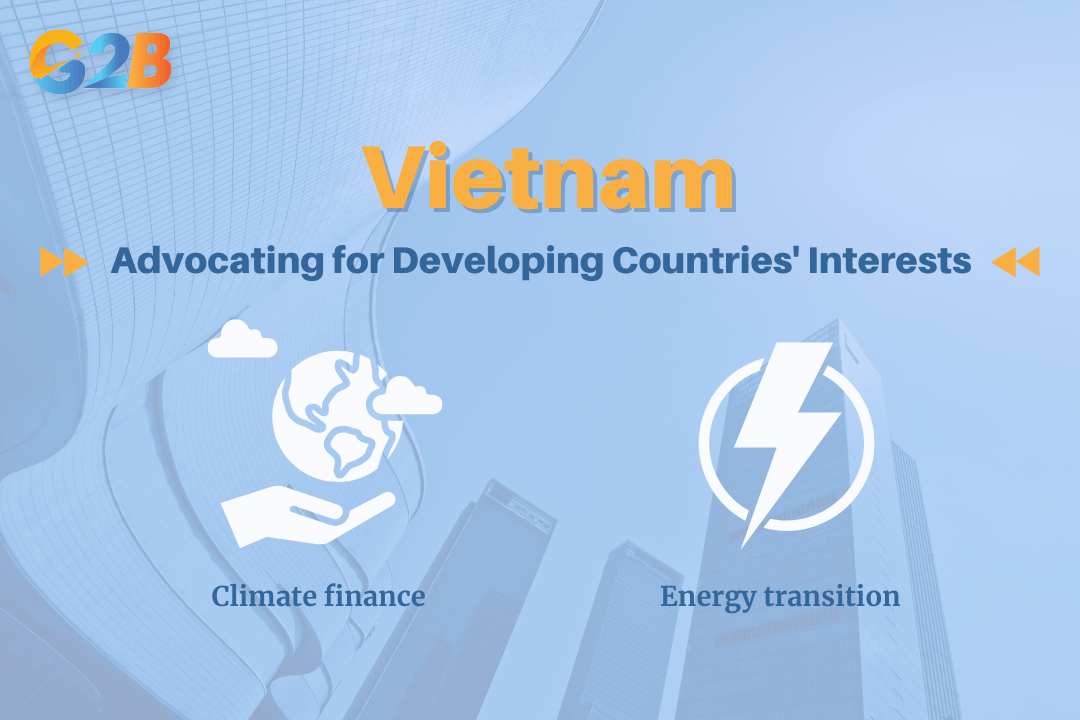
Vietnam advocates for developing countries' interests
This strategic alignment elevates Vietnam from a participant to an influential voice of reason and resilience, bridging the gap between the advanced economies of the G-7 and the aspirations of the AU-led Global South.
The Group of 20 (G-20) remains the central nervous system of global economic governance. By integrating the industrial might of the G-7 with the demographic and economic potential of the Global South - now fortified by the African Union - the G-20 creates the only table large enough to hold the world's most pressing problems.
For businesses and investors, understanding the G-20's direction is no longer optional. The policies ratified here regarding digital infrastructure, green energy, and cross-border trade will define the regulatory landscape for the next decade. Furthermore, the rising prominence of nations like Vietnam within this sphere signals a permanent shift in the center of economic gravity.
Stay ahead of global macro-economic trends and regulatory shifts. Follow G2B for more information on business strategy and company formation in Vietnam!
