




 Delaware (USA)
  Vietnam
  Singapore
  Hong Kong
  United Kingdom
 A visa run Moc Bai involves exiting Vietnam through the Tay Ninh land border to Cambodia and re-entering immediately to activate a new visa. Travelers use this process to extend their legal stay inside Vietnam. Whether you are holding an eVisa, tourist visa, or waiting for a new visa approval, understanding the Moc Bai border run process can help you save time and avoid unnecessary complications. In this complete guide, we will walk you through the requirements, procedures, costs, and useful tips for a smooth Vietnam to Cambodia border run experience.
What is a visa run at Moc Bai?
A visa run at Moc Bai is a travel process where foreigners exit Vietnam and re-enter the country immediately. Foreigners perform this action to activate a new visa or renew their allowed stay period. Travelers cross the land border from Vietnam into Cambodia. They receive an entry stamp in Cambodia, turn around, and re-enter Vietnam using a new, valid visa. This resets their legal immigration status.
Where is the Moc Bai border located?
The Moc Bai border is located in Ben Cau District, Tay Ninh Province, Vietnam. This checkpoint connects Vietnam to the Bavet border crossing in Svay Rieng Province, Cambodia. The border gate sits on the Trans-asia Highway (National Highway 22).
| Location point | Distance | Travel time |
|---|---|---|
| Ho Chi Minh City Center | 70 kilometers | 2 to 2.5 hours |
| Tay Ninh City | 40 kilometers | 1 hour |
| Phnom Penh (Cambodia) | 170 kilometers | 3.5 to 4 hours |
Why do travelers choose Moc Bai for visa runs?
Travelers choose Moc Bai because it is the closest land border checkpoint to Ho Chi Minh City. The short distance allows foreigners to complete the immigration process in a single day. Transport providers run daily routes to this checkpoint. Frequent bus schedules and private car services make the journey highly accessible.
Who uses the Moc Bai visa run strategy?
Tourists, expats, business travelers, and digital nomads use the Moc Bai visa run strategy. These groups need a new entry stamp when their current legal stay expires. Different types of travelers face specific immigration requirements.
Why do tourists perform visa runs?
Tourists perform visa runs to stay in Vietnam after their current tourist visa expires. They exit the country on the expiration date and return with a newly approved electronic visa (eVisa). This allows visitors to continue traveling without booking expensive international flights.
How do expats benefit from border runs?
Expats use border runs as a temporary extension strategy while waiting for official residency documents. They cross the border to maintain legal status in Vietnam. Workers often wait weeks for a Work Permit or Temporary Residence Card (TRC). A quick border trip prevents illegal overstay penalties during this waiting period.
Why do business travelers need border runs?
Business travelers need border runs when they hold single-entry visas but require frequent regional travel. They also use this method to switch from a tourist visa to a business sponsor visa.
How do digital nomads use visa runs?
Digital nomads use visa runs to create flexible, long-term stay plans. They chain consecutive eVisas together by crossing the land border every 90 days. This method supports remote workers who do not qualify for official employment visas in Vietnam.
Is a Moc Bai visa run still legal in 2026?
A Moc Bai visa run remains a legal immigration procedure in 2026. However, the Vietnam Immigration Department regulates the frequency of these trips. Immigration policies change frequently. Travelers must verify current rules before planning their journey.
What are the current Vietnam immigration rules?
Current immigration rules allow foreigners to re-enter Vietnam with a valid eVisa or pre-approved visa letter. The government no longer requires a waiting period between exiting and re-entering. A visa run is not a guaranteed long-term immigration strategy. Officers monitor passports for excessive back-to-back tourist visas. In practice, officers often deny entry after 3-4 consecutive runs within 12 months due to electronic tracking of travel patterns.
How do visa types impact re-entry?
Visa types dictate your re-entry rights at the land border. Single-entry visas expire the moment you cross the Moc Bai exit gate. You must hold a new, unactivated visa to re-enter Vietnam. Multiple-entry visas allow you to leave and return freely until the final expiration date.
How does officer discretion affect re-entry?
Immigration officers hold full discretion to approve or deny your re-entry into Vietnam. Entry approval is never an automatic right. Officers check your travel history. They refuse entry if they suspect you live and work illegally in Vietnam on continuous tourist visas.
What documents do you need for a Moc Bai visa run?
You need a valid passport, a new Vietnam visa approval, a Cambodia visa, and cash to complete a Moc Bai visa run. Missing any document results in entry denial. Organize your paperwork before leaving Ho Chi Minh City.
What are the passport requirements?
Your passport must remain valid for at least six months beyond your planned re-entry date. It must also contain at least two completely blank pages. Immigration officers stamp one page for the Vietnam exit and entry, and another page for the Cambodia entry and exit.
What Vietnam visa status is required?
You must hold a valid exit status on your current visa and a newly approved visa for your return. You cannot cross the border if you overstayed your current visa without paying the fine first. Your new eVisa must explicitly list "Moc Bai Landport" as the approved entry gate.
What are the Cambodia visa requirements?
You need a valid Cambodian visa to enter Bavet, which you can obtain on arrival or online. Most nationalities qualify for a Visa on Arrival at the land checkpoint.
| Visa Type | Cost | Processing Method |
|---|---|---|
| Cambodia Tourist Visa (T) | $30 USD | On arrival at the border |
| Cambodia Ordinary Visa (E) | $30 USD | On arrival at the border |
| Cambodia eVisa | $30 USD | Online application beforehand |
Some nationalities face restrictions and must apply for a Cambodian visa at an embassy prior to travel.
Which payment methods work at the border?
You must pay border fees using exact cash in US Dollars (USD) or Vietnamese Dong (VND). Border checkpoints do not accept credit cards or digital payments for visa fees. Immigration officers prefer crisp, undamaged USD bills for the Cambodia Visa on Arrival.
What supporting documents should you bring?
You should bring printed travel reservations and accommodation details to prove your intentions. Officers may request these documents during inspection. Prepare the following items:
- Print your Vietnam eVisa approval
- Print your return flight ticket out of Vietnam
- Print your hotel booking confirmation
- Bring sponsorship letters if entering on a business visa
- Carry two passport-sized photos (4x6 cm)
How do you do a visa run from Ho Chi Minh city to Moc Bai?
You complete a visa run by traveling to the border, exiting Vietnam, entering Cambodia, and immediately returning to Vietnam. The process involves five distinct steps. Follow this standard procedure to ensure a smooth crossing:
Step 1: How do you travel to Moc Bai?
You travel from Ho Chi Minh City to Moc Bai using a public bus, a private car, or a shuttle service. The journey takes approximately two hours depending on traffic. Bus companies depart from Pham Ngu Lao street in District 1. You must arrive at the border during operating hours.
Step 2: How do you exit Vietnam immigration?
You exit Vietnam by presenting your passport to the immigration officer at the Moc Bai departure building. The officer verifies your current legal stay. They place an exit stamp in your passport. You then walk across the neutral zone toward the Cambodian checkpoint.
Step 3: How do you enter Cambodia at Bavet?
You enter Cambodia by filling out an arrival card and paying the visa fee at the Bavet checkpoint. The Cambodian officer processes your Visa on Arrival. The officer places an entry stamp in your passport. You are now legally in Cambodia.
Step 4: Should you turn around or stay in Cambodia?
You can turn around immediately or stay in Cambodia for a short visit. Most visa runners walk directly to the Cambodian departure desk to exit immediately. The Cambodian officer places an exit stamp in your passport. You walk back across the neutral zone to Vietnam.
Step 5: How do you re-enter Vietnam?
You re-enter Vietnam by presenting your passport and new eVisa to the Moc Bai arrival officer. The officer inspects your documents and travel history. If approved, the officer activates your new visa and stamps your passport. You then board your transport back to Ho Chi Minh City.
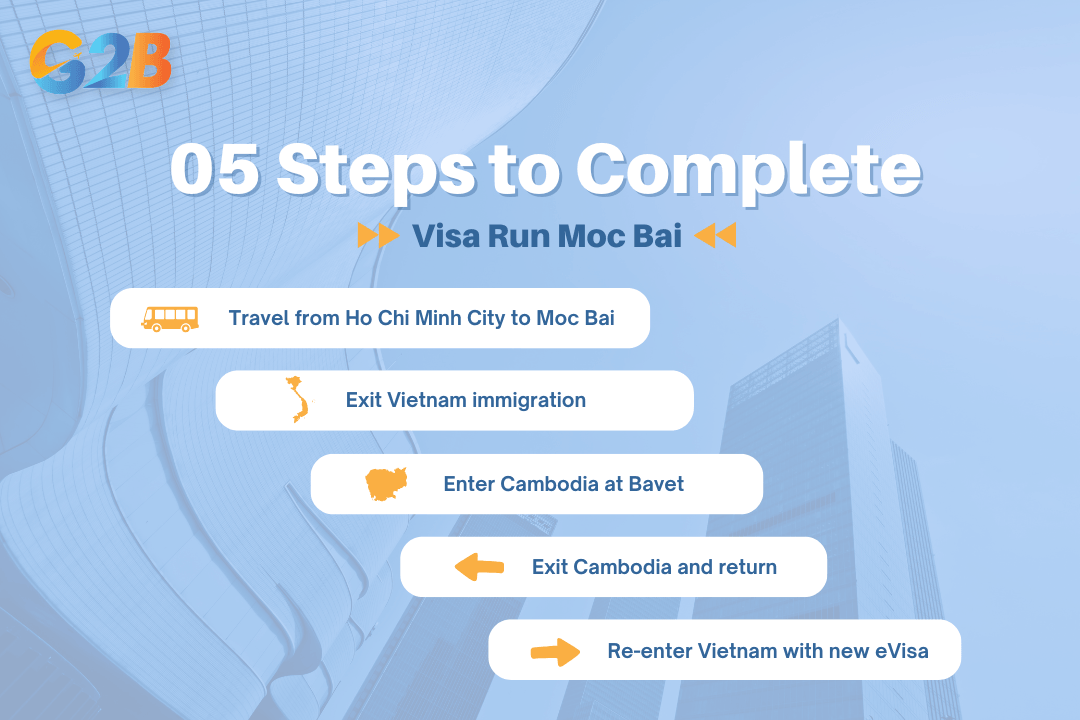
Necessary steps to complete a visa run from Ho Chi Minh city to Moc Bai
How much does a Moc Bai visa run cost?
A Moc Bai visa run costs depending on your transport and visa choices. You must budget for travel, the Cambodia entry fee, and the Vietnam visa fee.
How much is the Cambodia visa fee?
The Cambodia Tourist Visa on Arrival costs $30 USD. You pay this fee directly to the Cambodian immigration officials at the Bavet border. If you arrive without passport photos, officers charge an extra $2 to $5 USD scanning fee.
How much does the Vietnam visa cost?
A standard Vietnam eVisa costs $25 USD for a single entry and $50 USD for multiple entries. You pay this fee online during the application process. You do not pay any official visa fees to the Vietnamese officers at the land border if you hold an eVisa.
What extra charges should you watch for?
You should watch for unofficial border assistance fees, photo fees, and poor currency exchange spreads. Touts often approach foreigners offering "fast-track" services for $10 to $20 USD. Cambodian officers sometimes demand small tips (coffee money) to process visas quickly. You can politely refuse, though it may delay your processing time.
How long does a Moc Bai visa run take?
A complete Moc Bai visa run takes between six and eight hours from Ho Chi Minh City. This includes driving time and border processing.
What is the timeline for a same-day trip?
A typical same-day trip starts at 7:00 AM and ends by 3:00 PM. The timeline looks like this:
- 7:00 AM: Depart Ho Chi Minh City
- 9:30 AM: Arrive at Moc Bai and exit Vietnam
- 10:00 AM: Enter Cambodia at Bavet
- 10:30 AM: Exit Cambodia
- 11:00 AM: Re-enter Vietnam
- 11:30 AM: Depart Moc Bai
- 2:00 PM: Arrive in Ho Chi Minh City
How long are the border waiting times?
Border waiting times range from 30 minutes on quiet days to three hours during peak times. Queues move slowly when large tour buses arrive. Weekends, public holidays, and the days before the Lunar New Year (Tet) create massive delays.
What are the fastest travel options?
Hiring a private car provides the fastest travel option for a border run. The driver waits for you at the exit gate, eliminating the wait for scheduled bus departures. Visa run agencies also speed up the process by organizing paperwork in bulk and guiding you past confused tourists.
What are the best ways to travel to the Moc Bai border?
The best ways to travel to the Moc Bai border include public buses, private drivers, and visa run agencies. Your choice depends on your budget and experience level.
How does the public bus work?
The public bus (Route 703) departs from Ben Thanh Bus Station and drops you near the border gate. This is the cheapest option but requires you to navigate the border alone. You must walk from the bus drop-off point to the immigration building.
Why hire a private driver?
Hiring a private driver guarantees comfort, air conditioning, and a flexible schedule. The driver picks you up from your hotel and waits at the border until you finish. This option works best for business travelers or families traveling with children.
How do visa run agencies help?
Visa run agencies provide round-trip transport and simplified paperwork support. They check your documents before departure to prevent border rejections. The agency guide walks with you through the checkpoints. They handle communication with the immigration officers.
How do you plan a self-guided trip?
You plan a self-guided trip by booking a standard tourist bus to Phnom Penh and disembarking at the border. You tell the bus driver you are only doing a visa run. You must manage your own time to catch the return bus heading back to Ho Chi Minh City.
What are the common problems at the Moc Bai border?
Common problems at the Moc Bai border include entry refusals, missing documents, overstay fines, and local scams. Preparation eliminates these risks.
Why does immigration refuse re-entry?
Immigration refuses re-entry if you lack a valid visa, hold the wrong visa type, or show a suspicious travel history. Officers deny foreigners who appear to live illegally in Vietnam. If denied, you must stay in Cambodia and apply for a proper visa at the Vietnam Embassy in Phnom Penh.
What causes Cambodia visa issues?
Cambodia visa issues occur when travelers hold restricted passports or forget to bring USD cash. Citizens from certain African and Middle Eastern countries cannot get a Visa on Arrival. They must apply for a visa at the Cambodian Embassy in Ho Chi Minh City before attempting the border run.
What are the overstay penalties?
You face financial fines and possible immigration blacklisting if you cross the border after your Vietnam visa expires. The fine depends on the number of overstayed days. Officers calculate the penalty at the departure desk. You must pay the fine in cash before they stamp your exit.
How do you avoid border scams?
You avoid border scams by ignoring unofficial agents and refusing to hand your passport to strangers. Only give your passport to uniformed officers behind the official glass counters. Ignore touts who claim the border is closed or insist you need a medical certificate to cross.
How can you avoid delays during a Moc Bai visa run?
You avoid delays by arriving early, carrying exact cash, printing documents, and acting professionally. Smooth interactions with officers speed up processing.
Why should you arrive early?
Arriving early helps you beat the large tourist buses traveling from Ho Chi Minh City to Phnom Penh. The border is quietest between 7:00 AM and 9:00 AM.
Why is exact cash important?
Carrying exact cash prevents delays caused by officers lacking change. Cambodian officials rarely give change for large bills like $100 USD. Bring exactly $30 USD in small, crisp bills for the visa fee.
Why must you print visa approvals?
You must print visa approvals because mobile phone signals frequently fail inside the border buildings. Officers reject digital copies displayed on phone screens. A printed A4 copy of your eVisa speeds up the entry inspection.
How does professional dress help?
Professional dress signals respect to the immigration officers and results in smoother interactions. Avoid wearing beachwear, sleeveless shirts, or dirty clothes. Officers heavily scrutinize travelers who look unkempt or behave aggressively.
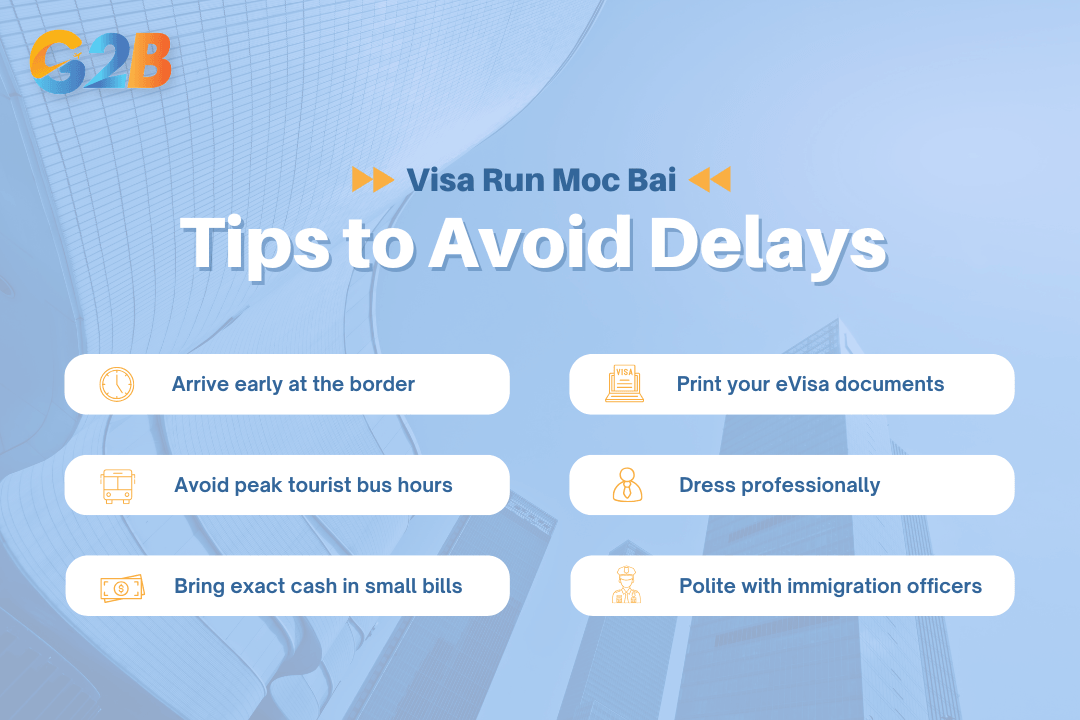
Tips to avoid delays during a Moc Bai visa run
When is the best time to go to the Moc Bai border?
The best time to go to the Moc Bai border is midweek during the early morning hours. Avoiding weekends and holidays minimizes your queue time.
What are the standard operating hours?
The Moc Bai border gate operates daily from 6:00 AM to 10:00 PM. You must complete both the exit and entry processes within these hours. If you exit Vietnam at 9:50 PM, you risk being locked out in the neutral zone until the next morning.
Which days are best to cross?
Tuesday, Wednesday, and Thursday are the best days to cross. Border traffic remains light during the middle of the week. Fridays and Sundays see heavy traffic from expats and tourists completing weekend runs.
How do holidays affect border crossings?
National holidays cause severe delays, staff shortages, and massive crowds at the border. The Lunar New Year (Tet) creates the worst border conditions of the year. Avoid doing a visa run during Tet, Independence Day, or Liberation Day.
How does a Moc Bai visa run compare to flying out?
A Moc Bai visa run costs less but takes more physical effort compared to flying out of Vietnam. Both methods achieve the same legal result.
How do costs compare?
A land border run costs around $70 USD total, while a regional flight run costs over $150 USD. Flights require airport transport, airline tickets, and higher food costs.
| Metric | Moc Bai Border Run | Regional Flight Run (e.g., Bangkok) |
|---|---|---|
| Total Cost | $70 - $100 USD | $150 - $300 USD |
| Transport Time | 2 hours each way | 1.5 hours + 2 hours airport wait |
| Physical Effort | High (Walking in heat) | Low (Air-conditioned airport) |
How does processing speed compare?
A border run finishes in a single six-hour day trip, whereas flight runs often require an overnight stay. Booking a same-day turnaround flight causes suspicion at airline check-in counters.
What are the approval risks?
Airport immigration officers generally ask fewer questions than land border officers. Land borders see high volumes of "perpetual tourists," causing Moc Bai officers to scrutinize travel histories closely.
What are the alternatives to a Moc Bai visa run?
Alternatives to a Moc Bai visa run include applying for an eVisa extension, securing a business sponsor, or obtaining a Temporary Residence Card. These methods allow you to stay in Vietnam without traveling to a land border.
How does a Vietnam eVisa work?
A Vietnam eVisa grants foreigners up to 90 days of stay with single or multiple entries. You apply online via the National Web Portal on Immigration. You cannot extend an eVisa from inside the country. You must leave and return.
How do you extend a visa through a sponsor?
You extend a visa through a sponsor by having a legally registered Vietnamese company apply for a business visa on your behalf. This changes your status from a tourist to a business visitor.
What is a temporary residence card?
A Temporary Residence Card (TRC) grants foreign workers, investors, and spouses long-term legal status for up to three years. A TRC completely eliminates the need for visa runs. You need a valid Work Permit, an investment certificate, or a marriage certificate to qualify for a TRC.
Which other border crossings allow visa runs?
You can perform visa runs at other land borders like Ha Tien, Lao Bao, and Lao Cai. Ha Tien connects to Cambodia, Lao Bao connects to Laos, and Lao Cai connects to China. Moc Bai remains the most practical choice for foreigners living in southern Vietnam.
Frequently asked questions about the Moc Bai visa run
Can you return to Vietnam the same day?
Yes, you can return to Vietnam on the same day. Most travelers exit Vietnam, enter Cambodia, and re-enter Vietnam within a single hour.
Do you need a Cambodia visa?
Yes, you must obtain a Cambodia visa to complete the process. You apply for a Visa on Arrival at the Bavet checkpoint using exact USD cash.
Can you use an eVisa after the run?
Yes, you can use a newly issued eVisa to re-enter Vietnam. Ensure the eVisa explicitly lists "Moc Bai Landport" as the allowed entry gate.
Is the Moc Bai border open every day?
Yes, the Moc Bai border opens every day, including weekends and public holidays. The operating hours run strictly from 6:00 AM to 10:00 PM.
How many times can you do a visa run?
Vietnam law does not specify a hard limit on visa runs. However, immigration officers frequently deny entry to foreigners who attempt more than three consecutive runs.
What is the final checklist before your Moc Bai visa run?
The final checklist ensures you have the correct documents, cash, and transport details before leaving your home. Missing one item leads to a failed border crossing. Complete these steps the night before your trip:
- Check your passport validity for the six-month minimum requirement.
- Confirm your Vietnam eVisa lists Moc Bai as the entry port.
- Print two paper copies of your eVisa approval.
- Bring two passport-sized photos.
- Withdraw $30 USD in crisp bills for the Cambodia visa.
- Withdraw 1,000,000 VND for transport and food.
- Save your transport driver’s phone number.
The Moc Bai visa run serves as a practical solution for foreigners needing to reset their immigration status in Vietnam. By organizing exact cash, printing eVisa approvals, and dressing appropriately, travelers navigate the border checkpoints efficiently. Understanding the current regulations prevents unexpected fines and entry denials. Whether utilizing a private driver, a public bus, or a corporate service provider, careful preparation guarantees a legally compliant and successful return to Vietnam. For streamlined support in work permit / TRC / visa services, contact G2B for professional guidance and reliable assistance throughout every step of the application process.
