




 Delaware (USA)
  Vietnam
  Singapore
  Hong Kong
  United Kingdom
 How to convert a tourist visa to a business visa in Vietnam is a common question for foreign professionals. Vietnam requires foreigners to exit the country and re-enter with a new sponsored business visa. The Vietnam Immigration Department strictly enforces visa rules. Foreign nationals cannot change their visa status directly inside the country. Applicants must exit the territory, secure sponsorship from a registered company, and apply for a new DN visa. This article explains the requirements, application processes, associated costs, and legal pathways.
Can you convert a tourist visa to a business visa in Vietnam?
No, standard tourist visa (DL) cannot be directly converted to a business visa (DN) inside Vietnam without exiting. Vietnam allows limited direct in-country conversion from a tourist visa only if you obtain a work permit or investment certificate. Standard business visa (DN) applicants without these documents must exit Vietnam and re-enter. Circular 16/2024/TT-BCA (replacing provisions from Law No. 51/2019/QH14, updated by Immigration Law 2023) regulates visa conversion procedures. This regulation explicitly permits foreigners to change their visa purpose without leaving the country under very specific conditions. You qualify for an inland conversion if you meet one of the following criteria:
- You possess documents proving you are an investor (converting to a DT visa).
- You receive an invitation from a company and hold a valid work permit or work permit exemption (converting to an LD visa).
- You entered via an eVisa and subsequently obtained a valid work permit.
- You possess documents proving a family relationship with the sponsor.
A standard business visa (DN) applies to foreigners conducting short-term work without a formal labor contract or work permit. Because DN visa applicants lack these specific documents, they do not qualify for the legal exceptions mentioned above. Therefore, standard DN visa applicants must perform a visa run. The government prevents foreigners from bypassing proper background checks by enforcing this rule. The sponsoring company takes full legal responsibility for the foreign national during their stay.
Foreigners requiring a standard DN visa follow specific rules to complete the process:
- Exit the country before the current tourist visa expires.
- Obtain a sponsorship letter from a local enterprise.
- Apply for the business visa through an embassy or an eVisa portal.
- Re-enter Vietnam using the new business visa stamp.
Many foreigners use land border checkpoints to complete this exit and entry requirement. The Moc Bai border checkpoint connects southern Vietnam with Cambodia. The Lao Bao border checkpoint connects central Vietnam with Laos. Traveling to a neighboring country satisfies the exit condition set by the government. The applicant presents the new visa approval documents upon re-entry. The immigration officer verifies the sponsorship data in the national system before granting access.
What are the differences between a tourist visa (DL) and a business visa (DN)?
A tourist visa (DL) supports tourism activities without a sponsor, while a business visa (DN) supports work-related entry and requires a company sponsor. A DL visa prohibits commercial engagement. Tourists cannot sign business contracts or attend professional conferences. For example, a tourist can visit Ha Long Bay or stay in a hotel in Hanoi. They cannot, however, visit a factory to conduct quality control inspections. A foreign specialist evaluating a manufacturing plant requires a DN visa. A DN visa supports business meetings, contract negotiations, and site visits. The Vietnam Immigration Department separates the DN visa into two categories based on the sponsoring company type. The department issues DN1 visas for foreign nationals working with domestic businesses. The department issues DN2 visas for individuals offering services or establishing a commercial presence under international treaties to which Vietnam is a member. The table below compares the key features of both visa types:
| Visa Type | Purpose | Duration | Sponsor Required | Work Permission |
|---|---|---|---|---|
| DL | Tourism | Single/multiple entry, 15 - 90 days | No | No |
| DN1 | Business with domestic-invested company | Up to 12 months | Yes | Limited (no labor contract) |
| DN2 | Business with foreign-invested company or international treaties | Up to 12 months | Yes | Limited |
Foreigners must choose the correct visa category based on their activities. The tourist visa allows individuals to travel freely across provinces for leisure. The business visa requires the applicant to align their travel with the sponsoring company's registered business activities. Labor inspectors monitor foreign workers to ensure compliance. Operating a business or receiving a salary on a tourist visa violates national law.
Read more: DN1 vs DN2 Visa in Vietnam: Differences, Requirements, and Use Cases
Who qualifies for a Vietnam business visa (DN)?
A foreign national qualifies for a Vietnam business visa when a registered Vietnamese or foreign-invested company issues a formal sponsorship letter. The sponsoring company assumes legal responsibility for the applicant. The company must operate legally in Vietnam. The enterprise submits the NA2 form to the Vietnam Immigration Department. The company must hold a valid Business Registration Certificate (BRC). The applicant must hold a passport with at least six months of validity. The stated entry purpose must align perfectly with the DN classification rules.
To qualify for the business visa, the following conditions apply:
- Hold a valid passport with at least two blank pages.
- Receive an official invitation from a legally operating enterprise.
- Maintain a clean immigration record without prior deportations from Vietnam.
- Ensure the visit focuses entirely on business-related activities.
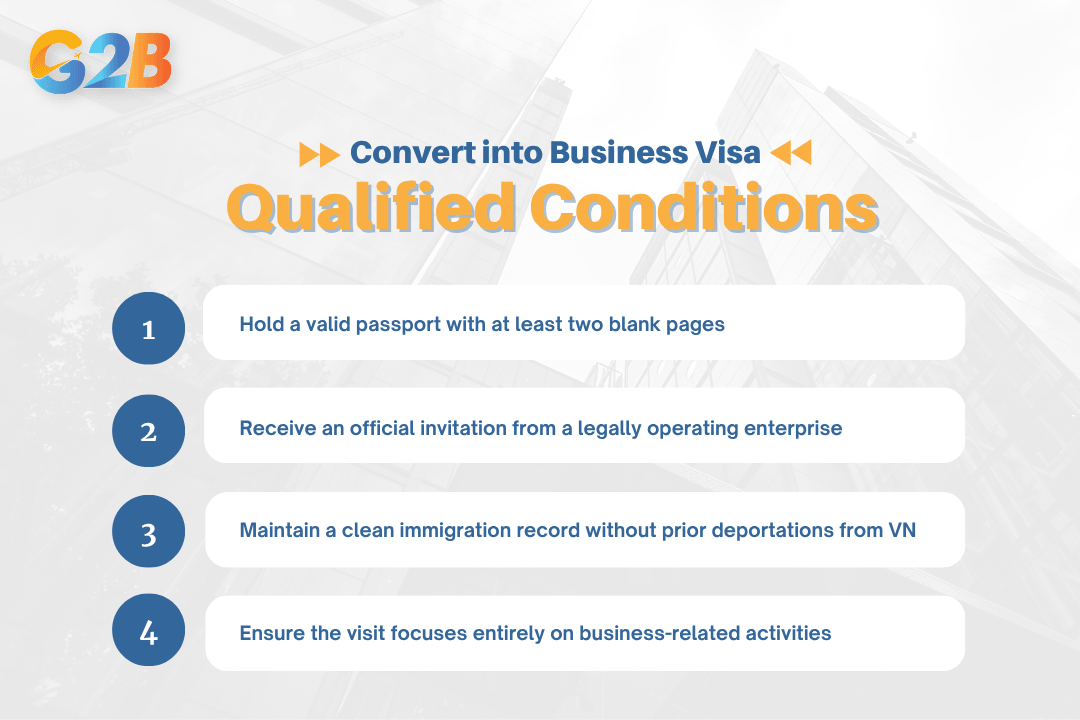
Applicants must meet several requirements to qualify for a Vietnam business visa
How do you convert a tourist visa to a business visa step-by-step?
You convert a tourist visa to a business visa by exiting Vietnam, securing company sponsorship, applying for the DN visa, and re-entering the country. This process requires careful timing. The applicant must not overstay the current tourist visa. The sponsoring company initiates the process while the applicant is still in Vietnam or after they exit. The immigration office processes standard applications in 3 to 7 working days.
Follow these steps to complete the visa conversion process:
- Exit Vietnam before the DL visa reaches its expiration date.
- Obtain a sponsorship letter (NA2 form) approved by the Vietnam Immigration Department.
- Apply for the DN visa at a Vietnamese embassy or via the eVisa system.
- Receive the visa approval letter if using the Visa on Arrival (VOA) route.
- Re-enter Vietnam and receive the DN visa stamp at the border checkpoint.
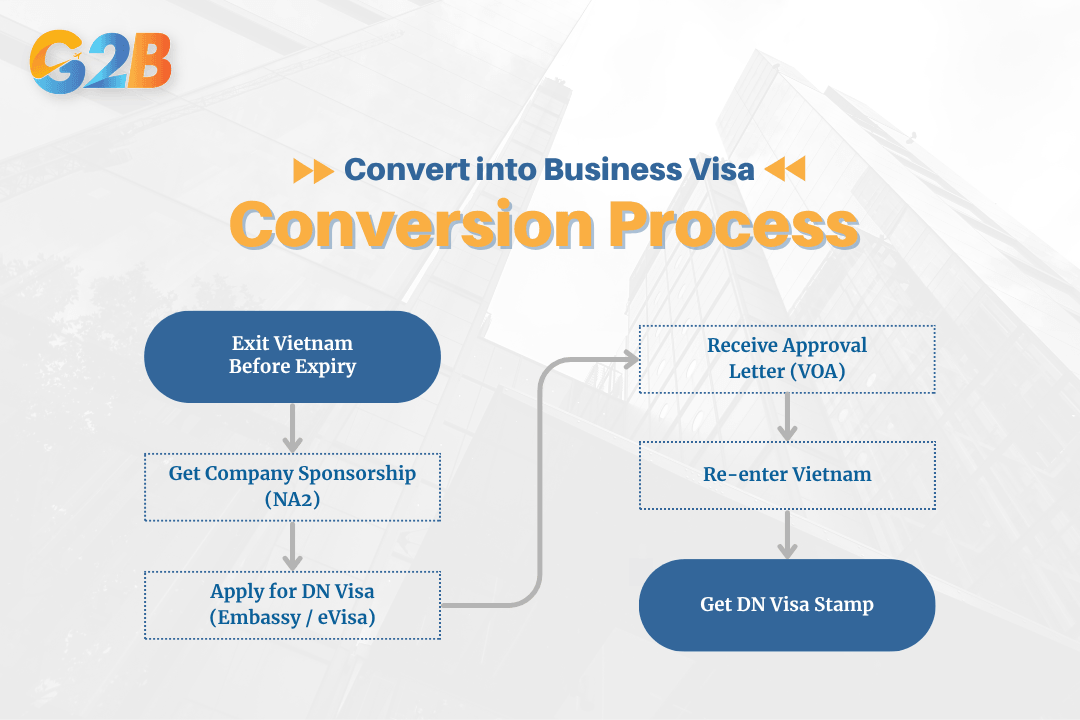
Applicants follow this process to convert a tourist visa to a business visa
Common exit points include Cambodia, Thailand, and Laos. Applicants flying out of Vietnam often visit Bangkok or Kuala Lumpur. Applicants using land borders often travel to Phnom Penh. Many applicants apply for the new eVisa while sitting in a hotel in a neighboring country. The applicant logs into the National Web Portal on Immigration. They upload their passport data page and a portrait photo. The portal generates an electronic code to track the application. The sponsoring company tracks the application status through the national immigration portal. Once the department issues the approval letter, the company sends a copy to the applicant. The applicant prints this letter and presents it to the border officials. The border officer verifies the barcode and stamps the new business visa into the passport.
What documents are required for a Vietnam business visa?
You need sponsor-issued documents and personal identification, including a valid passport, the NA2 sponsorship form, and the NA1 application form. Both the applicant and the sponsoring company must prepare specific paperwork. Missing documents cause application delays or rejections. The company submits its legal business profile to the immigration portal before requesting the visa.
The required documents include:
- Submit a passport with at least six months of validity and two blank pages.
- Provide the NA2 sponsorship form submitted by the company.
- Present the visa approval letter for Visa on Arrival applications.
- Fill out the completed NA1 application form.
- Attach two passport-sized photos (4x6 cm) with a white background.
- Include a certified copy of the company's business registration license.
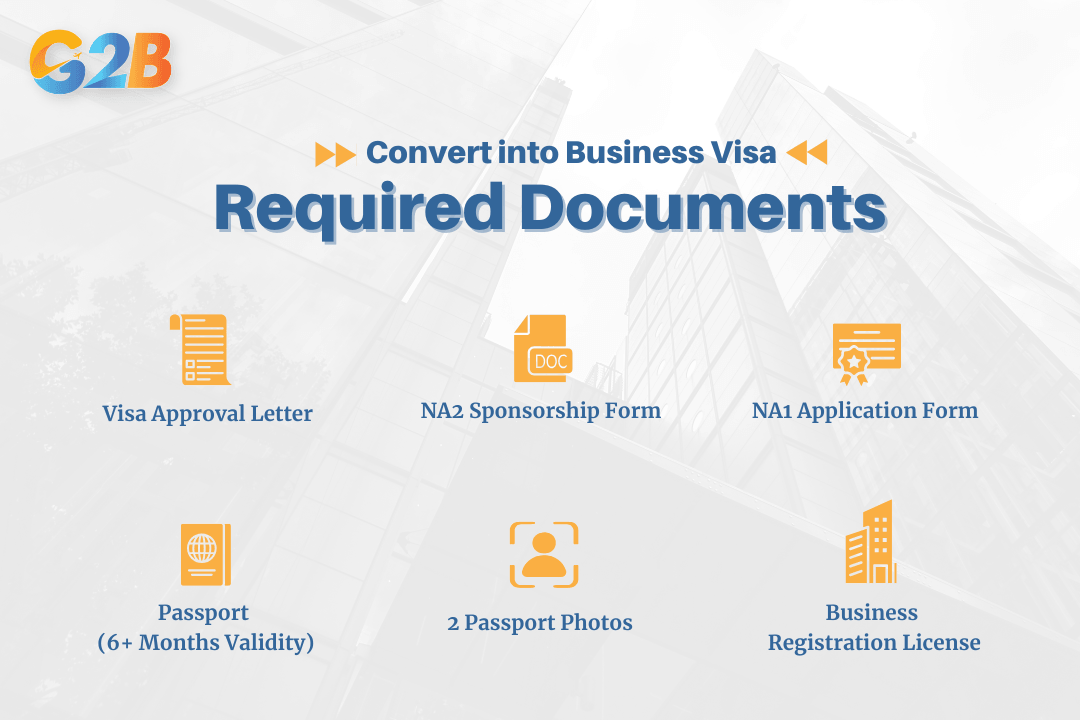
Business visa applications require many documents
The NA1 form requires personal details, travel history, religious affiliation, and the intended address in Vietnam. The applicant must sign the NA1 form directly in blue ink. The NA2 form requires the company director's signature and the official red company stamp. The immigration department requires the original forms or certified digital copies submitted through the electronic system. The photos must show the applicant's full face without glasses, taken within the last six months. The passport must not have torn or missing pages. Providing accurate information prevents entry denials at the border checkpoint.
What are the application methods for a Vietnam DN visa?
You can apply for a Vietnam DN visa via a Vietnamese embassy, a Visa on Arrival (VOA) at the airport, or the eVisa system. Each method offers different advantages and restrictions. The embassy application allows the applicant to receive the visa stamp before traveling. The Visa on Arrival (VOA) method requires an approval letter beforehand and airport stamping upon arrival. The eVisa system grants a 90-day single or multiple-entry visa for eligible nationalities. The table below outlines the different application methods:
| Application Method | Process | Processing Time | Best For |
|---|---|---|---|
| Embassy | Apply directly at the consulate | 5-7 days | High certainty, land borders |
| Visa on Arrival (VOA) | Get an approval letter, stamp at the airport | 3-5 days | International airports only (Noi Bai, Tan Son Nhat, Da Nang, Cam Ranh) |
| eVisa | Apply online | 3-5 days | 90-day single/multiple entry for eligible nationalities |
The VOA method works only at designated international airports. These include Noi Bai in Hanoi, Tan Son Nhat in Ho Chi Minh City, Da Nang International Airport, and Cam Ranh in Nha Trang. Upon landing, the applicant approaches the Landing Visa counter before passing through passport control. They submit their passport, the printed approval letter, the NA1 form, and the stamping fee. The officers call the applicant's name once the visa is stamped. Land border crossings require a pre-stamped visa from an embassy or a valid eVisa. The eVisa limits the stay to 90 days but removes the need for complex paperwork. The company still acts as the guarantor for the eVisa.
How much does it cost to convert to a business visa in Vietnam?
The total cost to convert to a business visa ranges from $50 to $300, depending on the application method, duration, and urgency. Applicants pay fees to the government and service providers. The cost fluctuates based on the visa duration and the number of entries allowed. A single-entry visa costs less than a multiple-entry visa. The standard costs include:
- Pay the visa stamping fee directly to the immigration officer ($25 for single entry, $50 for multiple entries).
- Pay the service or agency fee for processing the approval letter ($20 to $150).
- Cover the sponsorship fee, which varies depending on the sponsoring company's policy.
- Expect a 30% to 100% cost increase for urgent processing requests.
The government portal processes eVisas for a non-refundable $25 fee, payable via international credit card. The Visa on Arrival method requires a stamping fee paid in exact cash (USD or VND) at the airport. Immigration officers do not accept credit cards or foreign currencies other than US Dollars or Vietnamese Dong for the stamping fee. Applicants using the embassy route pay the fee directly to the consulate, which varies by country and local currency rates. Travel expenses for the border run also add to the overall cost. Bus tickets to Cambodia cost around $25 to $35. Flights to Thailand cost between $100 and $250. Foreigners must budget for these travel expenses when planning the visa conversion.
What risks exist when converting a tourist visa to a business visa?
Overstaying your tourist visa, using a fake sponsorship, and engaging in the wrong activities cause severe penalties, including fines and deportation. Immigration authorities monitor foreign activities closely. Violating visa conditions results in immediate legal action. The government issues administrative fines based on the severity of the violation. The main risks include:
- Pay overstay fines ranging from $10 to $50 per day.
- Face blacklisting and entry bans for submitting fake sponsorship documents.
- Risk deportation for working illegally on a tourist visa.
- Face entry denial after conducting repeated border runs without proper documentation.
Using a "ghost company" to sponsor a business visa violates Vietnamese law. The immigration department inspects company addresses to verify their existence. The immigration database flags passports connected to immigration violations. If the government detects a fake sponsor, they cancel the visa immediately and issue a deportation order. Overstaying a tourist visa by a few days requires a simple administrative fine at the airport exit counter. Overstaying by several months leads to a forced exit and a multi-year entry ban. Conducting multiple back-to-back visa runs in a short period raises suspicion. Immigration officers question travelers who lack proper long-term documentation. Maintaining legal compliance protects the foreigner's right to work and live in Vietnam.
What are the alternatives to converting a tourist visa in Vietnam?
Foreigners can apply directly for long-term legal stay options like a Temporary Residence Card (TRC), a work visa, or an investor visa. A business visa serves short-term needs. Professionals seeking long-term employment or business operations explore other legal routes. These alternatives provide more stability and allow foreigners to open bank accounts or rent long-term apartments. Choosing a long-term visa eliminates the need for frequent border runs and provides legal grounds to sponsor dependent family members. The primary alternatives include:
- Apply for a Temporary Residence Card (TRC) linked to a valid work permit.
- Secure a work visa (LD1, LD2) for official employment with a Vietnamese company.
- Obtain an investor visa (DT1 - DT4) by contributing capital to a registered enterprise.
- Request an eVisa extension in specific, limited cases approved by immigration.
The LD1 visa applies to foreigners who possess a work permit exemption certificate. The LD2 visa applies to foreigners who require a standard work permit. A TRC lasts between two and five years, depending on the visa category. The investor visa duration depends on the amount of capital contributed to the company. DT1 visas require a major investment, while DT4 visas apply to smaller investments. The TRC allows foreigners to sponsor their spouse and children for a TT dependent visa.
Read more: TRC for Family in Vietnam
What are the frequently asked questions about the Vietnam visa conversion?
Foreign nationals often have specific questions regarding the rules, timelines, and legalities of changing their visa status in Vietnam. The following sections address the most common inquiries.
Can you change your visa type without leaving Vietnam?
No, you must exit in most cases, including standard DL to DN. The immigration law mandates a border run. Foreigners exit a neighboring country and re-enter with the newly approved visa category. The only exceptions apply to foreign investors changing to an investor visa, foreigners marrying a Vietnamese citizen, or workers receiving a formal work permit while holding a valid business visa. Normal business and tourist visa changes require a physical exit to update the entry record in the immigration system.
How long does the DN visa last?
A DN business visa lasts up to 1 year per entry, depending on the duration requested by the sponsoring company. Immigration authorities grant the visa length based on the company's justification. A 90-day visa is the most common starting point for business visitors using the eVisa portal. Companies can apply for 6-month or 12-month visas if they prove long-term business needs through the traditional embassy or VOA route. The passport validity must exceed the visa duration by at least one month.
Can you work on a business visa in Vietnam?
No, a DN business visa does not replace a valid work permit and does not allow full-time employment. The DN visa permits short-term tasks like attending meetings, negotiating contracts, and exploring investments. Executing a formal labor contract requires an LD work visa and a work permit issued by the Department of Labor, Invalids and Social Affairs. Working without a permit leads to severe fines for both the employee and the employer.
Is a visa run legal in Vietnam?
Yes, a visa run is legal in Vietnam, but repeated border runs increase the risk of entry denial. Immigration officers scrutinize individuals who frequently exit and re-enter on back-to-back short-term visas. The government designed visas for specific timeframes. Attempting to live in Vietnam permanently on consecutive short-term visas violates the spirit of the law. Securing a proper long-term visa reduces this risk and ensures smooth border crossings.
Converting a tourist visa to a business visa in Vietnam requires careful planning and strict adherence to immigration laws. Foreigners must secure reliable company sponsorship, complete a border run, and submit accurate paperwork to the authorities. Understanding the differences between visa categories prevents illegal employment and costly fines. Managing the application process correctly ensures a secure legal status for professional activities. Companies and foreign experts must collaborate to gather the NA1 and NA2 forms efficiently. Exploring long-term alternatives like work visas or investor visas offers greater stability for those operating in the country. For tailored support in navigating these procedures, G2B provides professional services for work permit / TRC / visa applications, ensuring a compliant and efficient process for employers and foreign employees.
