




 Delaware (USA)
  Vietnam
  Singapore
  Hong Kong
  United Kingdom
 Vietnam visa exemption allows foreigners from specific countries to enter and stay in Vietnam without applying for a visa. The Vietnamese government implements this policy to promote international tourism, facilitate business travel, and support diplomatic relations. Travelers receive automatic entry permission at border checkpoints based on their nationality, passport type, and travel purpose.
What is Vietnam visa exemption?
Visa exemption in Vietnam means eligible foreign travelers can enter the country without a pre-arranged visa. The Vietnam Immigration Department grants a temporary stay stamp directly at the border checkpoint. This policy removes the need for embassy visits or online applications before travel. The government grants these visa-free entry rights based on unilateral policies or bilateral agreements. Travelers receive temporary stay permissions strictly for tourism, transit, or short-term business visits. Visitors must comply with all immigration compliance requirements during their stay. Foreigners cannot engage in paid employment without proper work permits. Immigration officers hold the authority to deny entry if travelers violate these conditions.
Who can enter Vietnam without a visa?
Citizens from unilaterally or bilaterally exempt countries can enter Vietnam without a visa. Holders of specific diplomatic passports and overseas Vietnamese with valid exemption certificates also qualify for visa-free entry. The Vietnam Immigration Department categorizes eligible travelers into specific legal groups. Foreigners must meet the exact criteria for their respective group. Eligible travelers include:
- Hold ordinary passports from visa-exempt countries
- Travel under bilateral diplomatic agreements
- Present official government passports
- Use a 5-year visa exemption certificate as overseas Vietnamese or eligible relatives
Is visa exemption different from an eVisa?
Yes, visa exemption requires no application and applies only to specific nationalities. The Vietnam eVisa requires an online application, payment of a government fee, and prior approval before arrival. Travelers rely on exemption for short, spontaneous trips. The eVisa serves travelers who need longer stays or hold passports from non-exempt countries. The eVisa allows a maximum stay of 90 days with multiple entries. Exemption durations vary strictly by nationality and bilateral agreements.
What are the differences between visa exemption and Vietnam eVisa?
Visa exemption grants automatic entry for selected nationalities at no cost. The eVisa requires a formal application, government fee payment, and processing time for a wider range of nationalities.
| Feature | Visa exemption | Vietnam eVisa |
|---|---|---|
| Application Required | No | Yes |
| Entry Approval | Automatic | Pre-approved |
| Eligible Nationalities | Limited countries | Wider eligibility |
| Duration | Country-dependent | Fixed validity (up to 90 days) |
| Fees | No visa fee | Government fee applies |
Which countries are exempt from Vietnam visa requirements?
This part provides an overview of the countries eligible for Vietnam visa exemption policies. Foreign travelers should carefully review the applicable exemption conditions and permitted stay durations before entering Vietnam.
Which countries receive unilateral Vietnam visa exemption?
Vietnam granted a 45-day unilateral exemption (announced August 2023) for ordinary passport holders of 13 countries: Germany, France, Italy, Spain, United Kingdom, Japan, South Korea, Denmark, Sweden, Norway, Finland, Belarus, and Russia. This exemption applies to ordinary passports and is subject to the specific conditions and permitted stay purposes set by Vietnamese authorities (e.g., tourism, short-term business).
| Country | Maximum Stay |
|---|---|
| Germany | 45 days |
| France | 45 days |
| Italy | 45 days |
| Spain | 45 days |
| United Kingdom | 45 days |
| Japan | 45 days |
| South Korea | 45 days |
| Denmark | 45 days |
| Sweden | 45 days |
| Norway | 45 days |
| Finland | 45 days |
| Belarus | 45 days |
| Russia | 45 days |
Which ASEAN countries receive visa-free access to Vietnam?
Vietnam provides visa-free access to citizens of all nine other ASEAN member states. The maximum stay ranges from 14 to 30 days based on bilateral regional agreements. ASEAN countries promote regional travel through mutual visa waivers. Travelers from these nations present their ordinary passports at the border to receive an entry stamp. The Vietnam Immigration Department calculates the stay limit based on the specific country of citizenship.
Which countries have bilateral visa exemption agreements with Vietnam?
Vietnam holds bilateral visa exemption agreements with over 80 countries. Most of these agreements apply strictly to holders of diplomatic or official passports. Diplomatic and reciprocal agreements allow government officials to travel freely. A few bilateral agreements also cover ordinary passports. For example, citizens of Chile and Panama enjoy bilateral visa-free entry on ordinary passports for 90 days. The Ministry of Foreign Affairs publishes the updated list of bilateral agreements. Travelers must verify their specific passport eligibility differences before booking flights. Ordinary passport holders cannot use diplomatic exemptions.
What are the requirements for Vietnam visa-free entry?
The following part outlines the general requirements for entering Vietnam under visa exemption policies. Foreign travelers should ensure that they satisfy all applicable entry conditions before relying on visa-free access to Vietnam.
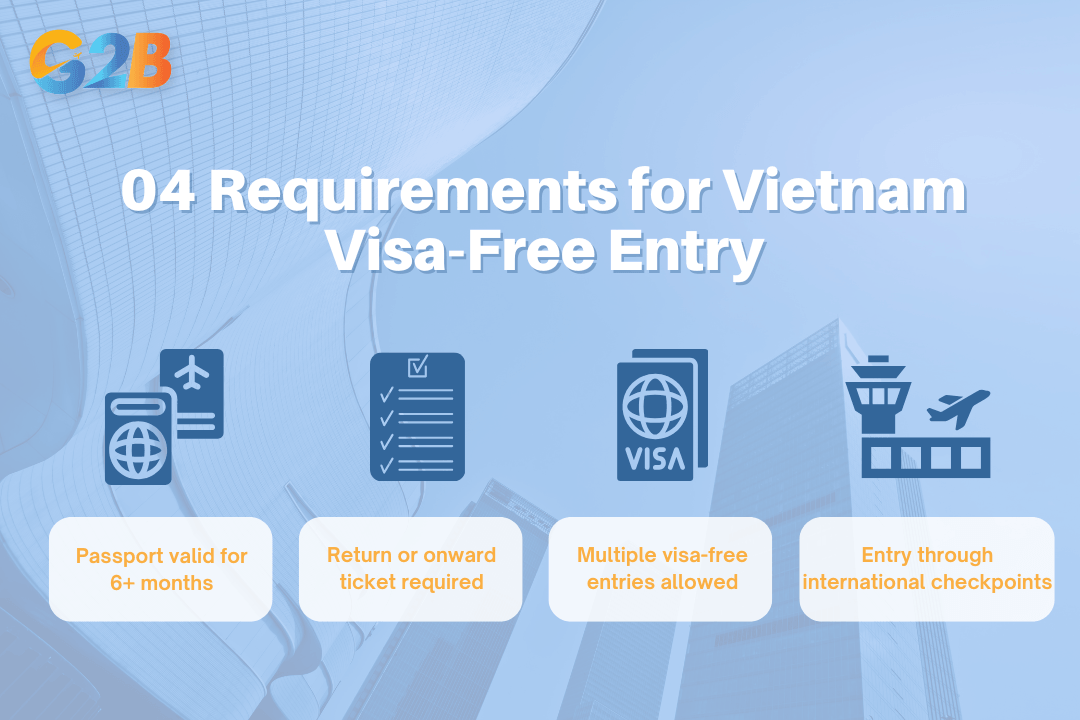
04 requirements for Vietnam visa-free entry
What passport validity is required for visa exemption?
Foreigners must present a passport valid for at least six months from the date of entry into Vietnam. The passport must also contain at least two blank pages for immigration stamps. The Vietnam Immigration Department enforces strict passport rules. Airlines check passport validity before boarding. Travelers with passports expiring in less than six months face boarding denials. Damaged or altered passports also result in entry refusal at the border checkpoints.
Do travelers need proof of onward travel?
Yes, visa-exempt travelers must show proof of onward travel. Immigration officers and airline staff ask for a return flight ticket or a confirmed ticket to a third country. Airline boarding verification practices require staff to confirm departure plans. The departure date on the ticket must fall within the allowed visa-free period. Travelers who fail to provide this proof often face entry refusal at the departure airport. Land border officers also request bus or train tickets proving departure.
Can travelers enter Vietnam multiple times visa-free?
Yes, eligible travelers can enter Vietnam multiple times using visa exemption. The Vietnamese government removed the previous 30-day waiting period between consecutive visa-free visits. Travelers can leave Vietnam and return immediately to receive a new visa-free stay stamp. This process supports regional travel itineraries. Immigration officers monitor frequent border runs to prevent illegal employment or unauthorized long-term residency. Officers hold the right to question travelers performing continuous border runs.
Which entry checkpoints accept visa-exempt travelers?
Visa-exempt travelers can enter Vietnam through all international checkpoints. This includes international airports, international land borders, and designated international seaports. The Vietnam Immigration Department staffs these checkpoints. Visitors present their documents to the officers upon arrival. There are no restrictions on the port of entry for visa exemption. This differs from the eVisa system, which limits entry to specific registered borders.
How long can foreigners stay in Vietnam without a visa?
The following part explains the permitted stay duration for foreigners entering Vietnam under visa exemption policies. The length of visa-free stay may vary depending on the traveler’s nationality and the applicable exemption category.
What is the maximum visa-free stay duration?
The maximum visa-free stay duration depends entirely on the traveler's nationality. Unilateral exemptions allow 45 days, while ASEAN exemptions allow between 14 and 30 days. The entry day counts as day one of the total stay. Immigration officers stamp the allowed duration and the mandatory exit date directly into the passport. Travelers must leave Vietnam on or before the stamped exit date. Calculating the exact duration prevents accidental overstays.
Can travelers extend a visa exemption stay in Vietnam?
Travelers generally cannot extend a standard visa exemption stay within Vietnam for tourism. Foreigners who secure legal employment can convert their status to a business visa. The Vietnam Immigration Department restricted standard tourist extensions to prevent policy abuse. Travelers wanting a longer stay usually leave the country and re-enter.
What happens after the visa-free period expires?
Travelers who stay past their exit date face overstay penalties. The Vietnam Immigration Department imposes administrative fines based on the number of overstayed days. Short overstays result in fines paid at the airport exit counter. Extended overstays lead to serious legal consequences. Authorities add repeat offenders to the immigration blacklist. Severe cases involve possible deportation risks and bans from re-entering Vietnam. Officers calculate the fines per day according to state regulations.
Does Vietnam offer visa exemption for overseas Vietnamese?
The following part addresses whether Vietnam provides visa exemption policies for overseas Vietnamese. This section helps clarify the applicable entry conditions and eligibility rules for individuals of Vietnamese origin living abroad.
What is the Vietnam 5-year visa exemption certificate?
The 5-year visa exemption certificate is issued to eligible overseas Vietnamese and their family members by Vietnamese competent authorities (Ministry of Foreign Affairs via Vietnamese missions). It normally allows multiple entries with maximum stay up to 180 days per visit and is valid for five years or until passport expiry. The Ministry of Foreign Affairs and overseas consulates issue this document. The certificate remains valid for five years or until the holder's passport expires. It acts as a long-term multiple-entry visa waiver. This certificate exists as a physical booklet or a sticker placed inside the foreign passport.
Who qualifies for the 5-year visa exemption?
Overseas Vietnamese who hold foreign passports qualify for the 5-year exemption. Foreign spouses and foreign children of Vietnamese citizens or overseas Vietnamese also meet the eligibility criteria. Applicants must prove their Vietnamese origin or their family relationship to a Vietnamese citizen. This policy encourages the Vietnamese diaspora to visit relatives, manage local properties, and invest in the local economy. The government defines the exact relationship boundaries required for approval.
What documents are required for the 5-year exemption certificate?
Applicants must submit their foreign passport, proof of Vietnamese origin, and a completed application form. Relatives must provide marriage certificates or birth certificates to prove their family ties. Required steps include:
- Provide a valid foreign passport
- Submit proof of Vietnamese origin
- Attach family relationship documents
- Complete official application forms
- Provide recent passport-sized photos
- Pay the certificate processing fee
Can travelers use Vietnam visa exemption for business trips?
The following part explores whether Vietnam visa exemption can be used for business travel purposes. This section provides additional clarification on how visa-free entry applies to different types of short-term visits to Vietnam.
Does visa exemption allow business activities?
Yes, travelers can use visa exemption for short-term business visits. Allowed activities include attending meetings, signing contracts, and visiting local trade exhibitions. The Vietnam Immigration Department permits basic commercial exploration under this temporary status. However, the government enforces strict employment restrictions. Visitors cannot receive a salary from a Vietnamese company while using a visa exemption stamp. Short-term business visitors must adhere to local commercial regulations.
Which activities require a work permit or business visa?
Foreigners must obtain a work permit and a proper business visa for long-term employment. Paid labor, corporate relocation, and extended commercial operations fall strictly outside visa exemption rules. Vietnam strictly regulates the local labor market. Foreigners working illegally face immediate deportation and company fines. Utilizing professional services prevents severe legal disruptions to business operations.
How does Vietnam visa exemption work at airports?
The following part explains how Vietnam’s visa exemption policy is applied at airports. This section provides a general overview of the entry process and what travelers can expect upon arrival in Vietnam.
What documents do immigration officers check?
Immigration officers check the traveler's original passport and proof of onward travel. Officers occasionally ask for accommodation details and verbal entry declarations. The process takes only a few minutes. The officer verifies the traveler's nationality against the official exemption list. The officer then stamps the passport with the entry date and the legally required departure date. Travelers must secure this stamp before entering the baggage claim area.
Which Vietnam airports process visa-free travelers?
All major international airports in Vietnam process visa-free travelers. Visitors simply proceed to the regular immigration counters upon landing.
| Airport | City |
|---|---|
| Noi Bai International Airport | Hanoi |
| Tan Son Nhat International Airport | Ho Chi Minh City |
| Da Nang International Airport | Da Nang |
| Cam Ranh International Airport | Nha Trang |
| Phu Quoc International Airport | Phu Quoc |
Can travelers combine visa exemption and eVisa entry?
The following part discusses whether travelers can combine visa exemption with eVisa entry when visiting Vietnam. This section provides general clarification on how different entry options may be applied in practice.
When should travelers choose an eVisa instead of visa exemption?
Travelers should choose an eVisa when they plan to stay longer than their visa-free limit. The eVisa also suits travelers who require a multiple-entry permit for an extended period. The 45-day exemption serves most short-term tourists. Digital nomads and extended travelers prefer the 90-day eVisa. Citizens of non-exempt countries must always apply for an eVisa before arrival. The eVisa provides guaranteed stay durations regardless of short-term policy shifts.
Can travelers re-enter Vietnam using an eVisa after visa-free entry?
Yes, travelers can re-enter Vietnam using an approved eVisa immediately after finishing a visa-free stay. Travelers must leave the country and re-enter to activate the eVisa stamp. This sequential entry option provides flexibility for long-term travelers. Foreigners must ensure strict compliance with immigration regulations during border runs. Authorities monitor entry patterns to prevent illegal residency. Leaving the country via a land border and returning the same day remains a legal method to switch from exemption to eVisa status.
What are common mistakes with Vietnam visa exemption?
The following part highlights some common mistakes travelers may make when using Vietnam visa exemption. This section helps readers better understand typical issues that can affect entry and stay compliance in Vietnam.
Why are some travelers denied boarding or entry?
Travelers face denied boarding if their passport expires in less than six months. Missing onward travel proof and an incorrect understanding of stay durations also cause entry refusals. Airlines hold legal responsibility for verifying passenger documents. They deny boarding to avoid fines from the Vietnamese government. Some travelers mistakenly assume they receive 45 days, but their specific nationality only allows 14 or 30 days. Unauthorized activities, like past overstays, also flag travelers in the digital immigration system.
How can travelers avoid overstaying in Vietnam?
Travelers avoid overstaying by tracking their exact entry and exit dates. They must verify the exit stamp provided by the immigration officer upon arrival:
- Check nationality-specific rules before departure
- Track entry dates carefully using the passport stamp
- Calculate the exit date counting the arrival day as day one
- Apply for business visa conversions early if eligible
- Maintain valid travel documents at all times
- Book departure tickets well before the maximum stay expires
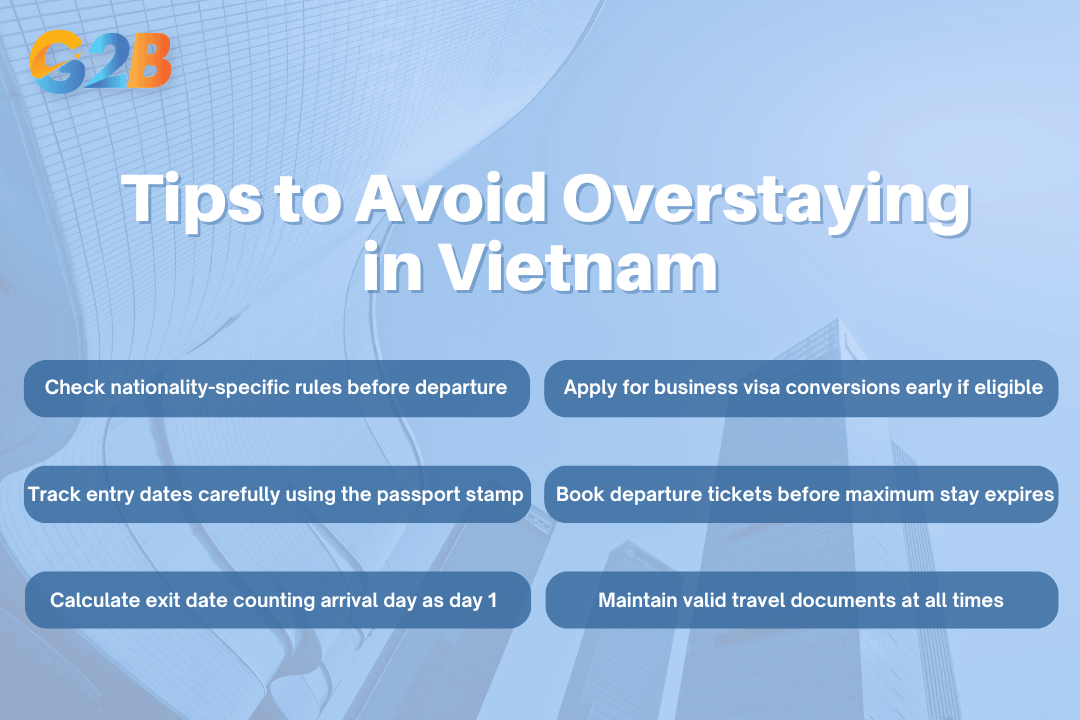
Travelers avoid overstaying by tracking their exact entry and exit dates
What recent changes affect Vietnam visa exemption policies?
This part outlines recent updates and changes related to Vietnam visa exemption policies. The section provides general context on how new regulations may impact eligible travelers entering Vietnam.
Has Vietnam expanded visa-free access recently?
Yes, Vietnam expanded visa-free access in August 2023. The government extended the unilateral exemption period from 15 days to 45 days for 13 designated countries. The National Assembly approved these policy changes to boost tourism recovery initiatives. This extension matches or exceeds the visa-free durations offered by neighboring countries. The Ministry of Culture, Sports and Tourism strongly supported this international tourism strategy. The change drastically increased European and Asian tourist arrivals.
How do Vietnam’s visa policies support tourism and investment?
Relaxed visa policies increase international arrivals and stimulate the local economy. Extended stay limits support business travel and improve regional competitiveness for foreign direct investment. Easier entry rules encourage tourists to spend more time and money in Vietnam. Business professionals face fewer administrative hurdles when planning market visits. Free entry limits upfront operational barriers.
What is the difference between Vietnam visa exemption, eVisa, and visa on arrival?
The following part explains the differences between Vietnam visa exemption, eVisa, and visa on arrival. This section provides a general comparison to help travelers better understand the available entry options for Vietnam.
How do Vietnam entry options compare?
Visa exemption requires no prior approval, while both eVisa and Visa on Arrival require advance processing. The eVisa operates entirely online, whereas Visa on Arrival requires a physical approval letter.
| Feature | Visa exemption | eVisa | Visa on arrival |
|---|---|---|---|
| Pre-approval needed | No | Yes | Yes |
| Eligible nationalities | Selected countries | Broad list | Limited use |
| Maximum stay | Country-specific | Government-defined | Approval-defined |
| Entry purpose | Tourism/business | Multiple purposes | Mostly business/tourism |
| Government fee | No visa fee | Paid online | Approval + stamping fees |
Vietnam visa exemption FAQs
The following part provides answers to some frequently asked questions about Vietnam visa exemption. This section helps clarify common concerns and provides additional guidance for travelers planning their entry into Vietnam.
Can US citizens enter Vietnam visa-free?
No, US citizens cannot enter Vietnam visa-free with an ordinary passport. US citizens must apply for a Vietnam eVisa or possess a 5-year visa exemption certificate.
Can Indian passport holders use Vietnam visa exemption?
No, Indian passport holders do not currently receive standard visa exemption in Vietnam. Indian citizens must apply for an eVisa before traveling to Vietnam.
Is travel insurance required for visa-free entry?
Vietnam does not legally require travel insurance for visa-free entry. However, the government strongly recommends comprehensive medical insurance to cover unexpected healthcare costs.
Can travelers work in Vietnam during a visa-free stay?
No, travelers cannot engage in paid employment in Vietnam during a visa-free stay. Foreign workers must obtain a work permit and a sponsored business visa.
Can visa-free visitors open a bank account in Vietnam?
Generally, visa-free visitors cannot open a standard local bank account in Vietnam. Banks require a valid long-term visa or temporary resident card for account creation.
Does Vietnam visa exemption apply to cruise passengers?
Yes, cruise passengers from visa-exempt countries enter Vietnam without a visa. The cruise operator usually coordinates border checks with the local seaport immigration authorities.
Can travelers extend visa-free stays online?
No, travelers cannot extend a visa-free stay online. Foreigners generally must leave the country and re-enter, or visit an immigration office for legal status conversion.
Are children eligible for Vietnam visa exemption?
Yes, children from eligible countries receive visa exemption. Children must have their own valid passport or be officially registered on their parent's passport.
Can travelers enter Vietnam through any border checkpoint?
Yes, visa-exempt travelers can enter through any international airport, seaport, or land border. Immigration officers process these entries at all official international checkpoints.
Does Vietnam visa exemption guarantee entry approval?
No, visa exemption does not guarantee entry approval. The Vietnam Immigration Department retains the final authority to deny entry based on security concerns or incomplete documents.
How to check official Vietnam visa exemption updates
This part explains how travelers can check official updates on Vietnam visa exemption policies. The section provides general guidance on where to find reliable and up-to-date immigration information.
Which government sources publish Vietnam visa rules?
The Vietnam Immigration Department and the Ministry of Foreign Affairs publish official visa rules. Vietnamese embassies and consulates also provide localized updates for specific countries. Travelers access these resources directly through official government portals:
- Consult the Vietnam Immigration Department portal
- Read official announcements from the Ministry of Foreign Affairs
- Contact local Vietnamese embassies and consulates
- Verify airline databases during flight booking
Why should travelers verify visa exemption updates before departure?
Travelers must verify updates because immigration rules change periodically. Governments adjust bilateral agreements, and airlines enforce strict boarding rules based on the latest international guidelines. Relying on outdated information causes missed flights and ruined itineraries. Airline systems sync with official immigration databases to verify passenger eligibility. All clients should double-check their entry eligibility exactly one week before their departure flight. Proactive verification prevents unexpected legal issues at the border.
Vietnam’s visa exemption policy offers significant convenience for eligible foreign travelers by reducing entry procedures and supporting smoother travel experiences. However, visa-free entry still comes with specific immigration requirements regarding passport validity, permitted stay duration, and travel purposes. Understanding the applicable exemption categories and complying with Vietnam’s immigration regulations is essential for avoiding legal issues during your stay. Whether traveling for tourism, family visits, or short-term business activities, foreign visitors should carefully review the latest visa exemption conditions before entering Vietnam. For streamlined support in work permit / TRC / visa services, contact G2B for professional guidance and reliable assistance throughout every step of the application process.
