




 Delaware (USA)
  Vietnam
  Singapore
  Hong Kong
  United Kingdom
 Key deportation cases in this article provide foreign nationals with guidance to understand immigration laws, defend their rights, and resolve visa violations. Immigration issues trigger deportation processes. Common triggers for deportation include immigration violations, visa issues, missing work permits, and criminal proceedings. Vietnam manages these cases strictly under the law on entry, exit, transit, and residence of foreigners in Vietnam.
What is deportation in Vietnam?
Deportation in Vietnam forces a foreign national to leave the country because they violated administrative rules, immigration laws, or the criminal code. The government cancels the foreigner's right to reside in Vietnam and enforces their immediate exit.
How does Vietnamese law define deportation?
Pursuant to the Law on Handling Administrative Violations 2012 (as amended and supplemented in 2020) and the Penal Code 2015 (as amended and supplemented in 2017), deportation is a sanction imposed on individuals who violate Vietnamese laws, requiring them to leave Vietnam for a specified period or permanently, depending on the nature and seriousness of the violation committed. The government applies this penalty through administrative sanctions or court judgments. Authorities base deportation decisions on specific legal frameworks. The legal system categorizes deportation in three main ways:
- Deportation as an administrative sanction: Immigration officers issue a deportation order when foreigners overstay visas or work without permits.
- Deportation linked to criminal sentencing: Courts order deportation as a main or supplementary penalty for criminal convictions.
- Removal from Vietnam under immigration authority decisions: Government bodies force foreigners to leave if they pose a threat to national security or public order.
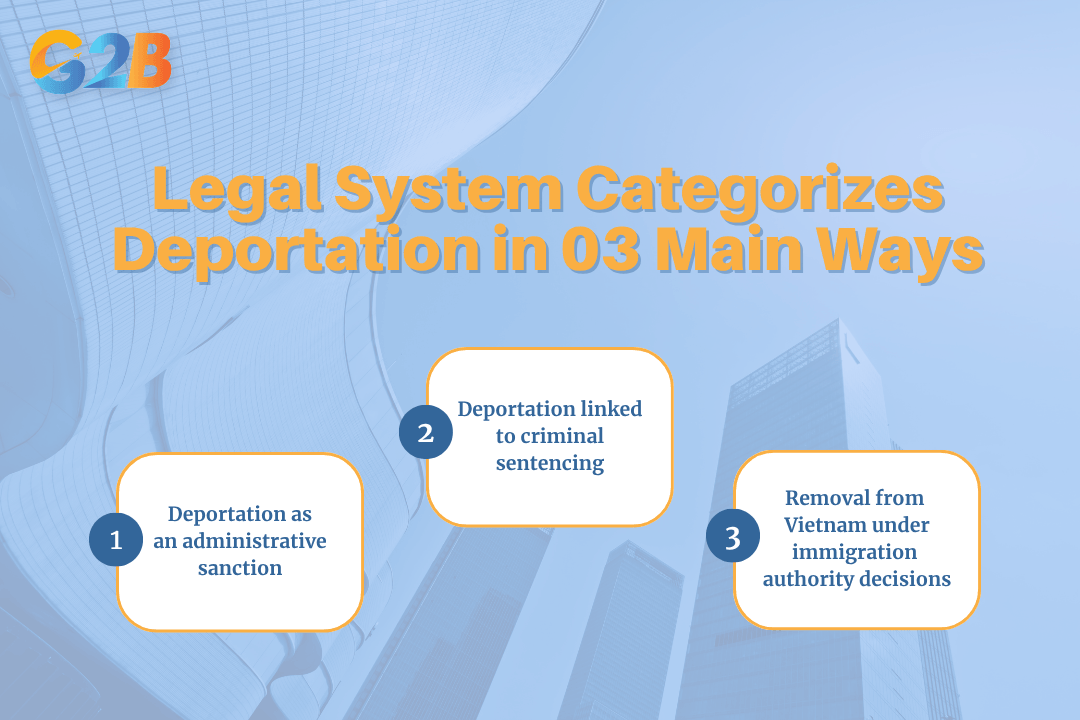
The legal system categorizes deportation in 03 main ways
Which authorities handle deportation cases in Vietnam?
The Ministry of Public Security and the Vietnam Immigration Department handle deportation cases for foreigners in Vietnam. Provincial immigration offices, border control agencies, and criminal courts also manage specific stages of the removal process. The government divides deportation responsibilities among several official bodies. The table below explains the roles of each authority:
| Government authority | Role in deportation cases |
|---|---|
| Ministry of Public Security (MPS) | Oversees national immigration policies and issues final deportation orders for serious cases. |
| Vietnam Immigration Department | Manages visa records, investigates violations, and processes administrative deportation files. |
| Provincial Immigration Management Offices | Handle local immigration violations, detain foreigners, and submit deportation requests to central authorities. |
| Courts | Issue deportation judgments during criminal proceedings. |
| Border Control and Exit Authorities | Enforce the exit order at airports and land borders to ensure the foreigner leaves the country. |
When is a foreigner deported from Vietnam?
A foreigner faces deportation from Vietnam when they commit immigration violations, engage in criminal activities, or breach administrative rules. The government cancels their legal status and requires them to exit the territory.
Which immigration violations may lead to deportation?
Immigration violations lead to deportation when foreigners ignore visa rules, enter the country illegally, or misuse their temporary residence status. Authorities penalize these actions heavily. Immigration officers investigate foreigners for several common violations. To maintain legal status, foreigners must avoid these actions:
- Overstay a valid visa or temporary residence card.
- Enter the country using false documents or fake passports.
- Work in Vietnam without a valid work permit or business visa.
- Violate temporary residence registration rules at local police stations.
- Misuse visa categories repeatedly, such as working on a tourist visa.
Which criminal cases result in deportation?
Criminal cases result in deportation when a court convicts a foreigner of a crime under the Vietnam Penal Code. The judge includes deportation as a legal penalty. Courts review the severity of the crime before issuing a deportation order. Common criminal triggers include:
- Serve a prison sentence followed by mandatory deportation
- Violate public order through violence or property damage
- Commit fraud-related offenses against businesses or individuals
- Engage in drug-related offenses, including possession and trafficking
- Face security-related allegations that threaten the national government
What are the administrative reasons for deportation?
Administrative reasons for deportation occur when foreigners fail to maintain valid residence documents or ignore official government notices. Immigration officers enforce removal for non-compliance. Administrative errors often result from carelessness or lack of legal knowledge. Authorities trigger deportation for the following administrative reasons:
- Hold expired residence documents for an extended period.
- Fail to comply with immigration notices or interview requests.
- Engage in unauthorized employment without proper employer sponsorship.
- Breach the original entry conditions approved by the immigration department.
What legal rights does a foreigner have during deportation proceedings in Vietnam?
Foreigners have the right to receive the deportation decision, hire a lawyer, request an interpreter, and contact their embassy. The law protects basic human rights during the removal process.
Do foreigners have the right to be informed of the decision?
Foreigners have the right to receive a written notice explaining the deportation decision and the exact legal grounds. Authorities must provide this document before enforcing the removal. The immigration department prepares the formal decision. This process includes:
- Issue written notice requirements to the foreigner.
- State the legal grounds and specific violated laws clearly.
- Explain the deadline for the foreigner to leave the country.
How does the right to legal representation work?
Foreigners can hire an immigration lawyer to defend their case, review documents, and communicate with the authorities. Legal representation helps protect the foreigner's rights. A lawyer provides essential support during legal procedures. Legal professionals offer the following services:
- Provide immigration lawyer support to explain local laws.
- Act as defense counsel during police investigations.
- Represent the foreigner in court for criminal cases.
Do foreigners have the right to translation and interpretation?
Vietnamese law grants foreigners the right to use an interpreter during official questioning and document reviews. This ensures the foreigner understands the legal proceedings. Language barriers cause misunderstandings during immigration cases. Translation rights include:
- Require language assistance during police questioning.
- Receive document explanation in the foreigner's native language.
- Sign translated statements to verify accuracy.
Can foreigners contact their embassy or consulate?
Foreigners have the right to contact their embassy or consulate immediately upon receiving a deportation notice or facing detention. Consular staff provide emergency support. Embassies assist their citizens in foreign legal systems. This right involves:
- Request consular notification from the detaining authorities.
- Receive passport and travel document support for the exit process.
- Obtain a list of local legal representatives.
Does a foreigner have the right to appeal or request a review?
Foreigners possess the right to appeal an administrative deportation decision or request a legal review within specific timeframes. This process challenges incorrect legal judgments. The law allows foreigners to contest government decisions. Foreigners use these options:
- File administrative complaints to the issuing government agency.
- Explore legal review options through the administrative courts.
- Submit evidence to prove the deportation decision lacks legal grounds.
What should you do first if you receive a deportation notice in Vietnam?
You must review the legal basis, contact a lawyer, gather your documents, and notify your embassy immediately. Fast action prevents forced detention and missing appeal deadlines.
Why must you review the legal basis immediately?
You must review the legal basis immediately to understand the specific violation and the deadline for your departure. This determines your next legal steps. Immigration notices contain critical information. You should:
- Identify the exact violation stated in the document.
- Check the deadlines for voluntary departure or appeal submission.
- Review the penalty amounts listed in the decision.
Why should you contact an immigration or deportation lawyer?
You should contact a lawyer to assess your case, communicate with authorities, and find legal options to delay or cancel the deportation. Professional guidance reduces severe penalties.
Which immigration documents should you gather?
You must gather all your personal identification, residence papers, and employment records to present to your lawyer and the immigration department. Complete documentation supports your case. You need these specific documents for the legal process:
- Locate your original passport.
- Copy your current and past Vietnam visas.
- Collect your Temporary Residence Card (TRC).
- Find your original work permit.
- Print your current employment contract.
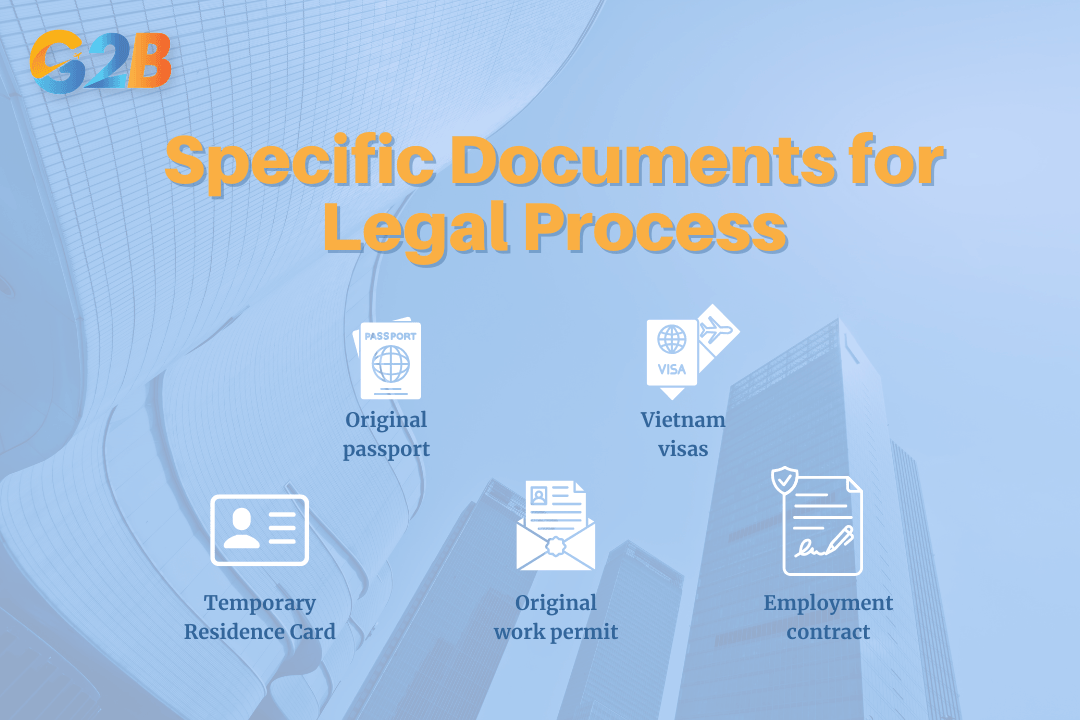
Specific documents for the legal process
How quickly should you notify your embassy?
You should notify your embassy within 24 hours of receiving the deportation notice or facing police detention. The embassy tracks your case and issues emergency travel documents.
Why must you avoid missing required appointments?
You must avoid missing required appointments because immigration authorities view absence as non-compliance, which leads to immediate detention. Attending meetings shows cooperation with the law.
How does legal advice help in visa overstay deportation cases in Vietnam?
Legal advice helps foreigners explain their visa overstay, submit penalty payments, and apply for exit visas without facing a long-term entry ban. Overstay is the most common deportation trigger.
How do authorities handle overstay violations?
Authorities handle overstay violations by issuing administrative fines, ordering immediate exit, or applying formal deportation orders. The penalty depends on the number of overstayed days. The government applies structured penalties for visa overstays. The table below shows the typical actions:
| Overstay Duration | Common Government Action | Estimated Fine Range (VND) |
|---|---|---|
| Less than 16 days | Administrative fine and exit requirement | 500,000 - 2,000,000 |
| 16 to 29 days | Administrative fine and strict exit order | 3,000,000 - 5,000,000 |
| 30 to 59 days | High administrative fine and possible deportation record | 5,000,000 - 10,000,000 |
| 60 to 89 days | Severe fine, mandatory exit, and re-entry restrictions | 10,000,000 - 15,000,000 |
| 90 days or more | Maximum fine, formal deportation, and entry ban | 15,000,000 - 20,000,000 |
Can visa overstay be resolved without deportation?
Foreigners can resolve short-term visa overstays without deportation by paying fines, explaining the situation, and arranging voluntary departure. Authorities accept status correction for minor infractions. You can fix minor overstays through specific legal actions. The process includes:
- Arrange voluntary departure before the government issues a deportation order.
- Pay the required fine at the state treasury.
- Process status correction through a legal sponsor or employer.
Which evidence may reduce overstay penalties?
Evidence such as medical records, employer sponsorship letters, or proof of administrative errors can reduce overstay penalties. Authorities review these documents to grant leniency. Immigration officers consider valid reasons for missing visa deadlines. You should provide:
- Submit medical emergencies records showing hospital admission.
- Provide employer sponsorship letters explaining delayed paperwork.
- Show proof of an administrative error caused by a travel agency.
How does legal advice help with deportation related to work permit violations?
Legal advice helps foreigners and employers fix work permit violations, explain labor status to authorities, and avoid forced deportation. Vietnam strictly regulates foreign labor.
What happens if you work without a permit?
Working without a permit results in an administrative fine of up to 25,000,000 VND and immediate deportation. Employers also face heavy fines for hiring illegal foreign workers.
How do permit expiration issues lead to deportation?
Permit expiration issues lead to deportation when foreigners continue working after their legal work document expires. Authorities cancel the associated temporary residence card.
How does employer compliance and sponsorship evidence help?
Employer compliance and sponsorship evidence prove that the company takes responsibility for the foreigner's legal status. This evidence delays deportation while the company corrects the documents. Employers play a central role in immigration cases. A company must:
- Submit employer compliance records to the labor department
- Provide sponsorship evidence to the immigration office
- Explain the delay in the work permit application process
Which corrective actions prevent deportation?
Corrective actions prevent deportation by legalizing the foreigner's status before authorities issue a formal removal decision. Fast action saves the foreigner's job and residence. A lawyer helps companies implement corrective actions quickly. These steps include:
- Stop unauthorized work activities immediately
- Pay administrative fines for labor violations
- Apply for a new work permit or proper business visa
What legal advice applies if you are detained during a deportation case in Vietnam?
Legal advice protects detained foreigners by ensuring they receive fair treatment, family contact, and clear communication with immigration investigators. Detention isolates foreigners from regular legal resources.
Why does detention happen in deportation cases?
Detention happens when authorities need to investigate violations, enforce immigration rules, or process criminal procedures. Police hold foreigners who pose flight risks. The government uses detention for specific legal reasons. These reasons include:
- Conduct legal investigation into complex immigration fraud
- Ensure immigration enforcement for foreigners refusing to leave
- Manage criminal procedure requirements before court hearings
What can you expect during immigration detention?
During immigration detention, authorities verify your identity, conduct official interviews, and hold you in a temporary facility. The facility restricts your movement and communication. Detention follows strict police protocols. You will experience:
- Undergo identity verification using passport and biometric data
- Attend official interviews with immigration officers
- Stay in a temporary holding center until the exit flight
How does a lawyer assist during detention?
A lawyer assists during detention by visiting the facility, reviewing evidence, and communicating with police officers to protect your legal rights. Legal presence prevents abusive interrogation. Detained foreigners rely heavily on legal professionals. A lawyer will:
- Manage communication with authorities on your behalf
- Ensure rights protection during police interviews
- Conduct evidence review to build a defense strategy
How does family and employer notification work?
The authorities or your lawyer notify your family and employer about your detention status and location. This notification allows your employer to send necessary legal documents.
Can you appeal a deportation decision in Vietnam?
Foreigners can appeal a deportation decision by filing an administrative complaint to the issuing authority or taking the case to court. An appeal challenges unfair legal judgments.
What are the administrative complaint procedures?
Administrative complaint procedures require the foreigner to submit a formal written request to the immigration department asking them to reconsider the deportation order. The department reviews the complaint internally.
When does court review apply to deportation cases?
Court review applies when the foreigner disagrees with the result of the administrative complaint and files a lawsuit in the administrative court. The judge evaluates the legality of the deportation.
What are the filing deadlines and supporting evidence requirements?
Foreigners must file the first administrative complaint within 90 days of receiving the deportation decision and provide strong supporting evidence. Late submissions lose the right to appeal. The appeal process demands strict compliance with deadlines. You must:
- Prepare filing documents within the 15-day limit.
- Collect supporting evidence like medical records or employment proof.
- Submit the final dossier to the relevant legal department.
What are the possible appeal outcomes?
The appeal outcomes include canceling the deportation, reducing the administrative penalty, or extending the departure deadline. The authority bases the decision on the submitted evidence. A successful appeal changes your immigration status. The government may:
- Order the deportation canceled completely.
- Approve the penalty reduced to a manageable fine.
- Grant the departure deadline extended for voluntary exit.
How long does the deportation process take in Vietnam?
The deportation process takes between a few days for administrative violations and several months for complex criminal cases. The timeline depends on documentation and police investigations.
What is the administrative deportation timeline?
Administrative deportation typically takes 7 to 15 days from the time authorities discover the violation to the foreigner's physical departure. This process moves quickly. The administrative timeline varies slightly based on the case. The table below details the stages:
| Process stage | Average timeline |
|---|---|
| Violation discovery & notice | 1 to 3 days |
| Document processing & Fine payment | 3 to 7 days |
| Issuance of final deportation order | 1 to 3 days |
| Physical departure from Vietnam | 2 to 5 days after the order |
What is the criminal case deportation timeline?
Criminal case deportation takes several months or years because the foreigner must complete police investigations, court trials, and prison sentences first. Deportation happens after the sentence ends.
Which factors delay the removal process?
Missing passports, embassy verification procedures, and pending legal appeals delay the physical removal of a foreigner from Vietnam. Authorities cannot deport someone without valid travel documents. Unexpected issues extend the time spent in the country or in detention. Common factors include:
- Resolve passport issues when the document is lost or expired.
- Wait for embassy verification to issue emergency travel papers.
- Process pending appeals in the administrative courts.
What happens after deportation from Vietnam?
After deportation, the foreigner must exit the country, faces a negative immigration record, and receives a temporary or permanent ban from re-entering Vietnam. The legal consequences last for years.
How do exit procedures work?
Exit procedures require the foreigner to travel to the designated airport or border gate under police supervision and board the departure transport. Authorities stamp the passport with a deportation mark.
How does deportation affect immigration records and future visa applications?
Deportation creates a permanent negative mark on the foreigner's immigration record, making future visa applications highly difficult or impossible. Vietnam shares this data across its embassy networks.
What are the re-entry restrictions after deportation?
Vietnam imposes re-entry restrictions lasting from three years to a permanent lifetime ban, depending on the severity of the original violation. Criminal deportations usually trigger permanent bans.
What are the conditions for returning to Vietnam later?
To return to Vietnam later, the foreigner must complete the ban period, clear all administrative fines, and apply for a special visa approval. The immigration department evaluates these requests strictly.
How can a lawyer help in a Vietnam deportation case?
A lawyer helps by assessing legal exposure, preparing defense documents, negotiating with immigration officers, and managing the entire legal process. Legal professionals simplify complex bureaucratic systems.
How do lawyers assess legal exposure?
Lawyers assess legal exposure by reviewing the foreigner's visa history, identifying the exact law broken, and estimating the financial and legal penalties. This creates a realistic defense plan.
How do lawyers communicate with immigration authorities?
Lawyers communicate with immigration authorities by submitting official letters, attending official meetings, and representing the foreigner during formal questioning. This ensures professional legal dialogue.
How do lawyers prepare explanations and evidence?
Lawyers prepare explanations and evidence by drafting official statement letters and organizing employment and medical records in Vietnamese. Proper formatting meets government standards. Preparation determines the success of the case. Lawyers take these steps:
- Draft formal legal explanations.
- Translate foreign evidence into Vietnamese.
- Compile the final dossier for submission.
How do lawyers file appeals and complaints?
Lawyers file appeals and complaints by ensuring all documents meet the 15-day legal deadline and contain accurate legal arguments. They submit these directly to the dispute resolution departments.
How do lawyers coordinate with the embassy and employer?
Lawyers coordinate with the embassy and employer to secure travel documents, retrieve unpaid salaries, and finalize tax obligations before the foreigner leaves. This coordination protects the foreigner's financial interests.
What are the common mistakes foreigners make during deportation proceedings?
Foreigners often make mistakes by ignoring official notices, lying to immigration officers, and traveling without clearance. These errors increase fines and lead to immediate detention. Foreign nationals escalate their legal problems through poor decisions. You must avoid these common mistakes:
- Ignore official notices sent by the immigration department
- Miss legal deadlines for fine payments or appeals
- Give inconsistent statements during police interviews
- Fail to contact legal counsel early in the process
- Travel to the airport before receiving proper exit clearance
- Neglect to inform the employer or legal sponsor about the situation
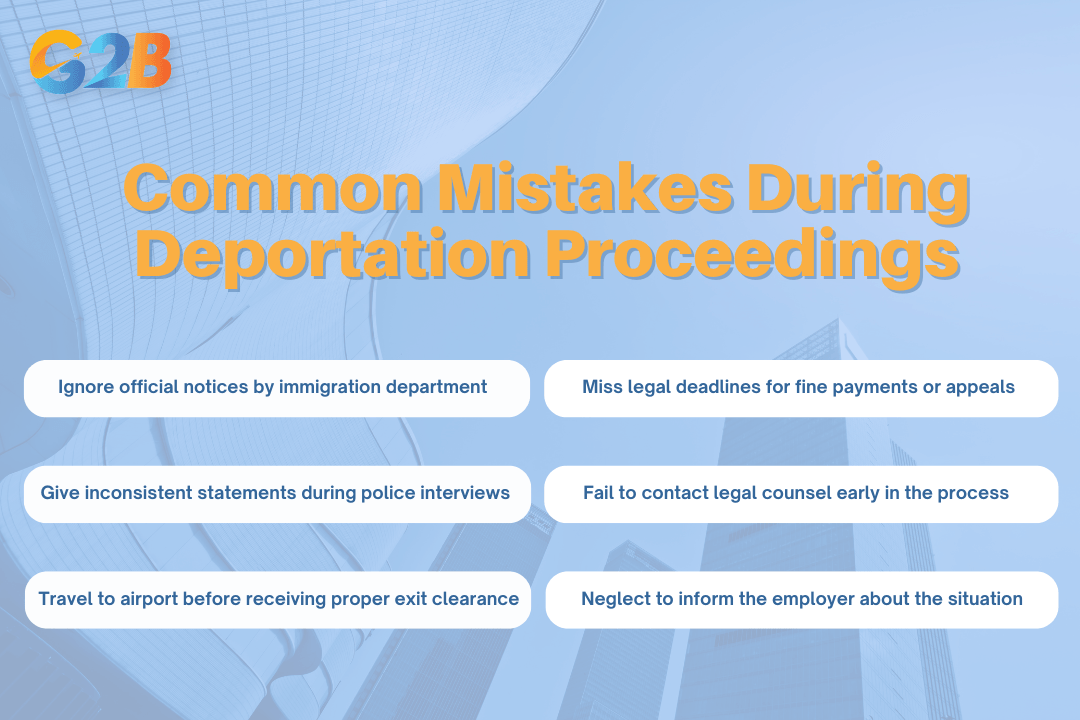
Common mistakes foreigners make during deportation proceedings
FAQs about deportation cases in Vietnam
Can Vietnam deport a foreigner for overstaying a visa?
Yes, Vietnam can deport a foreigner for overstaying a visa. Long overstays exceeding 30 to 90 days usually result in mandatory deportation and re-entry bans.
Can I work while a deportation case is pending?
No, you cannot work while a deportation case is pending. Authorities suspend your work permit and temporary residence card during the investigation process.
Can deportation be appealed?
Yes, deportation can be appealed. You have 15 days to file an administrative complaint with the issuing authority or the administrative court.
Will detention always happen before deportation?
No, detention will not always happen before deportation. Authorities use detention primarily for severe violations, uncooperative foreigners, or criminal cases.
Can I return to Vietnam after deportation?
Yes, you can return to Vietnam after deportation if your re-entry ban expires. You must clear all previous fines and obtain special approval from the immigration department.
Should I contact my embassy immediately?
Yes, you should contact your embassy immediately. The embassy provides emergency travel documents, monitors your legal treatment, and notifies your family.
Vietnam strictly enforces its immigration laws, and deportation cases carry severe legal and financial consequences. Foreign nationals must maintain valid visas, hold proper work permits, and respect administrative rules to reside legally in the country. If authorities issue a deportation notice, securing expert legal advice immediately protects your rights, prevents unnecessary detention, and helps manage the complex exit process. By coordinating with professionals, foreigners can resolve violations efficiently, handle administrative fines, and potentially reduce long-term re-entry bans, ensuring a smoother resolution to complex immigration disputes.
