




 Delaware (USA)
  Vietnam
  Singapore
  Hong Kong
  United Kingdom
 A TRC for investors is a temporary residence permit that allows a foreign national to live in a country legally based on a capital investment. Authorities link residency rights directly to business operations, real estate purchases, or financial contributions. Foreign business owners use this card to establish a legal presence in a host country. Governments issue investor TRCs to boost the local economy and attract foreign direct investment (FDI). Investors transfer capital into local banks to qualify for this program. Immigration departments evaluate the financial data and issue the physical residence card. In this article, we will explore the system of investor TRC.
What is a TRC for investors?
A TRC for investors is a residence permit that allows a foreign national to live in a country based on capital investment. Authorities link residency rights to business, real estate, or financial contributions. The card contains a smart microchip. This microchip holds the investor's biometric data, passport details, and investment classification. Police and government officials scan this card to confirm the investor's legal status. A TRC replaces standard paper visas. Investors keep this card in their wallets. They use the card to open bank accounts, sign lease agreements, and travel across national borders. The government strictly ties the validity of this card to the original investment's active status.
Why do investors apply for a temporary residence card?
Investors apply for a TRC to gain legal residence through economic contribution. Governments use investor TRCs to attract foreign direct investment (FDI) and stimulate economic growth. The TRC allows investors to manage their assets locally. Without a TRC, foreign business owners must enter the country on short-term tourist or business visas. Short-term visas limit banking access and property rights. A TRC provides long-term stability for business operations.
Core purposes include:
- Grant legal residency via capital investment.
- Enable long-term business operations and management.
- Support capital inflow into the national economy.
- Allow the investor to open local corporate and personal bank accounts.
- Simplify international travel in and out of the host country.
- Provide a pathway to permanent residence in specific jurisdictions.
Who issues the TRC for investors?
National immigration departments issue the TRC for investors in coordination with economic ministries. These government bodies evaluate the financial impact before granting the physical residence permit. The process involves multiple government authorities. The Ministry of Planning and Investment (or equivalent) registers the foreign company. The central bank tracks the incoming foreign funds. Finally, the Department of Immigration reviews the personal background of the applicant. In Vietnam, the Immigration Department (under the Ministry of Public Security) issues the TRC after verification by the Department of Planning and Investment (DPI) and State Bank of Vietnam (SBV). Immigration officers print and hand over the official card. Embassies in foreign countries do not issue the actual TRC; they only issue the initial entry visa.
Who is eligible for a TRC for investors?
Eligibility depends on investment size, source of funds, and legal compliance. Authorities verify the applicant's financial capacity and the project's economic impact on the local market. Governments set strict rules to prevent fraud. The investor must meet the minimum capital threshold. The state also checks the investor's personal history. Criminal records usually disqualify an applicant immediately. The investment must add value to the host country through taxes or job creation.
Typical eligibility requirements include:
- Invest a minimum capital threshold (varies by country and asset class).
- Prove the legal source of all invested funds.
- Maintain the investment actively during the entire TRC validity period.
- Pass international security and background checks.
- Hold a valid passport from a recognized country.
- Obtain official government approval for the business or property purchase.
- Hold a valid Investment Registration Certificate (IRC) or Enterprise Registration Certificate (ERC) approved by Vietnam's DPI.
What types of investments qualify for a TRC?
Governments accept company formation, real estate purchases, and government bond investments for investor TRCs. The specific asset class dictates the required capital threshold and regulatory rules. Each country defines acceptable investment types differently. Setting up a new Limited Liability Company (LLC) is the most common method. The investor buys shares in the company and registers as the legal owner. Some nations also allow investors to buy apartments or commercial buildings to secure a TRC.
Common investment routes include:
- Register a new local business entity.
- Purchase shares in an existing local company.
- Buy approved residential or commercial real estate.
- Invest in a new or existing project/business that meets Vietnam's economic contribution criteria (e.g., job creation, technology transfer).
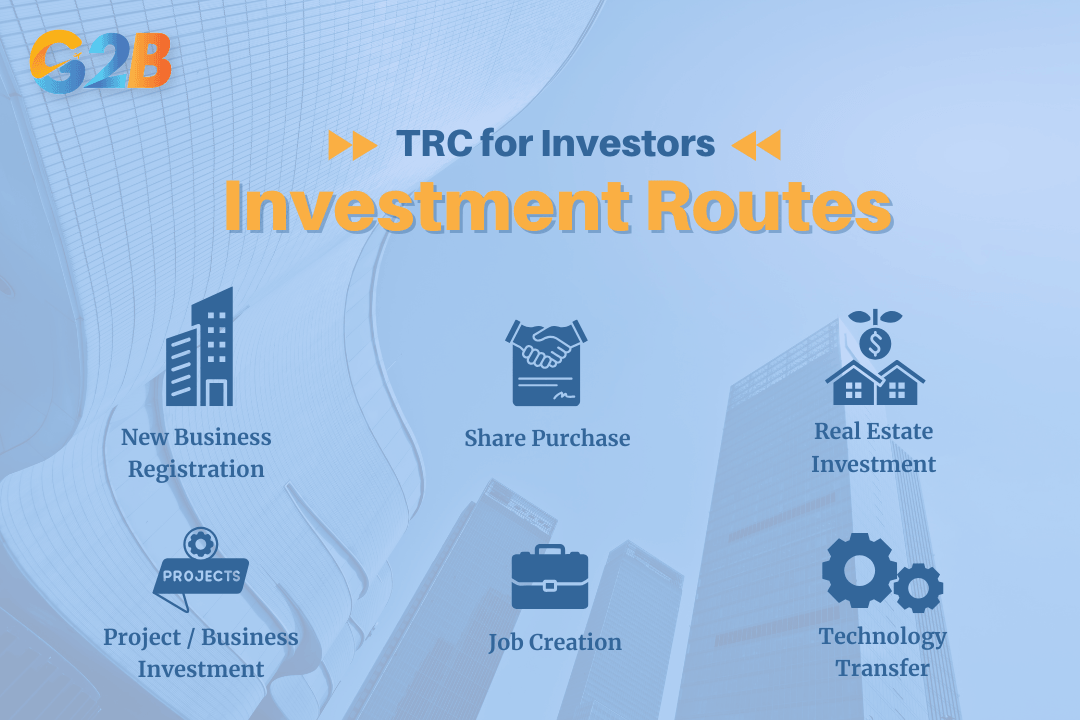
Investors qualify for a TRC through approved investment activities in Vietnam
What documents are required for a TRC for investors?
Applicants must submit financial, legal, and identity documents to apply for a TRC. Authorities assess the authenticity and traceability of these papers to ensure legal compliance. Gathering the correct documents takes time. Investors must translate foreign documents into the local language. Public notaries must stamp these translations. Many countries also require an apostille stamp from the investor's home embassy.
Core documents include:
- Submit a passport with sufficient validity (usually 12+ months).
- Provide proof of investment (bank statements, official share certificates).
- Submit the business registration certificate or property ownership records.
- Provide a local or international tax identification number.
- Include a comprehensive health insurance policy.
- Attach a clean criminal police check from the home country.
- Provide recent passport-sized photographs.
How to prove the legal source of funds for a TRC?
Investors prove the legal source of funds using bank statements, tax returns, and business sale contracts. Financial authorities mandate this step to comply with global Anti-Money Laundering (AML) regulations. Governments block dirty money from entering their economies. Investors must show exactly how they earned the capital. If the money comes from a salary, the investor shows income tax records. If the money comes from selling a house, the investor shows the property sale contract. The central bank tracks the wire transfer from the foreign bank to the local bank.
How to apply for a TRC for investors?
Applicants submit TRC applications through immigration or investment authorities. The process includes document submission, verification of funds, and biometric registration. The application starts after the capital arrives in the host country. The investor first registers the business or buys the property.
Application steps include:
- Transfer the required investment capital to a local bank account.
- Register the business or finalize the real estate purchase.
- Submit the TRC application online via Vietnam Immigration Portal with all investment proof.
- Pay the official government processing fees.
- Complete the biometric registration (fingerprints and photo) at the immigration office.
- Await the final approval decision from the government.
- Collect the physical TRC card.
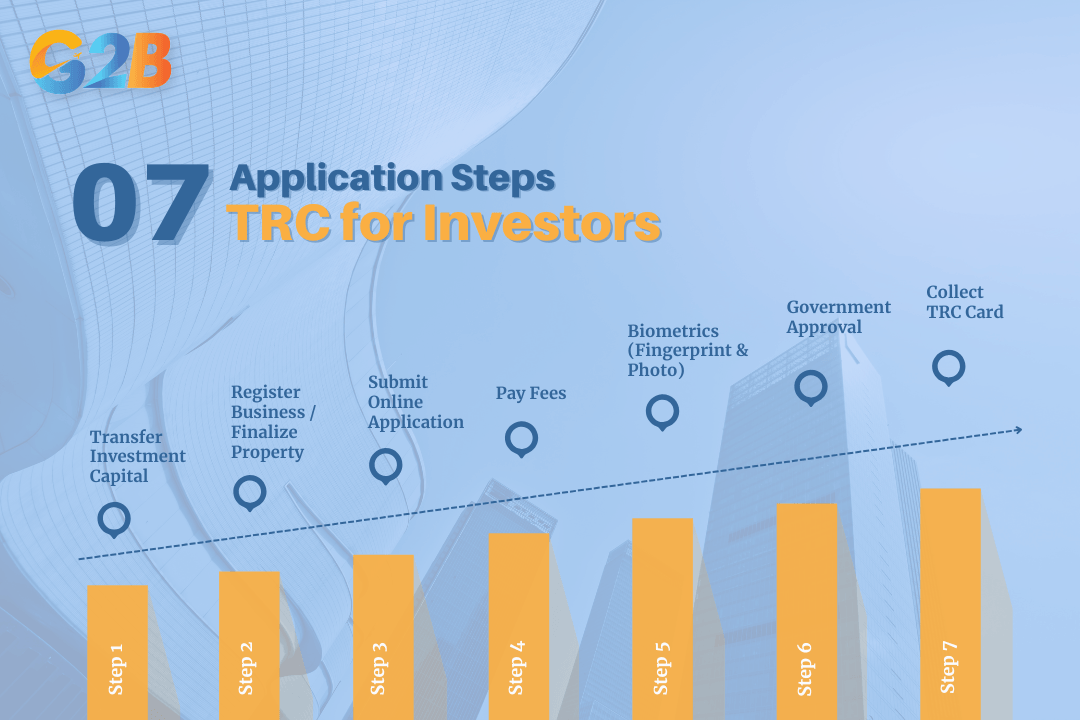
Investors follow a structured process to obtain a TRC in Vietnam
How long does it take to get a TRC for investors?
Processing time ranges from 3 to 16 weeks, depending on the jurisdiction and due diligence checks. High-value investments may receive priority processing in some countries. Immigration officers review financial documents slowly and carefully. They verify company registration numbers and contact banks. If an applicant submits incomplete documents, the immigration department pauses the application. The investor must supply missing data, which delays the timeline.
Standard timeline phases:
| Processing Phase | Average Time | Key Action |
|---|---|---|
| Capital Transfer & Setup | 1–2 weeks | Open bank accounts and register the business (get IRC/ERC). |
| Document Preparation | 1–2 weeks | Translate and notarize foreign files. |
| Application Review | 7-10 working days | Vietnam Immigration conducts checks |
| Card Issuance | 1–2 weeks | Print and distribute the physical residence card. |
How much does a TRC for investors cost?
An investor TRC costs between a few hundred and several thousand dollars in government fees. The total expense includes application charges, background check fees, and document translation costs. The TRC application fee is separate from the actual investment capital. The government charges non-refundable fees to process the file. Investors also pay for medical exams, notary stamps, and legal consulting.
Main cost factors include:
- Pay the government application and card printing fee.
- Pay due diligence and background check fees.
- Pay for official document translations and embassy apostilles.
- Pay the mandatory local health check at an approved hospital.
- Pay business setup fees if forming a new company.
How long is a TRC for investors valid?
A TRC for investors remains valid for 1 to 10 years. Validity depends directly on the investment type, capital retention rules, and national immigration policy. Higher investments often result in longer TRC validity periods. For example, a small business investment might grant a 1-year or 2-year card. A multi-million dollar factory investment might secure a 5-year or 10-year card. The card expires immediately if the investor's passport expires.
What rights does a TRC for investors provide?
A TRC grants residence and investment-related rights to the foreign national. Some countries expand these benefits and privileges based on the total size of the investment. The investor gains the freedom to manage their local assets legally. They do not need to apply for a tourist visa every time they enter the country. They receive a local identification number.
Key rights include:
- Reside legally in the host country during the card's validity.
- Operate, direct, or manage a registered local business.
- Access local financial systems, credit lines, and banking services.
- Sign domestic legal contracts, including office or housing leases.
- Exit and enter the country freely without standard entry visas.
- Register personal vehicles in the host country.
What are the restrictions of an investor TRC?
Investor TRCs impose strict compliance obligations tied to the active investment. The investor must maintain their capital in the country to keep their residence permit active. Governments monitor investor activity. The state does not allow foreigners to use a fake company just to get a visa. The company must file annual tax returns. If the business fails or the investor sells the real estate, the TRC conditions break.
Common restrictions include:
- Maintain the investment actively during the entire TRC validity period.
- Avoid withdrawing the core capital, which leads to permit cancellation.
- Comply with local corporate tax and accounting laws.
- Accept limits on regular employment (investors cannot work as standard employees for other companies).
- Report any changes in business structure or address to immigration authorities.
What are the tax obligations for TRC investors?
Investors holding a TRC must comply with corporate and personal income tax laws in the host country. The national tax authority tracks business revenues and personal dividends to ensure legal compliance. Holding a TRC makes the investor a tax resident in many jurisdictions if they stay for more than 183 days a year. The business must pay corporate tax on its profits. The investor must pay personal income tax on dividends drawn from the company. Failure to pay taxes blocks the investor from renewing the TRC.
How do authorities conduct due diligence for a TRC?
Government agencies run strict background checks on the investor's financial history and criminal record. Authorities use international databases to verify the legal origin of the invested capital. Immigration offices partner with financial intelligence units. They screen the applicant's name through Interpol and global sanction lists. They ensure the applicant has no history of money laundering or financial fraud. If the due diligence process flags a risk, the government rejects the application instantly.
What happens if an investor withdraws their capital?
If an investor withdraws their capital, the government cancels the TRC immediately. Authorities require the investor to leave the country or switch to a different visa category. The residence permit exists solely because of the financial contribution. If an investor sells their company shares or sells their designated real estate, they lose their eligibility. The investor must notify the immigration department of the sale. The department gives the investor a short grace period (usually 15 to 30 days) to exit the borders legally.
How to renew or extend a TRC for investors?
Renewal requires proof that the original investment remains active and compliant with regulations. Investors must apply for an extension before their current TRC expires. The renewal process checks if the business is real and active. The immigration office asks for the latest tax documents and bank statements. Maintaining clean accounting records guarantees a smooth extension.
Renewal steps include:
- Submit updated investment proof and current bank statements.
- Provide official tax compliance records and audited financial reports.
- Submit the renewal application 30 to 60 days before the current card expires.
- Pay the government renewal fees.
- Provide a new passport if the previous passport expired.
Why do TRCs for investor applications get rejected?
Applications fail due to financial inconsistencies, unverified funds, or failed background checks. Authorities deny requests if the investor breaks immigration rules or submits incomplete dossiers. Governments do not refund application fees for rejected files. Investors must ensure their capital matches the legal threshold perfectly. Any sign of fake documents leads to a permanent ban from the host country.
Common rejection reasons include:
- Fail to verify the legal source of investment funds.
- Transfer capital below the required minimum threshold.
- Submit incomplete, expired, or unnotarized documentation.
- Fail the international security or criminal background check.
- Register a business but fail to open a legitimate corporate bank account.
- Hold unpaid tax liabilities from previous business ventures.
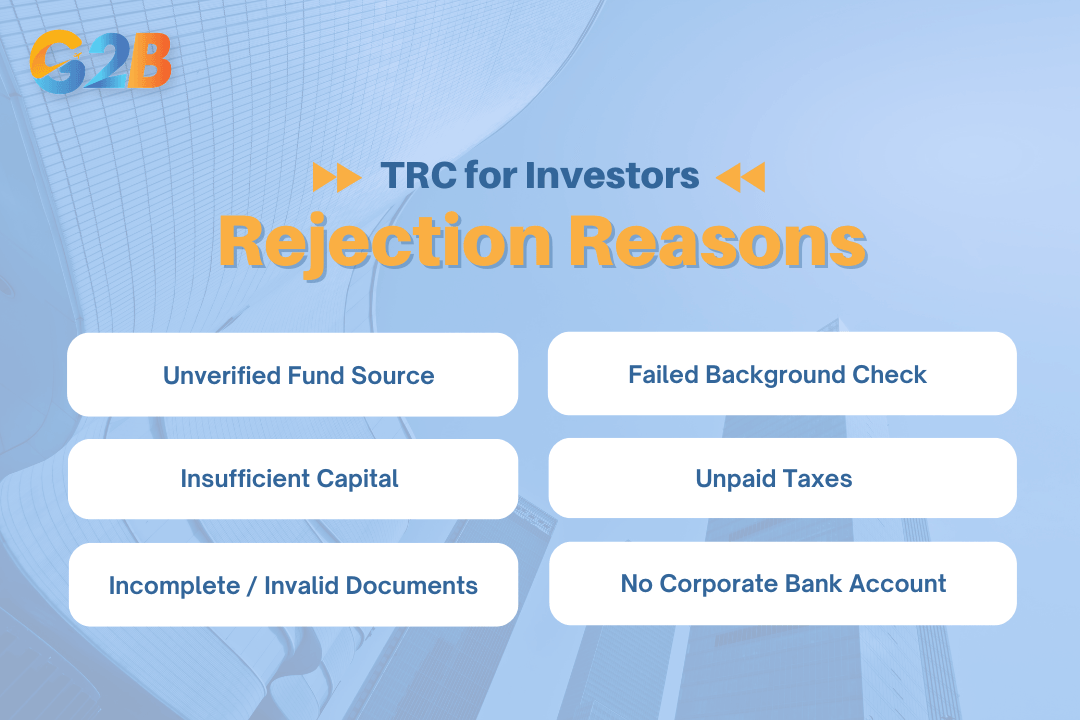
Investor TRC applications may be rejected due to several reasons
How to replace a lost TRC for investors?
Investors must report a lost TRC to the local police immediately and apply for a replacement. Managing a business or travelling without a physical residence card violates local laws. The investor needs an official police report to prove the card is missing. The immigration department uses this report to deactivate the lost microchip. This prevents criminals from using the investor's identity.
Replacement steps include:
- File a loss report at the nearest local police station.
- Obtain the stamped police confirmation document.
- Submit a replacement application to the immigration department.
- Provide a photocopy of the lost TRC or passport.
- Pay the required government card re-printing fee.
- Collect the new TRC card.
FAQs about TRC for investors
- What is the difference between an investor TRC and citizenship by investment?
An investor TRC grants temporary legal residence, while citizenship programs grant full nationality and a passport. A TRC requires periodic renewals. Citizenship provides permanent rights and does not require renewals.
- Can an investor TRC lead to permanent residence?
Yes, many countries allow investors to transition to permanent residence after 3 to 5 years of continuous investment. The investor must maintain the capital, obey local laws, and pass a final review to get permanent status.
- Can family members join under an investor TRC?
Yes, most investor TRC programs include family reunification options. The primary investor can sponsor their legal spouse and dependent children. The government issues dependent TRCs based on the main investor's status.
- Do investors need a separate work permit?
Usually, an investor TRC waives the need for a standard employee work permit. The TRC allows the investor to act as the legal director or manager of their own registered company. However, the investor cannot work as an employee for a different company.
- Can multiple investors share one TRC?
No, multiple investors cannot share a single physical TRC. However, multiple foreign partners can invest in the same company. If the company's total capital meets the minimum threshold per person, each partner can apply for their own individual TRC.
A TRC for investors provides a secure legal pathway for foreign business owners to live and operate in a host country. It allows investors to manage operations, access financial services, and maintain long-term residency status, provided all regulatory conditions are met. Careful attention to eligibility criteria, documentation, and renewal obligations is essential to avoid compliance risks. For streamlined support, G2B provides work permit / TRC / visa services, ensuring an efficient and fully compliant process for foreign investors.
