




 Delaware (USA)
  Vietnam
  Singapore
  Hong Kong
  United Kingdom
 Vietnam’s government requires compulsory health insurance to ensure legal compliance and medical access for all formal workers. Vietnam's compulsory social health insurance covers employees with local labor contracts. Many foreign workers also use employer-provided insurance or private international medical insurance to access premium healthcare services.
Are foreign workers required to have health insurance in Vietnam?
Foreign employees working in Vietnam are required to participate in the national health insurance scheme if they are employed under an indefinite-term labor contract or a fixed-term labor contract with a duration of at least three months.
When is health insurance mandatory for foreign workers?
Vietnamese law does not differentiate between Vietnamese and foreign nationals with respect to health insurance eligibility. Foreign nationals residing and working in Vietnam are entitled to participate in either voluntary or compulsory health insurance schemes, subject to the applicable legal requirements. Under current regulations, compulsory health insurance applies to foreign employees working under indefinite-term labor contracts or fixed-term labor contracts with a duration of at least three months.
When is health insurance not mandatory for foreigners?
Health insurance is not mandatory for short-term business visitors and tourists in Vietnam. Independent contractors without formal labor contracts also fall outside the compulsory national health insurance system. These individuals must purchase personal travel or private medical insurance.
What health insurance law applies to foreign workers in Vietnam?
The Law on Health Insurance sets the rules for foreign workers in Vietnam. The National Assembly of Vietnam issues these laws to manage the public healthcare fund.
What is Vietnam’s national health insurance framework?
Vietnam’s national health insurance framework provides the legal basis for compulsory participation. The government requires both employers and employees to contribute a percentage of the monthly salary to the public health fund. Vietnam Social Security collects these funds.
What is the difference between social insurance and health insurance?
Social insurance covers long-term benefits like retirement and maternity, while health insurance covers direct medical treatments. The government separates these two funds legally and structurally.
| Feature | Social insurance (SI) | Health insurance (HI) |
|---|---|---|
| Purpose | Retirement, sickness, maternity, death | Medical consultations, hospital stays, medicine |
| Managing authority | Vietnam Social Security | Vietnam Social Security & Ministry of Health |
| Foreigner eligibility | Mandatory for 1-month+ contracts | Mandatory for 1-month+ contracts |
What are the employer compliance obligations for health insurance?
Employer compliance obligations include registering foreign staff with the local social security office. Companies must process monthly payroll deductions and submit these funds to the government. Employers must perform the following actions:
- Register new foreign employees within 30 days
- Calculate premiums based on the gross monthly salary
- Deduct the employee contribution from the payroll
- Submit the total contribution to Vietnam Social Security
- Report any changes in personnel to the authorities
Who must join Vietnam’s national health insurance?
Foreign workers who sign local labor contracts (indefinite-term contract or a labor contract of at least three month) with Vietnam-based entities must join the national health insurance system. The law applies to expats working for local companies, foreign-invested enterprises, and foreign non-governmental organizations.
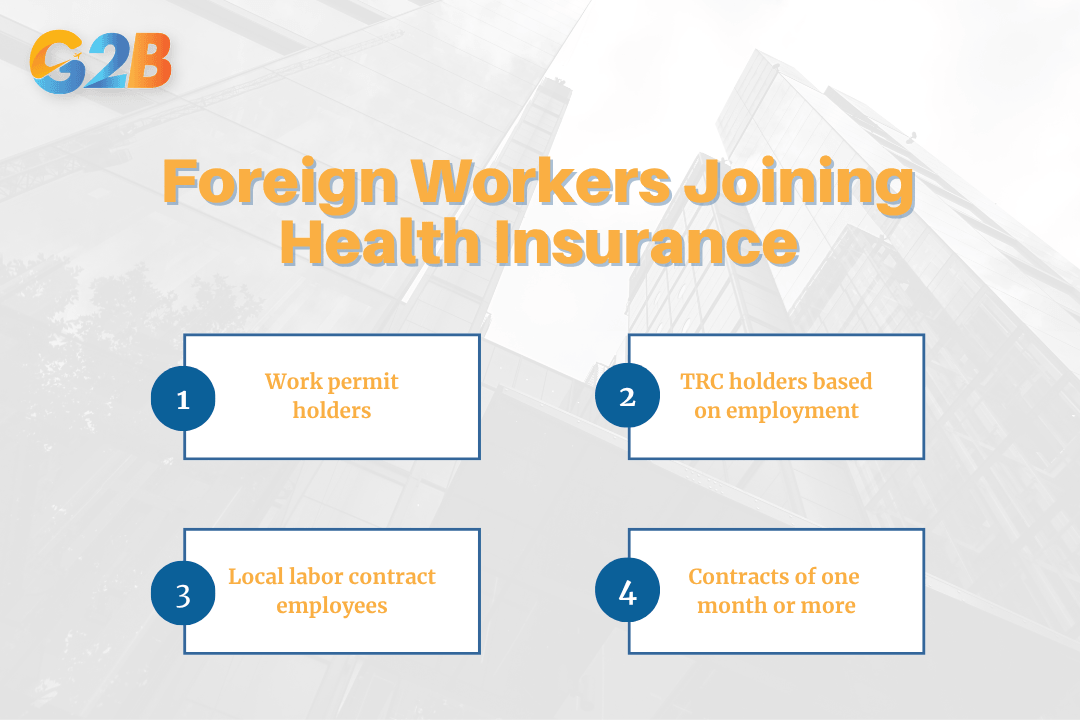
Foreign workers who sign local labor contracts must join insurance system
Do foreign employees with work permits need health insurance?
Yes, foreign employees with work permits must participate in the national health insurance program. The employer links the work permit to the local labor contract during the mandatory registration process.
Do foreign employees with temporary residence cards need health insurance?
Yes, foreign employees holding Temporary Residence Cards (TRCs) based on employment require health insurance. The TRC proves legal long-term residency, but the underlying labor contract dictates the mandatory insurance requirement.
What are the exemptions for foreign workers regarding health insurance?
Some foreign workers receive exemptions from the mandatory national health insurance system. Intra-company transferees who maintain labor contracts in their home country do not pay into the Vietnamese system. Exemptions apply to:
- Transfer foreign employees internally within a global company.
- Employ diplomatic staff and embassy personnel.
- Apply specific bilateral social security treaties.
How does Vietnam’s health insurance for foreign workers work?
Vietnam’s health insurance provides basic medical coverage for foreign workers through a state-managed fund. The system assigns a specific primary public hospital or clinic to each registered employee.
What does the national health insurance cover?
The national health insurance covers basic medical services at public healthcare facilities. Patients use their health insurance cards to receive discounted or free medical care. Covered services include:
- Attend public hospital consultations.
- Receive emergency medical treatment.
- Access inpatient hospital care.
- Obtain prescribed medicines from the national list.
- Undergo standard medical procedures and surgeries.
What are the coverage limits and co-payment rules?
Coverage limits and co-payment rules determine how much the patient pays out of pocket. The national health insurance covers 80% of medical costs at the registered primary hospital, leaving the worker to pay a 20% co-payment.
How do public hospitals compare to private hospitals in Vietnam?
Public hospitals handle national health insurance claims, while private hospitals cater primarily to private insurance holders. Foreign workers often prefer private hospitals for better facilities and English-speaking staff.
| Facility type | National health insurance accepted | English-speaking staff | Waiting times | Cost |
|---|---|---|---|---|
| Public hospitals | Yes (covers 80%) | Limited | Long | Low |
| Private hospitals | Mostly No | High | Short | High |
How much do foreign workers pay for health insurance in Vietnam?
Foreign workers pay a total of 4.5% of their monthly taxable salary toward health insurance in Vietnam. The employer and the employee split this cost according to government regulations.
What is the employee contribution rate for health insurance?
The employee contribution rate for health insurance is 1.5% of the gross monthly salary. Employers deduct this amount directly from the foreign worker's monthly paycheck before paying the net salary.
What is the employer contribution rate for health insurance?
The employer contribution rate for health insurance is 3% of the employee's gross monthly salary. The company pays this amount from its own funds on top of the employee's base salary.
How does the payroll deduction process work?
The payroll deduction process requires the employer to calculate the 1.5% employee share and the 3% employer share. The company transfers the total 4.5% to the Vietnam Social Security bank account every month.
What are the contribution calculation examples for health insurance?
Contribution calculation examples depend on the statutory base salary cap. The government caps the maximum salary for health insurance calculations at 20 times the statutory base salary (currently capped at 46,800,000 VND). Example calculations based on the 46,800,000 VND cap:
- Calculate a monthly salary of 30,000,000 VND: Employer pays 900,000 VND; Employee pays 450,000 VND
- Calculate a monthly salary of 60,000,000 VND (exceeds cap): Employer pays 1,404,000 VND; Employee pays 702,000 VND based on the 46,800,000 VND maximum limit
What medical benefits do foreign workers receive?
Foreign workers receive essential medical benefits through the national health insurance program. Vietnam Social Security funds treatments at designated public hospitals across the country.
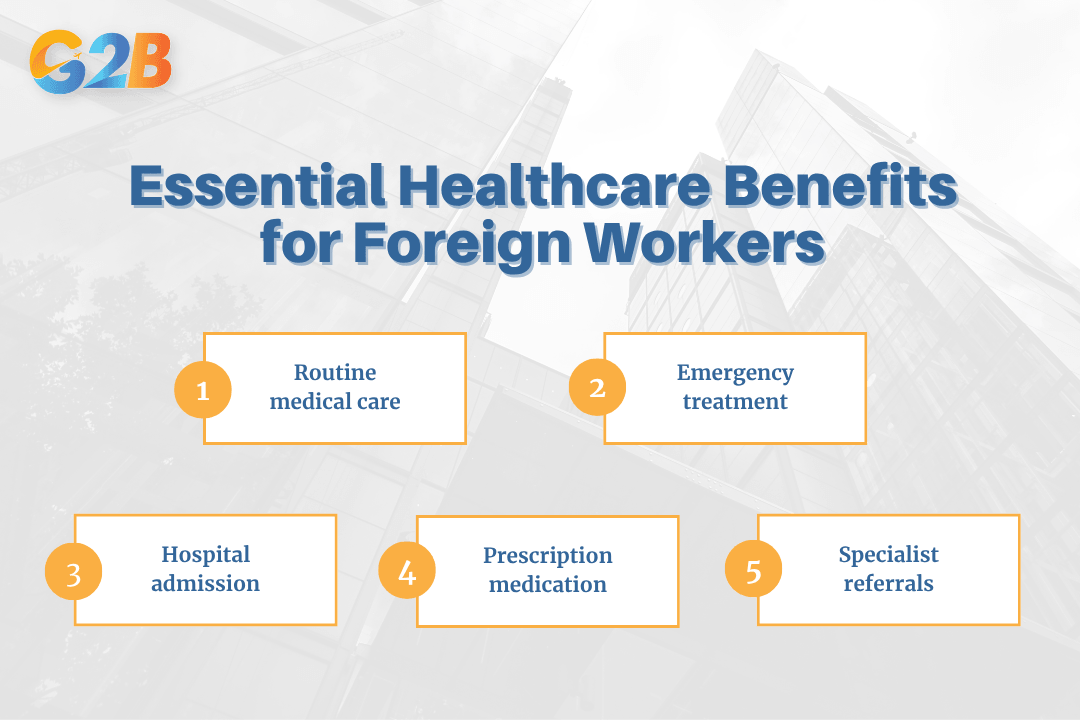
Foreign workers can access essential healthcare through national insurance
Does national insurance cover routine medical care?
Yes, national insurance covers routine medical care at the employee's registered primary healthcare facility. Workers present their health insurance card to receive subsidized doctor consultations and basic health checks.
Does national insurance cover emergency treatment?
Yes, national insurance covers emergency treatment at any public hospital in Vietnam. Patients receive the standard 80% coverage rate for life-threatening emergencies, even outside their registered primary hospital.
Does national insurance cover hospital admission?
Yes, national insurance covers hospital admission for inpatient care. The fund pays for standard public hospital beds, nursing care, and necessary surgeries listed under Ministry of Health guidelines.
Does national insurance cover prescription medication?
Yes, national insurance covers prescription medication included in the Ministry of Health's approved drug list. Pharmacies inside public hospitals dispense these medicines directly to patients holding valid insurance cards.
Does national insurance cover specialist referrals?
Yes, national insurance covers specialist referrals if the primary hospital issues a formal transfer document. Patients lose the 80% coverage rate if they visit a higher-level specialist hospital without this official referral.
Is private health insurance necessary for foreign workers in Vietnam?
Private health insurance is not legally mandatory, but it is highly necessary for most foreign workers in Vietnam. Expatriates buy private plans to access international hospitals and avoid the limitations of the public system.
Why do many expats buy private health insurance?
Many expats buy private health insurance to access international-standard healthcare in Vietnam. Private policies allow foreigners to bypass crowded public hospitals and receive immediate treatment. Expats choose private insurance to:
- Visit English-speaking hospitals and clinics
- Gain faster access to medical professionals
- Utilize international hospital networks across Asia
- Ensure medical evacuation to countries like Thailand or Singapore
What are the common private insurance options in Vietnam?
Common private insurance options include local expat plans, regional policies, and global coverage. Insurance companies design these packages specifically for foreigners living and working in Vietnam. Workers can choose:
- Buy local expat plans for treatment strictly within Vietnam
- Purchase regional plans covering Southeast Asia
- Select global health insurance for worldwide medical access
How does national insurance compare to private insurance?
National insurance provides basic low-cost public healthcare, while private insurance offers premium access to private hospitals. Foreign workers usually maintain national insurance for legal compliance and use private insurance for actual medical needs.
| Comparison point | National Health Insurance | Private Health Insurance |
|---|---|---|
| Legal requirement | Mandatory | Optional |
| Hospital choice | Restricted to registered public hospitals | Flexible choice of private/international hospitals |
| Coverage area | Vietnam only | Vietnam, Regional, or Global |
| Direct billing | Yes, at public hospitals | Yes, at network private hospitals |
How to register foreign employees for health insurance in Vietnam?
Employers must register foreign employees for health insurance at the provincial social security office. Companies submit physical or electronic dossiers to activate the mandatory health insurance contributions.
What is the employer registration process for health insurance?
The employer registration process begins when the company submits the labor contract and declaration forms to Vietnam Social Security. The authorities process the documents and register the foreign worker into the national database.
What documents are required for health insurance registration?
Employers and employees must prepare specific legal documents for health insurance registration. Vietnam Social Security strictly checks these documents before issuing health insurance cards. Required documents include:
- Submit the employee's valid passport copy.
- Provide the notarized work permit.
- Attach the Temporary Residence Card.
- Include the signed local labor contract.
- Complete the TK1-TS declaration form for the employee.
- Complete the D02-LT declaration form for the employer.
How does the health insurance card issuance work?
The health insurance card issuance occurs after the local social security office approves the registration dossier. Vietnam Social Security prints a physical card and generates an electronic health insurance card on the VssID mobile application.
What is the processing time for health insurance registration?
The processing time for health insurance registration takes approximately five to seven working days. The local social security office issues the health insurance card once the employer pays the first monthly premium.
What happens if an employer does not register a foreign worker?
If an employer does not register a foreign worker for health insurance, the company violates Vietnamese labor laws. The government strictly enforces compliance to protect the public health fund.
What are the administrative penalties for non-compliance?
Administrative penalties for non-compliance include financial fines ranging from 12% to 20% of the total unpaid insurance premiums. The government also forces the employer to pay the outstanding health insurance arrears with daily interest.
What labor inspection issues arise from non-compliance?
Labor inspection issues arise when the Department of Labor, Invalids and Social Affairs (DOLISA) audits a company. Inspectors penalize companies that fail to provide proof of health insurance payments for their foreign staff.
What is the impact on employee benefits?
The impact on employee benefits is severe if the company fails to register the worker. The foreign employee loses the right to subsidized public medical care and must pay 100% of hospital bills out of pocket.
What are the health insurance rules for dependents of foreign workers?
The health insurance rules for dependents of foreign workers depend on their residency and employment status. Vietnam’s national health insurance does not automatically cover family members of expatriate employees.
Do spouses living in Vietnam need health insurance?
Spouses living in Vietnam do not receive automatic coverage under the foreign worker's national health insurance. If the spouse signs a local labor contract, they must join the mandatory system independently.
Do children and families get health insurance coverage?
Children and families of foreign workers do not receive mandatory national health insurance coverage. Foreign children under six years old can receive free health insurance, but administrative barriers often make private insurance a better choice.
Do dependents need private insurance?
Yes, dependents need private insurance to ensure comprehensive medical coverage in Vietnam. Expatriate workers usually buy family packages from private insurance providers to protect their spouses and children.
Foreign workers must strictly adhere to Vietnam's mandatory health insurance regulations when signing a local labor contract. Employers and employees share the financial responsibility of contributing 4.5% of the monthly salary to Vietnam Social Security. While the national system provides basic public healthcare access, acquiring supplemental private health insurance guarantees access to premium, English-speaking international hospitals.
Properly managing these health insurance requirements ensures legal compliance, protects against unexpected medical expenses, and provides peace of mind for expatriates living in Vietnam. Companies seeking smooth registration processes can leverage professional consulting services to handle document submissions, payroll calculations, and government compliance effectively. For streamlined support, G2B provides work permit / TRC / visa services, ensuring an efficient and fully compliant process for foreign investors.
