




 Delaware (USA)
  Vietnam
  Singapore
  Hong Kong
  United Kingdom
 Overstay Vietnam visa cases trigger administrative fines, exit delays, and potential immigration blacklists. Foreigners must follow Vietnam's immigration laws to avoid legal consequences. This guide explains the specific penalties under Decree 144/2021/ND-CP, required exit documents, resolution steps for expired visas and the roles of Vietnam Immigration Department and border control authorities.
What does overstaying a Vietnam visa mean?
A Vietnam visa overstay means a foreigner remains in Vietnam after their authorized period of stay expires. Immigration authorities classify this action as an administrative violation under Vietnamese law.
When does a Vietnam visa become invalid?
A Vietnam visa becomes invalid at midnight on the expiration date printed on the passport stamp or electronic visa document. Foreigners lose their legal right to remain in the country after this specific date. Immigration officers stamp a permitted stay date upon arrival. This date represents the final day of legal stay. Different entry documents carry distinct validity rules:
- Tourist visas permit stays up to 90 days.
- eVisas expire on the exact date listed on the digital approval letter.
- Visa exemptions allow 15 to 45 days depending on the traveler's nationality.
- Business visas align with the duration approved by the sponsoring company.
eVisas expire on the exact date printed on the digital eVisa approval letter; for stamped visas, the date shown on the entry stamp ("permitted to remain until") is the controlling date. Visa exemption periods vary from 15 to 45 days depending on nationality and bilateral agreements. Travelers often confuse visa validity with permitted stay duration, but the entry stamp date always overrides general visa timeframes.
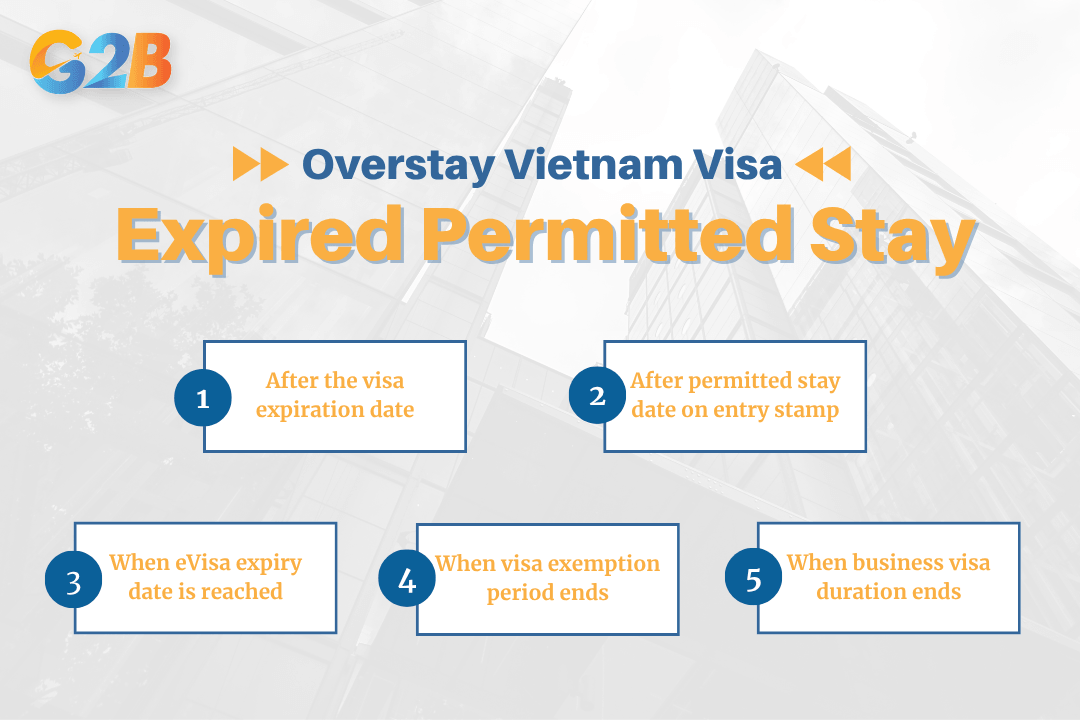
Foreign travelers must leave Vietnam before their permitted stay expires
Does one day count as an overstay in Vietnam?
Yes, staying one extra day in Vietnam counts as an illegal overstay. Immigration officers flag the passport immediately at the departure gate, and travelers must pay a fine before boarding their flight. Even a few hours past midnight trigger an official violation. Border guards enforce the rules strictly. Travelers face the exact same legal process for a one-day violation as they do for a longer delay. They must step aside, complete paperwork, and pay the mandatory penalty in Vietnamese Dong (VND).
What are the penalties for overstay Vietnam visa?
Penalties for a Vietnam visa overstay include monetary fines, exit delays, forced deportation, and entry bans. The severity of the punishment increases based on the total number of expired days.
How are Vietnam visa overstay fines calculated by number of days?
The Vietnamese government calculates overstay fines using the duration brackets defined in Decree 144/2021/ND-CP. Longer unauthorized stays trigger higher financial penalties and stricter administrative actions. Officers assess the exact duration from the day after expiration until the day the traveler reports to immigration. The following table details the official fine ranges:
| Overstay duration | Penalty range (VND) | Approximate USD |
|---|---|---|
| Less than 16 days | 500,000 - 2,000,000 VND | $20 - $85 |
| from 16 days to under 30 days | 3,000,000 - 5,000,000 VND | $130 - $220 |
| from 30 days to under 60 days | 5,000,000 - 10,000,000 VND | $220 - $440 |
| from 60 days to under 90 days | 10,000,000 - 15,000,000 VND | $440 - $660 |
| 90 days or more | 15,000,000 - 40,000,000 VND | $660 - $1500 |
Note: Exchange rates fluctuate. Fines are legally mandated in Vietnamese Dong (VND).
Can you be detained for visa overstay?
Yes, immigration authorities can detain foreigners for serious or repeated visa overstays. Detention typically occurs when travelers overstay for several months or fail to present a valid passport. Officers rarely detain individuals for short overstays of a few days. They focus detention efforts on cases involving illegal employment, lack of financial support, or refusal to comply with exit orders. Detained individuals remain in immigration holding facilities until their embassy intervenes or family members arrange a return flight.
Can you be blacklisted after overstay?
Yes, the Vietnam Immigration Department blacklists foreigners who overstay their visas for extended periods. A blacklist entry blocks the individual from applying for future Vietnam visas. The government implements entry bans ranging from one year to a permanent ban. Short overstays rarely trigger a blacklist if the traveler pays the fine promptly. However, overstays exceeding 30 days carry a high risk of future visa refusal. Immigration systems track passport numbers and biometric data to enforce these bans at all border crossings.
How much is the fine for overstay Vietnam visa?
The fine for a Vietnam visa overstay ranges from 500,000 VND to 20,000,000 VND. The final amount depends on the overstay length and the specific decision of the immigration officer handling the case.
What are the typical fine ranges?
Typical fine ranges start at 500,000 VND for a 1-day overstay and reach up to 20,000,000 VND for overstays exceeding 90 days. Immigration officers apply official penalty brackets based on government regulations. Decree 144/2021/ND-CP sets the legal standard for these administrative penalties. Officers hold the authority to choose the minimum or maximum amount within the specific bracket. Most first-time offenders receive the lower end of the penalty scale. Travelers must pay these fines in cash.
What increases the fine amount?
Several factors increase the final overstay fine amount. These include longer overstay durations, repeat immigration offences, engaging in unauthorized employment, and missing passport documents. Immigration officers review the complete context of the violation. The penalty increases when officers discover additional violations during the exit process.
Factors that maximize the fine include:
- Hiding from local police authorities
- Working for a Vietnamese company without a valid work permit
- Losing the original passport and failing to report it
- Repeating a visa overstay from a previous visit
How do you leave Vietnam after overstaying a visa?
You leave Vietnam after an overstay by paying the required administrative fine and obtaining an exit clearance. The process requires coordination with the Vietnam Immigration Department or airport border police.
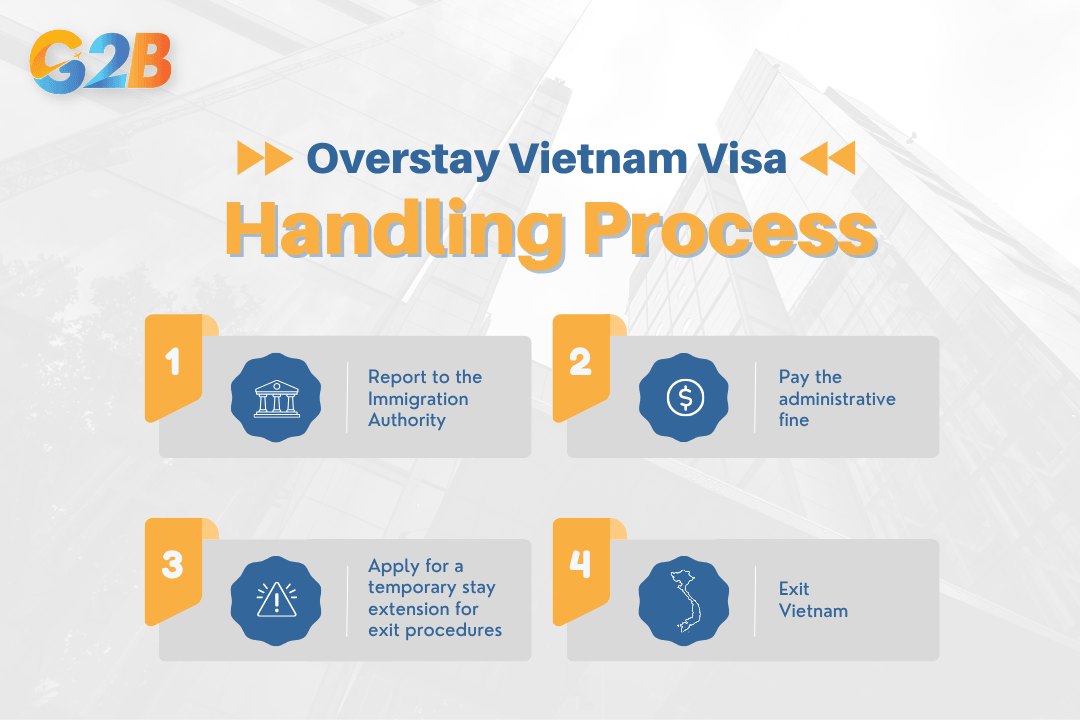
Process for handling foreigners with expired visas in Vietnam
Can you exit Vietnam at the airport?
You can exit Vietnam at the airport only for minor overstays. The airport immigration officers process the fine directly at the departure counter before your flight. Travelers with short overstays should arrive at the airport at least four hours before departure. They must bring enough Vietnamese Dong to cover the penalty. The officer calculates the fine, prints a receipt, and stamps the passport for exit. For overstays exceeding a few days, airport staff will deny boarding and direct the traveler to the central immigration office in the city.
Do you need an exit visa or exit permission?
Yes, foreigners may need a special exit permit/exit stamp to leave Vietnam if they overstay for a long period. The Vietnam Immigration Department issues this authorization after the traveler pays the full fine. Processing times and any short departure window vary by case and office.
Required steps to get an exit visa include:
- Submit the original passport to the immigration office
- Complete the administrative violation explanation form
- Provide flight tickets showing the planned departure date
- Pay the official penalty fee in cash
How long does the exit process take?
The exit process takes one day for minor airport overstays and up to seven business days for complex cases. Processing times depend on the severity of the violation and government workload. Same-day cases occur at the airport for individuals with a 1 or 2-day overstay. Multi-day cases happen when the traveler must visit the city immigration headquarters. Delayed cases arise when the foreigner loses their passport or requires a new travel document from their embassy. Weekends and national holidays pause all official processing.
Where do you pay Vietnam visa overstay fines?
You pay Vietnam visa overstay fines at the airport immigration counter or the Vietnam Immigration Department headquarters. The correct payment location depends entirely on the total length of the overstay.
Can you pay fines at the airport immigration counter?
Yes, you can pay fines at the airport immigration counter for brief overstays lasting less than three days. Border guards collect the fee in cash before stamping the exit approval. This process targets tourists who make simple calculation errors regarding their departure date. Travelers should carry exact change in VND. Airport offices rarely accept foreign currency or credit cards for administrative fines.
When must you visit the Vietnam immigration department office?
You must visit the Vietnam Immigration Department office if your overstay exceeds three days. Airport authorities cannot process long-term overstays and will block your departure. Foreigners must report to the immigration offices located in Hanoi, Da Nang, or Ho Chi Minh City. Provincial police departments also handle cases for individuals residing outside major cities. The central office requires a formal explanation letter detailing the reason for the overstay.
Can an agency help with visa overstays?
Yes, professional consulting agencies can help foreigners resolve complex visa overstay cases. Agencies guide travelers through the paperwork, represent them at the immigration office, and ensure faster processing. Working with an expert reduces stress and prevents costly mistakes. Experienced consultants manage the communication with government officials. They ensure the foreigner prepares the correct documents before submitting the final exit application.
Can you extend a Vietnam visa instead of paying overstay penalties?
No, you cannot extend a Vietnam visa after it expires without first paying the overstay penalty. The immigration department requires full payment of the fine before processing any extension requests.
Is visa extension possible after expiry?
Visa extension is legally possible after expiry, but it transitions into an overstay handling process. The applicant faces fines and a strict review before the government grants any additional stay duration. Applying for an extension before the expiration date is a standard, straightforward procedure. Once the date passes, the system flags the passport as illegal. The government limits post-expiry extensions to specific situations, such as severe medical emergencies or unexpected flight cancellations.
Who can apply for a visa extension?
Sponsored visa holders, business visa holders, and certain family visa holders can apply for an extension. Tourist visa and eVisa holders generally cannot extend their stay under current regulations. The application requires a legitimate sponsor in Vietnam:
- Business visa holders need their Vietnamese employer to submit the extension request.
- Family members need their Vietnamese spouse or relative to provide sponsorship documents.
- Tourist visa holders must leave the country and apply for a new visa to return.
What happens if you overstay an eVisa in Vietnam?
Overstaying an eVisa in Vietnam results in the exact same fines, exit delays, and legal penalties as overstaying a traditional visa. eVisa holders hold no special exemptions from immigration laws.
What are the eVisa overstay rules?
eVisa overstay rules mandate a daily fine and require the traveler to secure an exit stamp before leaving. The digital nature of the eVisa makes expiration tracking automatic for border guards. The government issues eVisas for up to 90 days. The precise expiry date prints clearly on the PDF document. The system alerts the immigration officer immediately when they scan an expired eVisa at the airport counter. eVisa holders must comply with the standard fine brackets outlined in Decree 144.
Can you apply for a new eVisa after overstay?
You can apply for a new eVisa after an overstay, but the government may reject the application. A record of a previous overstay lowers the approval chances for future online visas. The immigration database saves the violation history permanently. Short overstays rarely trigger an automatic rejection. However, individuals who overstayed for weeks or months will likely face a denied eVisa status. These travelers must apply through a Vietnamese embassy and provide a written explanation to obtain a new entry permit.
What happens in long-term Vietnam visa overstay cases?
Long-term Vietnam visa overstay cases result in maximum financial fines, mandatory deportation, and long-term entry bans. Authorities investigate these cases deeply to check for illegal employment or criminal activity.
What are the penalties for overstaying for several months?
Overstaying for several months triggers fines up to 20,000,000 VND and immediate deportation orders. The government places the foreigner on a strict blacklist, preventing return for up to five years. Immigration police may conduct field visits to the foreigner's registered address. The individual must write a detailed statement explaining their extended illegal stay. The government requires the traveler to cover all flight costs associated with their deportation.
What supporting documents are required for resolution?
Resolving a long-term overstay requires the original passport, an explanation letter, and police registration forms. Specific cases also require medical records or embassy letters to justify the delay. Submitting correct documents speeds up the exit process.
Required documents include:
- Prepare a valid original passport (with at least 6 months validity).
- Submit a medical proof certificate (if the overstay resulted from hospitalization).
- Provide a local police report (if the passport was lost or stolen).
- Attach an official support letter from the foreigner's embassy.
How do you resolve a Vietnam visa overstay fast?
You resolve a Vietnam visa overstay fast by calculating your exact penalty, gathering your documents, and visiting the immigration office immediately. Quick action demonstrates cooperation and prevents the fine from increasing.
What is the step-by-step process to resolve an overstay?
The step-by-step process requires reporting to authorities, paying the assessed fine, and securing an exit permit. Following the correct sequence ensures a smooth and legal departure from Vietnam. Required steps include:
- Calculate the exact overstay days starting from the expiry date.
- Contact the local or central immigration office.
- Prepare the original passport and a clear visa copy.
- Submit the explanation form to the immigration officer.
- Pay the assessed fine in Vietnamese Dong.
- Receive the approved exit visa or exit stamp.
- Depart legally within the designated timeframe.
What are the common mistakes to avoid?
Common mistakes include ignoring the expiry date, booking return flights too early, and trusting unofficial visa agents. These errors cause missed flights, lost money, and increased legal trouble. Travelers often assume they can pay any fine at the airport. This mistake leads to denied boarding for long overstays.
Mistakes to avoid include:
- Ignoring the issue and hoping the border guards will not notice.
- Booking non-refundable flights before receiving the official exit visa.
- Using unverified social media agents who promise illegal passport stamps.
- Giving wrong dates on the official explanation letter.
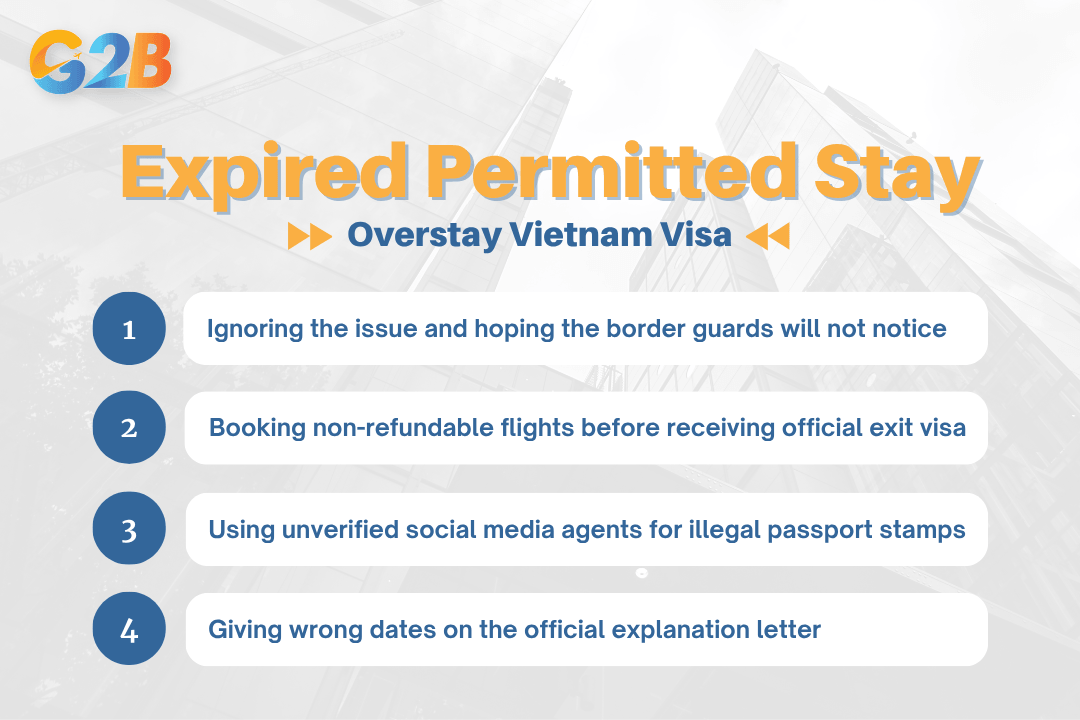
Travelers should carefully follow Vietnam visa regulations to avoid common mistakes
How to avoid overstaying in Vietnam?
You avoid overstaying in Vietnam by tracking your visa expiry date, reading the entry stamp carefully, and planning your departure early. Proactive calendar management prevents accidental immigration violations.
How do you track visa expiry dates?
You track visa expiry dates by setting digital calendar reminders and alarms on your smartphone. Checking the physical passport stamp on the day of arrival confirms the exact legal deadline. Do not rely entirely on the original visa application date. The final authorized date comes from the officer's stamp at the border. Set a reminder for seven days before the expiry date. This provides enough time to purchase a flight or arrange legal paperwork.
When should you apply early for an extension?
You should apply early for a visa extension at least seven to ten days before your current visa expires. Early application ensures the immigration office processes the request before you overstay. Extensions require coordination with sponsors and local authorities. Waiting until the final day guarantees an overstay violation because processing takes several business days.
How do you confirm the number of stay days?
You confirm the number of stay days by verifying the entry stamp and the stated visa terms in your passport. The stamp clearly shows the "permitted to remain until" date. Always double-check the officer's math at the immigration booth. If you hold a 30-day exemption, count day one as your arrival day. Do not assume the date aligns perfectly with your flight schedule.
Frequently asked questions about overstay Vietnam visa
Travelers frequently ask about the rules regarding one-day overstays, future visa impacts, and payment methods. Understanding these common questions helps foreigners navigate Vietnam's immigration system confidently.
Can I leave Vietnam with 1 day overstay?
Yes, you can leave Vietnam with a 1-day overstay. You must arrive at the airport early, report to the immigration counter, and pay a fine of approximately 500,000 VND before boarding.
Will overstay affect future Vietnam visas?
Yes, an overstay will affect future Vietnam visas if the violation lasts for a long period. Short overstays rarely impact future entries, but long overstays often lead to visa rejections.
Can I pay an overstay fine online?
No, you cannot pay a Vietnam visa overstay fine online. The government requires physical cash payments in Vietnamese Dong at the official immigration office or the airport border counter.
What happens with weekend or holiday expiry dates?
If your visa expires on a weekend or holiday, the system still counts those days as an overstay. You must exit the country or submit extension paperwork before the holiday begins.
Can children overstay visas in Vietnam?
Yes, children can overstay visas in Vietnam. The parents or legal guardians bear the legal responsibility for the violation and must pay the required fines on behalf of the minor.
Foreigners must actively track their permitted duration of stay and take immediate action if their visa expires. While short overstays generally result in a minor fine at the airport, longer violations demand formal visits to the immigration department and risk serious consequences like blacklisting or deportation. Working proactively with certified professionals helps resolve complex situations efficiently and ensures compliance with Decree 144. Maintaining respect for the legal entry limits guarantees a smooth exit from the country and protects the traveler's ability to return to Vietnam in the future. For streamlined support, G2B provides work permit / TRC / visa services, ensuring an efficient and fully compliant process for foreign investors.
