




 Delaware (USA)
  Vietnam
  Singapore
  Hong Kong
  United Kingdom
 A virtual office for business registration is a modern solution that empowers entrepreneurs to establish a professional presence without the traditional overhead. In today's dynamic business landscape, where agility and a strong first impression are paramount, virtual offices offer a strategic advantage, enabling companies to project a reputable image from day one. This article will navigate you through every aspect of using a virtual office for your company formation, covering its myriad benefits, crucial legalities and step-by-step implementation for your business structure.
Why consider a virtual office for your business registration?
The concept of a traditional physical office is rapidly evolving, giving way to more flexible and efficient models. For contemporary businesses, particularly those engaged in modern entrepreneurship, the choice of a registered address extends beyond mere geography. A virtual office, in the context of official company registration, is an increasingly relevant and powerful solution for business setup. It addresses the fundamental question: "What is a virtual office for business registration?" and immediately highlights its inherent benefits for modern enterprises.
The foundational appeal of virtual offices lies in their ability to provide agility and a strong first impression. Businesses often face the challenge of establishing a credible corporate presence without incurring substantial upfront costs associated with a physical space. A virtual office, offering a professional business address and essential services, directly tackles this dilemma. It’s an ideal startup solution for companies looking to establish a presence in a prime business location without the burden of a physical lease. For example, a tech startup with a remote team can register its company in a bustling business district, lending instant credibility without needing a physical headquarters. This flexible business address is particularly advantageous for businesses aiming for rapid market entry or those with a distributed workforce.
What exactly is a virtual office for business registration?
A virtual office, when utilized for official company registration, is a service that provides a business with a legitimate physical address and supporting administrative services, without the need for the business to occupy a dedicated physical office space. This arrangement primarily addresses the requirements of regulatory bodies for a legal business address. Essentially, it allows businesses to have a professional business address in a prestigious location, often accompanied by a suite of services designed to support daily operations.
The components and services included typically emphasize the "legal" and "professional" aspects crucial for company registration. A virtual office usually includes a prestigious mailing address, professional mail handling, and often local phone numbers with call forwarding. Beyond this, many providers also offer registered office services, ensuring compliance with statutory requirements for a legal entity. Mail handling involves receiving, sorting, and forwarding physical mail, while call forwarding directs calls from a dedicated business phone number to the client's preferred contact. Some advanced packages may even include virtual receptionist services, providing live answering and message taking. Each of these components contributes to fulfilling official registration requirements by providing a verifiable, professional point of contact for government authorities and clients alike. Unlike a P.O. box, a virtual office address is tied to a real physical location, making it generally accepted for business registrations and licenses.
Key benefits of using a virtual office for company registration
Utilizing a virtual office for company registration offers multi-faceted advantages, each addressing common challenges faced by businesses, particularly startups and those seeking expansion. These benefits include cost savings, operational efficiency, enhanced professional image, greater market entry capabilities, and robust support for remote work. They translate directly into tangible gains, answering questions about the overall value proposition.
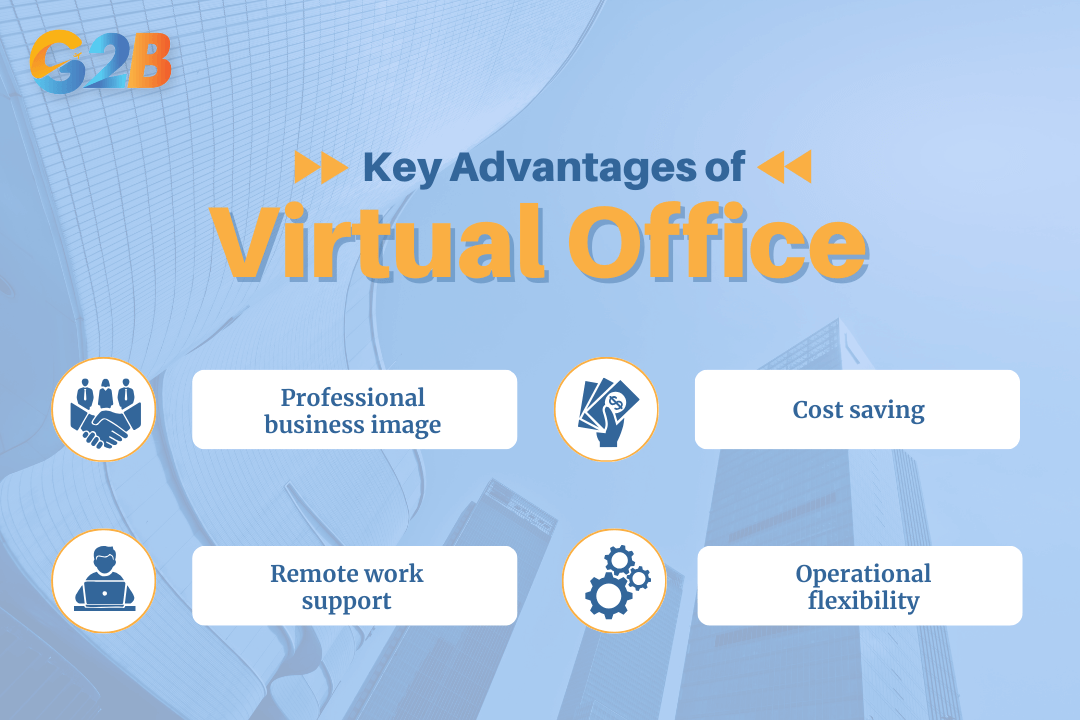
Key benefits of using a virtual office for company registration
How does a virtual office reduce business setup costs?
A virtual office significantly reduces business setup and ongoing operational costs by eliminating the necessity for a physical office space. By removing the need for a physical office, businesses avoid substantial expenses such as monthly rent, utility bills, and the initial capital outlay for office furniture and equipment. For instance, a startup can save up to 70% on monthly office costs by choosing a virtual office over leasing a physical space. This overhead reduction allows entrepreneurs to allocate financial resources more strategically towards core business development, marketing, and talent acquisition, rather than being tied down by fixed property expenses. The financial flexibility gained is crucial for lean operations and enables businesses to remain agile in competitive markets.
Can a virtual office provide a professional business image?
Yes, a virtual office can provide a highly professional business image, essential for building credibility and trust. A virtual office located in a prime business district instantly lends credibility and a professional facade, which is crucial for client and investor perception. Instead of using a residential address that might raise privacy concerns or appear less established, businesses can leverage a prestigious address on their business cards, websites, and official documents. This enhances brand image and creates a perception of an established corporate presence, vital for making strong first impressions. For example, registering a business in a renowned commercial hub through a virtual office can give a small enterprise the appearance of a larger, more reputable firm.
What flexibility does a virtual office offer for business operations?
A virtual office offers unparalleled flexibility for business operations, supporting modern work models and enabling scalable growth. The 'work-from-anywhere' model enabled by a virtual office supports a remote team structure, fostering talent acquisition regardless of geographical location. This adaptability means businesses are not bound by physical constraints, allowing them to scale up or down services as needed without the hassle of long-term leases or property management. For instance, a growing e-commerce business can easily expand its team without needing to find a larger office space, maintaining operational agility. This flexibility is a strategic advantage for businesses that value lean operations and the freedom to evolve.
How do virtual office services support daily business needs?
Beyond just an address, virtual office services provide crucial support for daily business needs, streamlining administrative tasks. Services like professional mail and package handling, a dedicated business phone number with call forwarding, and access to meeting rooms ensure smooth daily operations. Professional mail management ensures that all official correspondence is received, processed, and forwarded promptly, preventing critical information from being missed. A dedicated phone number, often with a virtual receptionist service, ensures that calls are answered professionally in the company's name, enhancing customer service and missed calls. Additionally, access to meeting facilities on demand allows remote teams to collaborate or meet clients in a professional setting when needed, combining the benefits of a virtual presence with the utility of a physical space.
Legal & regulatory aspects when registering your business with a virtual office
Navigating the legal and regulatory landscape is a critical step when registering your business with a virtual office. This section aims to directly address the questions: "Is a virtual office legal for business registration?" and "What are the legal steps involved?". The importance of due diligence and selecting a compliant provider cannot be overstated to ensure your company meets all statutory requirements and avoids potential issues.
Is a virtual address legally acceptable for company registration?
A virtual address is generally legally acceptable for establishing a corporate legal entity and serving as your business domicile, provided it meets specific statutory requirements of the jurisdiction. Many states and jurisdictions allow businesses to use a virtual office address for licensing and registration purposes, as long as it is a legitimate commercial location and not a P.O. Box. This means the address must be a real physical location that can receive mail during standard business hours.
It is crucial to verify that the chosen virtual office provider is registered as a Commercial Mail Receiving Agency (CMRA) with the relevant postal authorities and that they comply with all identity verification requirements, such as completing USPS Form 1583 in the U.S.. Without proper documentation from a legitimate provider, institutions may reject your registration documents.
In Vietnam, virtual offices are legally acceptable for business registration under the Enterprise Law 2020, provided the address is a verifiable physical location in a commercial building (not a P.O. Box) that can receive official mail and inspections, as per Decree 01/2021/ND-CP. Always confirm with the Department of Planning and Investment (DPI) in provinces like Ho Chi Minh City.
What documentation is required for virtual office registration?
To register a business using a virtual office, a specific set of documentation is typically required to ensure transparency and compliance. Key documentation often includes proof of identity for directors, the company articles of association, and a signed virtual office agreement. Providers will usually require two forms of government-issued identification, such as a driver's license or passport, along with a utility bill for proof of residential address. For the business itself, documents like the certificate of incorporation, LLC formation documents, or other business registration papers proving legal entity status are necessary. Additionally, a signed contract with the virtual office provider is essential as it outlines the terms of service and provides legal title to use the premises at the indicated address. Some jurisdictions may also require an Employer Identification Number (EIN) or equivalent tax ID.
Navigating local & industry-specific regulations
Businesses must be aware of local zoning laws and industry-specific regulations that might influence the acceptability of a virtual office for certain types of operations. While virtual addresses are widely accepted for company registration, federal, state, and local requirements can vary significantly. Some industries, particularly those involving physical inventory, customer-facing operations, or specific licensing requirements (e.g., healthcare, food services), may necessitate a physical inspection or a dedicated physical presence beyond a virtual office. For example, local or city business licenses often have stricter requirements due to zoning laws and safety inspections. In Vietnam, while virtual offices suit most service-based businesses, industries like food services or retail may require a physical site for fire safety and health inspections under local DPI rules.
Who can benefit most from a virtual office for registration?
Virtual offices offer tailored advantages to a diverse range of entrepreneurs and businesses. This section delves into identifying specific target audiences and their pain points, answering the question: "Who should use a virtual office?". The inherent flexibility and cost-effectiveness make it an attractive solution for various business models.
Startups & small businesses
For startups and SMEs operating on a limited budget and prioritizing lean operations, a virtual office allows for quick market entry without significant upfront capital. These businesses often face the challenge of establishing credibility and a professional image while minimizing overhead costs. A virtual office provides a prestigious address that enhances brand perception without the financial burden of renting and maintaining a physical office. This enables new ventures to conserve capital, focusing resources on product development, marketing, and scaling, rather than expensive real estate. The quick setup and minimal maintenance associated with virtual offices make them an ideal choice for market validation and efficient beginnings.
Remote & distributed teams
A virtual office provides a centralized, professional presence for remote and distributed teams, fostering a cohesive corporate identity regardless of employee location. As businesses increasingly adopt geographical flexibility and work-from-anywhere models, maintaining a single, official business address becomes crucial for legal and administrative consistency. A virtual office unifies disparate teams under one professional address, simplifying mail management, official correspondence, and the projection of a consistent brand image to clients and partners. This allows companies to tap into a wider talent pool without geographical limitations, supporting work-life balance for employees while ensuring a strong corporate footprint.
International companies
International companies seeking seamless market entry or establishing a representative office vs subsidiary can utilize a virtual office to gain a local footprint efficiently. For foreign direct investment and global expansion, a virtual office offers a cost-effective and low-risk way to test new markets or establish a local presence without committing to a full physical office lease. It provides a reputable local address for business registration, allowing international firms to comply with local regulations and build trust with local clients and authorities. This strategic advantage enables businesses to expand their global presence and explore new opportunities with minimal financial outlay and maximum flexibility.
Choosing the right virtual office provider for your registration needs
Selecting the appropriate virtual office provider is a pivotal decision that can impact your business's professionalism, compliance, and operational efficiency. This section aims to guide the user through the decision-making process, answering the question: "How to choose a virtual office provider?” It is crucial to consider specific criteria to ensure a long-term, beneficial partnership.
What services should a reputable provider offer?
A reputable provider should offer a comprehensive package including mail handling, call answering, and access to meeting facilities, alongside transparent pricing and dedicated customer support. Essential services go beyond just an address and typically include secure mail reception, sorting, and forwarding, ensuring all official correspondence is managed efficiently. Professional call answering services, often with a dedicated local phone number, are vital for maintaining a polished image and ensuring no important calls are missed. Additionally, access to meeting rooms or coworking spaces on an as-needed basis provides the flexibility for in-person interactions. Transparent pricing with no hidden fees and responsive client support are also key indicators of a trustworthy provider.
Location & prestige
Yes, choosing an address in a prime business district significantly enhances your professional image and can positively influence client and investor perception. While a virtual office provides flexibility, the actual physical location of the address it offers carries considerable weight. A prestigious address in a well-regarded commercial area instantly boosts credibility and can make your business appear more established and reliable. This is particularly important when pitching to potential clients, securing funding from investors, or seeking partnerships. The chosen address reflects on your brand, so opting for a location that aligns with your desired image and target market is a strategic consideration.
Customer support & scalability
A good provider offers responsive customer assistance and flexible plans that can scale with your business growth, ensuring a long-term partnership. As businesses evolve, their needs for virtual office services may change. A provider that offers flexible plans allows for easy upgrades or downgrades of services, such as adding more mail forwarding capacity, expanding virtual assistant support, or increasing meeting room access, without disruptions. Responsive customer support is equally important, providing timely assistance with any queries or operational adjustments. A provider that demonstrates a commitment to long-term partnership and offers adaptable solutions ensures that your virtual office infrastructure can seamlessly support your business as it expands.
Guide to registering your business with a virtual office
Registering your business with a virtual office is a straightforward process that combines the benefits of a professional presence with operational flexibility. This section provides a clear, actionable guide, addressing the "How-to" intent. By following these steps, you can effectively incorporate your company while leveraging the advantages of a virtual office.
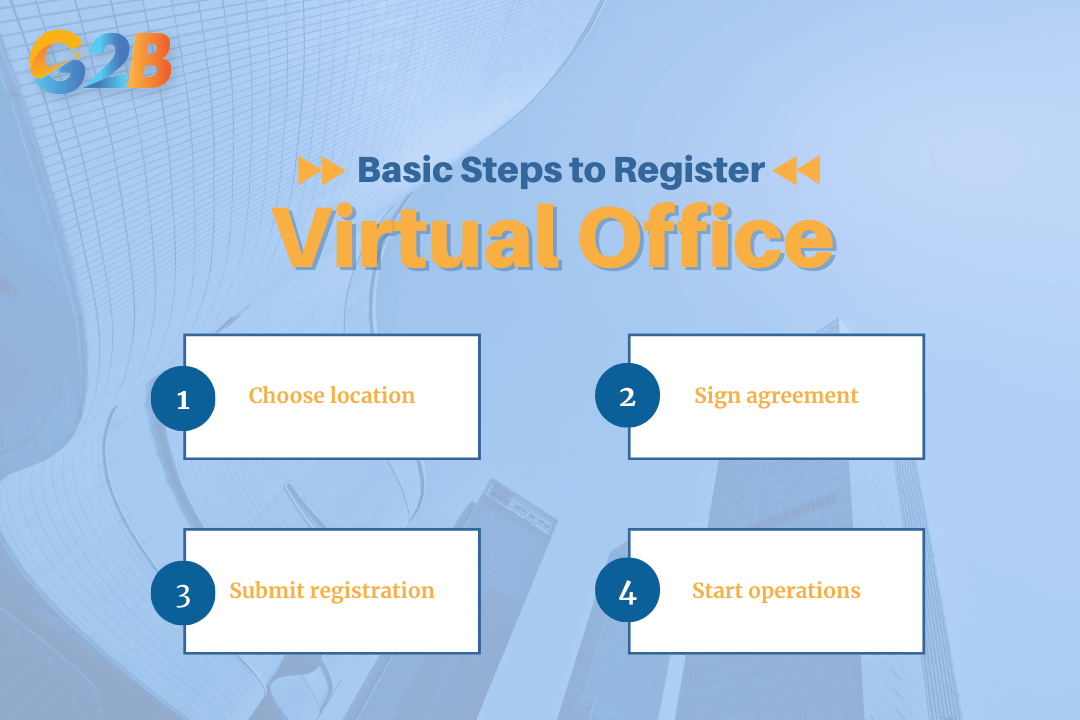
Guide to registering your business with a virtual office
Selecting your virtual office location & plan
Begin by carefully selecting a virtual office location that aligns with your target market and a plan that offers the services crucial for your business operations. Research potential addresses in prime business districts that enhance your company's image and resonate with your clientele. Evaluate the service packages offered by various providers, considering features such as mail handling, call answering, and access to meeting facilities. Ensure the chosen plan fits your budget while providing the necessary support for your business needs and legal compliance.
Completing the virtual office agreement
Formalize your partnership by completing and signing the virtual office agreement, which legally grants you the right to use the address for registration. This contract is a critical document, as it serves as proof of your legal title to the premises when dealing with government authorities. The agreement will detail the services included, pricing structure, and terms and conditions. Thoroughly review all clauses to ensure they meet your business requirements and statutory obligations.
Filing business registration documents with authorities
Proceed to file all necessary business registration documents with the relevant government authorities, listing your new virtual office address as the official registered office. This typically involves submitting articles of incorporation, LLC formation documents, or other required forms to agencies like the Secretary of State or Department of Planning and Investment. Ensure that the virtual office address is correctly entered as the primary business address on all official paperwork. It is also essential to pay all designated fees to complete the submission process and obtain official approval for your company's formation.
Post-registration
Once registered, actively utilize the mail handling, call forwarding, and other services to manage your business communications effectively. Update your business website, stationery, and other public-facing materials with your new professional address. Leverage the mail forwarding service to receive all official and client correspondence promptly. If included, use the professional call answering service to ensure every client interaction begins with a polished impression. By integrating these services into your daily workflow, you maximize the value of your virtual office and ensure seamless operations.
Utilizing a virtual office is a strategic advantage, offering significant cost savings by eliminating traditional overhead, projecting an enhanced professional image through a prestigious address, and ensuring seamless legal and regulatory compliance. It supports a diverse ecosystem of businesses, from nascent startups and agile remote teams to ambitious international corporations seeking effortless market entry. The decision to embrace a virtual office is a smart business choice, aligning your operations with the future of work.
Ready to start your journey in Vietnam? Contact G2B today for a consultation on how to set up a company in Vietnam service and to follow annual compliance requirements during operations. Let us handle the bureaucracy so you can focus on your business.
