




 Delaware (USA)
  Vietnam
  Singapore
  Hong Kong
  United Kingdom
 Common mistakes when applying for Vietnam eVisa cause automatic rejections, processing delays, and denied boardings at the airport. The Vietnam Immigration Department manages the electronic visa system for foreign nationals. Travelers submit digital applications through the official national web portal. The process requires precise personal information, valid travel documents, and exact itinerary details. Small spelling errors or incorrect document uploads stop the approval process immediately. This guide explains the errors travelers make during the application process and provides factual rules to ensure successful visa approvals.
What are the most common Vietnam eVisa application mistakes?
Applicants submit incorrect personal data, upload invalid documents, or misinterpret entry rules. These errors cause immediate rejection or significant travel delays. The electronic visa system uses automated software to scan applications. The system matches the typed text with the uploaded passport images. Any difference between the text and the image stops the application. Travelers often make simple typing errors during the form-filling stage.
Which specific data entry mistakes cause application failures?
Travelers type the wrong passport numbers, misspell their legal names, or select incorrect visa types. The immigration system requires exact matches with official documents. Application errors include:
- Leave out middle names from the application form.
- Type the letter "O" instead of the number "0" in the passport number.
- Choose a tourist visa instead of a business visa for work trips.
The system issues the visa exactly as requested. Wrong visa types restrict legal activities inside Vietnam. Business travelers cannot attend meetings legally on a tourist visa.
Why do personal information errors cause eVisa rejection?
Immigration systems reject mismatched identity data automatically. The portal compares the submitted text directly with the passport's Machine Readable Zone (MRZ). The Machine Readable Zone sits at the bottom of the passport data page. This zone contains international standard identity data. The Vietnam Immigration Department uses this specific data to verify identities. The system flags applications when the typed data does not match the MRZ data perfectly.
How does name order differ from passport records?
Applicants type their names in an incorrect sequence. The system requires the exact name order printed on the passport ICAO line. Different countries use different name orders. The passport MRZ standardizes this order. Typing "Nguyen Van A" instead of "Van A Nguyen" creates a critical mismatch. Travelers must copy the exact sequence from the bottom two lines of their passport.
What date of birth formats does the system require?
The Vietnam eVisa portal requires the standard DD/MM/YYYY date format. Applicants cause system errors when they use alternative regional date formats. Many applicants use the American MM/DD/YYYY format by mistake. The system reads this incorrect input and generates a mismatched birth date. The automated review process rejects the application when the generated date differs from the passport scan.
Why does the nationality field create inconsistencies?
Applicants select a nationality that differs from the uploaded passport. Dual citizens cause errors when they mix details from two different passports. Travelers must select the exact country that issued the passport they plan to use. The system links the visa specifically to one travel document. Nationality rules include:
- Select the country printed on the passport cover.
- Match the country code in the passport MRZ.
- Use the same passport for the application and the actual border entry.
How do passport mistakes affect Vietnam eVisa approval?
Invalid or near-expiry passports lead to automatic denial. The Vietnam Immigration Department enforces strict international passport standards for all foreign entrants. Travelers must hold a valid passport to receive an electronic visa. The government rejects temporary travel documents, emergency passports, and refugee travel documents.
What are the specific passport validity requirements?
Vietnam requires passports to remain valid for at least six months from the planned entry date. The passport must also contain empty pages. Border guards stamp the passport upon arrival. Travelers cannot enter Vietnam without space for these physical stamps. The passport requirements include:
- Keep passport validity ≥ 6 months from the date of entry into Vietnam.
- Retain at least 2 blank pages for entry and exit stamps.
- Upload a clear, flat image of the passport data page.
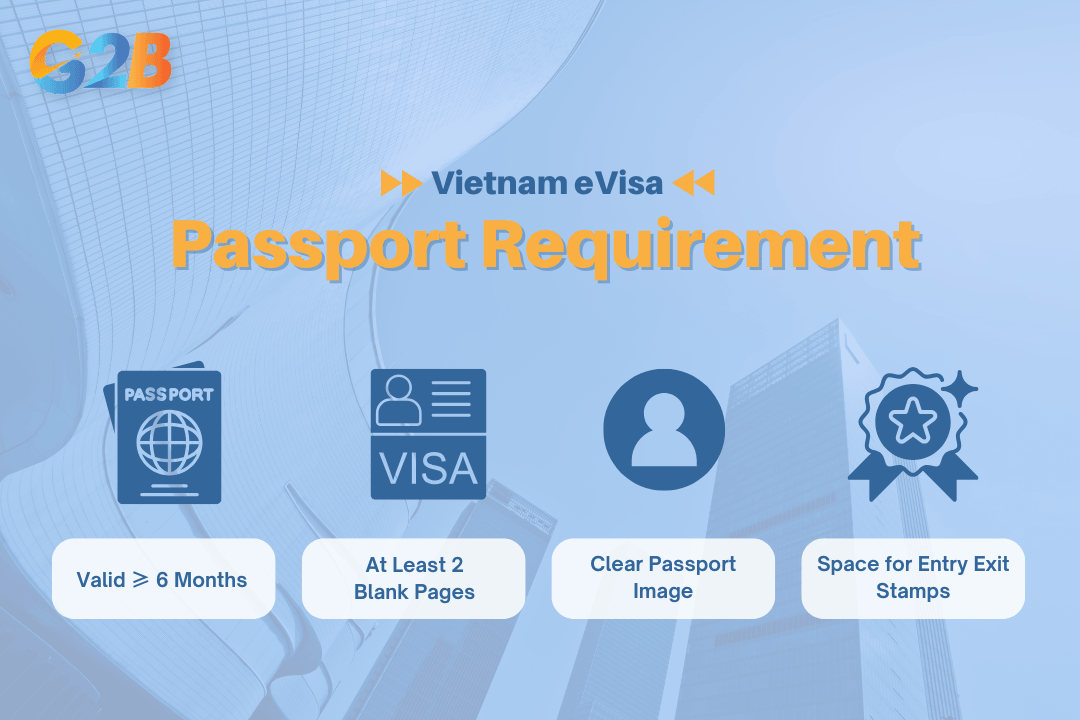
Travelers must meet passport validity and page requirements to enter Vietnam
Which upload errors invalidate the passport scan?
Applicants upload blurred, cropped, or obscured passport images. The automated system fails to read the necessary biometric data from bad scans. The uploaded image must show all four corners of the passport data page. Camera flashes often create white spots over the text or the photo.
| Passport Scan Rule | Consequence of Violation |
|---|---|
| Show all four corners | System rejects cropped images |
| Avoid camera glare | System fails to read the MRZ lines |
| Keep the page flat | System misreads distorted letters |
| Include the MRZ lines | System cannot verify the identity data |
What photo mistakes lead to Vietnam eVisa rejection?
Non-compliant photos violate international biometric standards. The immigration officers reject applications with wrong backgrounds, bad lighting, or hidden facial features. The Vietnam eVisa requires a separate digital portrait photo. This photo must follow strict biometric rules. The system uses this photo for facial recognition at the border checkpoints.
Which biometric standards apply to the portrait photo?
The photo must show a clear, front-facing view of the applicant. The subject must maintain a neutral expression against a solid white background. Many applicants upload casual selfies or holiday photos. The immigration department rejects these non-standard images immediately. Rules for the digital photo include:
- Use a plain white background without shadows.
- Look directly at the camera without tilting the head.
- Remove glasses, hats, and large hair accessories.
- Upload a recent photo taken within the last 6 months.
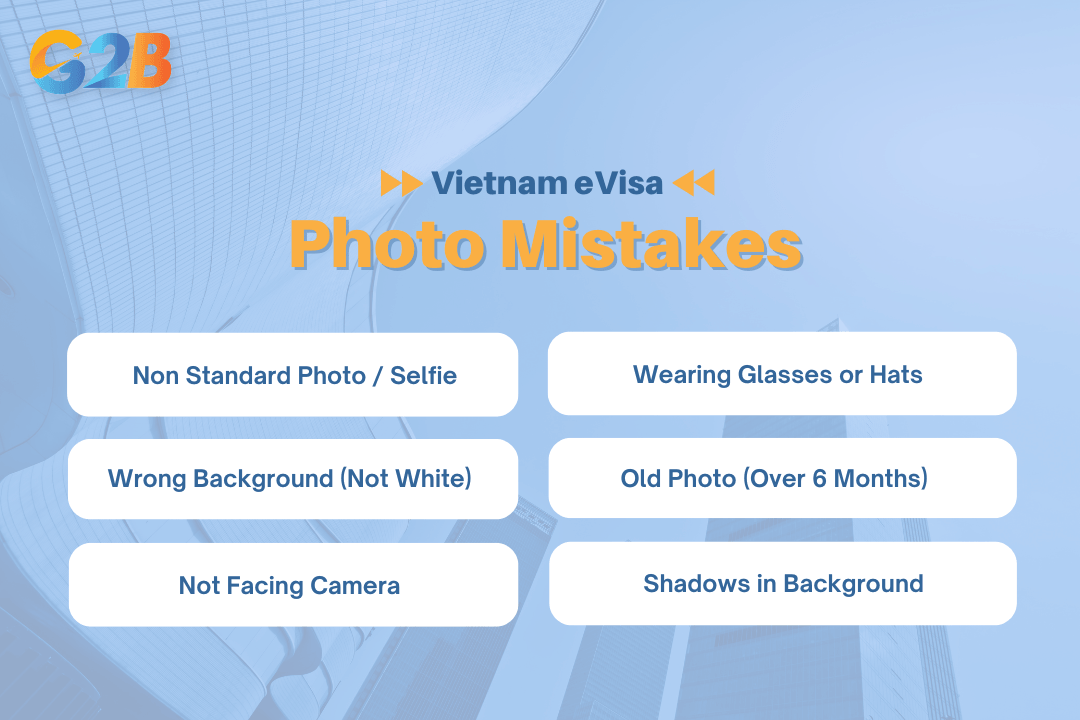
Incorrect photo format and standards can lead to Vietnam eVisa rejection
How do image quality issues affect the process?
Low-resolution or distorted photos cause verification failures. The system requires clear JPEG files that show sharp facial details. Applicants often compress images too much. Low-quality images prevent the border software from confirming the traveler's identity.
| Photo Error Type | System Result | Correction Method |
|---|---|---|
| Dark shadows | Automatic rejection | Use front-facing light sources |
| Colored background | Manual rejection | Stand against a white wall |
| Wearing glasses | Biometric failure | Remove all eyewear before taking photo |
| Low resolution | Unreadable file | Use original camera files (JPEG) |
Why does choosing the wrong entry port cause problems?
eVisas are valid only for the selected entry checkpoint. Border officials deny entry when a traveler arrives at a different, unapproved port. The Vietnam eVisa requires travelers to declare their exact arrival location. The government prints this specific port name directly on the approved visa document.
Which entry checkpoints accept Vietnam eVisas?
The government authorizes specific international airports, land borders, and seaports to process electronic visas. Domestic ports do not accept international arrivals. Travelers must check their flight or bus tickets before selecting the port. Accepted port categories include:
- International Airports (Noi Bai, Tan Son Nhat, Da Nang, Cam Ranh, Phu Quoc).
- International Land Borders (Moc Bai, Lao Bao, Cau Treo).
- International Seaports (Hon Gai, Hai Phong, Da Nang Port).
What happens if you arrive at an unapproved port?
Airlines deny boarding to travelers with mismatched entry ports. Border guards refuse entry to passengers who arrive at the wrong checkpoint. For example, selecting the Hanoi airport (Noi Bai) but flying into the Ho Chi Minh City airport (Tan Son Nhat) invalidates the entry. The traveler must apply for a new visa to enter through the new location.
Can travelers change the entry port after eVisa approval?
Travelers cannot modify approved electronic visas. Applicants must submit a completely new application and pay new fees to change the entry port. The system locks all data after approval. The immigration department does not offer amendment services for issued visas.
What mistakes occur with visa duration and validity dates?
Applicants select incorrect entry or exit dates on the form. Entering before the approved date or overstaying the granted duration violates immigration laws. The electronic visa system allows travelers to stay for specific periods. Current regulations usually grant 30-day or 90-day single/multiple entry, or 1-year multiple entry stays. Travelers must calculate their travel dates accurately.
How do entry date mistakes affect travel plans?
The eVisa validity begins on the exact entry date printed on the document. Travelers cannot enter Vietnam before this approved start date. Airlines check the visa start date during check-in. If the flight arrives in Vietnam one day before the visa starts, the airline prevents the passenger from boarding. Rules for visa dates include:
- Match the visa entry date with the flight arrival date.
- Account for time zone differences between the departure country and Vietnam.
- Enter Vietnam on or after the approved start date.
What are the consequences of overstaying the granted duration?
Overstaying the visa duration results in heavy fines, deportation, and future entry bans. The immigration system tracks the exact exit date of every traveler. Travelers must leave Vietnam on or before the expiration date printed on the visa. The government calculates the duration strictly from the approved start date, even if the traveler enters the country late.
| Date Mistake | Consequence at the Border |
|---|---|
| Arrive before the start date | Denied boarding by the airline |
| Arrive after start date | Allowed entry, but lost validity days |
| Leave after the end date | Financial fines and exit delays |
| Miscalculate 90 days | Potential blacklist from future entries |
How do payment errors affect eVisa processing?
Unsuccessful payment prevents application processing entirely. The immigration department only reviews applications after receiving the full, non-refundable processing fee. The official web portal uses an integrated payment gateway. Applicants must pay the government fee online using an international credit or debit card. The system generates a specific registration code only after a successful transaction.
Why do international card transactions fail on the portal?
Foreign banks block the transaction to prevent suspected fraud. The Vietnam payment gateway requires international cards to support 3D Secure verification. Many travelers assume the payment succeeds, but the system actually declines the card. Common payment failures occur when:
- The user closes the browser before the gateway confirms the transaction.
- The bank denies international payments to Vietnam.
- The applicant enters the wrong card details or OTP codes.
Are eVisa processing fees refundable?
The government classifies all visa processing fees as non-refundable. The immigration department keeps the fee regardless of approval or rejection. Travelers lose their money if they make application errors. Applying again requires a completely new payment. Applicants must confirm payment receipt through the application search tool.
What document upload errors cause delays or rejection?
Incorrect file formats or missing documents invalidate applications. The system fails to process files that exceed size limits or use unsupported formats. The digital application requires strict technical compliance. Uploading the wrong file type stops the automated review process.
What are the exact technical requirements for document uploads?
The system requires JPEG or PNG file formats for all uploads. The file size must remain under the maximum limit set by the portal. PDF files or Word documents cause upload errors. Applicants must convert all scans into image files before starting the application.
| Requirement Type | Technical Standard | Consequence of Error |
|---|---|---|
| File Format | JPEG, JPG, or PNG | Upload portal rejects the file |
| File Size | Under 2 Megabytes (MB) | System displays an error message |
| Image Clarity | High contrast, sharp text | Manual review rejection |
| Color Mode | Full color (RGB) | Black and white scans cause rejection |
How do incomplete passport scans ruin applications?
Applicants cut off the edges of the passport page during scanning. The system requires the entire biographical page, including the bottom machine-readable lines. Some scanners automatically crop white space. This cropping removes the vital ICAO lines at the bottom of the passport. Upload steps include:
- Scan the entire data page flat.
- Check the file size before uploading.
- Verify the format matches JPEG standards.
- Review the uploaded image preview on the portal.
Why does applying too late create problems?
Late applications risk missing exact travel dates. The immigration department processes requests during standard working days, excluding weekends and national holidays. Travelers often underestimate the time required for government processing. The eVisa system is not an instant approval service.
How long does the Vietnam Immigration Department take to process eVisas?
The standard processing time takes 3 to 5 working days. System maintenance or manual document reviews extend this timeline significantly. Working days in Vietnam run from Monday to Friday. The immigration office closes on Saturday, Sunday, and during major national events like the Tet Lunar New Year. Processing delays occur during:
- Peak international tourist seasons.
- Vietnamese national public holidays.
- Periods of high application volume.
When should travelers submit their eVisa applications?
Travelers must submit applications at least 7 to 10 days before their departure date. Early application provides time to fix errors and resubmit if necessary. Applying late leaves no room for corrections. If the department rejects a late application due to a misspelt name, the traveler misses their scheduled flight.
What strategic mistakes reduce eVisa approval success?
Lack of verification and rushed submissions increase rejection rates. Submitting forms without double-checking the data guarantees critical errors. Many applicants rush through the online form. They rely on memory instead of copying data directly from their physical passport.
How do applicants fail to review their data?
Applicants skip the final review page before clicking submit. They ignore system warnings regarding mismatched data or incorrect file uploads. The portal provides a summary page before the payment step. Travelers must use this page to cross-check every single letter and number against their passport.
Review strategies include:
- Verify the spelling of all names letter by letter.
- Confirm the passport number matches exactly.
- Check the entry date against the booked flight ticket.
- Ensure the selected entry port matches the arrival airport.
How do professional services improve eVisa application accuracy?
Corporate services help applicants avoid strategic errors by reviewing documents before submission. Professionals identify formatting mistakes and ensure strict compliance with immigration rules. Avoiding strategic mistakes includes:
- Consult regulations for specific business visa requirements.
- Match the visa application details with the corporate sponsor's information.
- Use structured checklists to verify biometric photo compliance.
Applying for a Vietnam eVisa requires strict attention to detail and adherence to government regulations. Travelers secure application approvals by providing accurate personal data, valid passports, and compliant biometric photos. The Vietnam Immigration Department uses automated systems to reject mismatched names, incorrect dates, and wrong entry ports immediately. Applicants ensure smooth border entry by submitting their requests early, verifying payment success, and cross-checking all form fields against their physical travel documents. Following these exact guidelines prevents travel delays, financial losses, and entry denials at Vietnamese border checkpoints. For streamlined support, G2B provides work permit / TRC / visa services, ensuring an efficient and fully compliant process for foreigners.
