




 Delaware (USA)
  Vietnam
  Singapore
  Hong Kong
  United Kingdom
 DN1 vs DN2 visa in Vietnam refers to the two primary business visa categories defined under the Vietnam Immigration Law. The Vietnamese government issues these business visas to foreign nationals entering the country for commercial purposes. Foreign professionals travel to Vietnam to attend meetings, sign contracts, explore investment opportunities, and collaborate with local partners. The Vietnam Immigration Department regulates all entry permits and sets strict guidelines for corporate sponsorship.
What is the difference between DN1 and DN2 visa in Vietnam?
The main difference between a DN1 and DN2 visa in Vietnam depends on the type of sponsoring entity. A local Vietnamese company sponsors a DN1 visa, while a foreign organization with a legal presence in Vietnam sponsors a DN2 visa. Vietnam business visas grant foreign nationals legal entry into the country for commercial activities. The Vietnam Immigration Law categorizes business visas to track the exact nature of foreign corporate cooperation. The government monitors whether foreigners interact with domestic businesses or international entities. Both visa categories share identical maximum validity periods, but they serve different corporate relationships.
The Vietnam Immigration Department requires strict documentation from the sponsoring organization. Vietnamese enterprises provide domestic business registration certificates. Foreign organizations submit foreign investment licenses or international non-governmental organization approvals. Understanding this core distinction ensures that foreign travelers submit accurate visa applications and avoid entry delays at the border.
What is a DN1 visa in Vietnam?
A DN1 visa in Vietnam is a business entry permit granted to foreigners who work with local Vietnamese legal entities. The Vietnam Immigration Department issues this visa to support short-term commercial activities, enterprise cooperation, and direct domestic investments. The DN1 visa supports the growth of local businesses by facilitating international partnerships. Foreign professionals utilize this visa to interact directly with domestic markets, local manufacturers, and Vietnamese service providers. The Vietnamese government designed this category specifically to regulate foreigners engaging with home-grown legal entities rather than international branches.
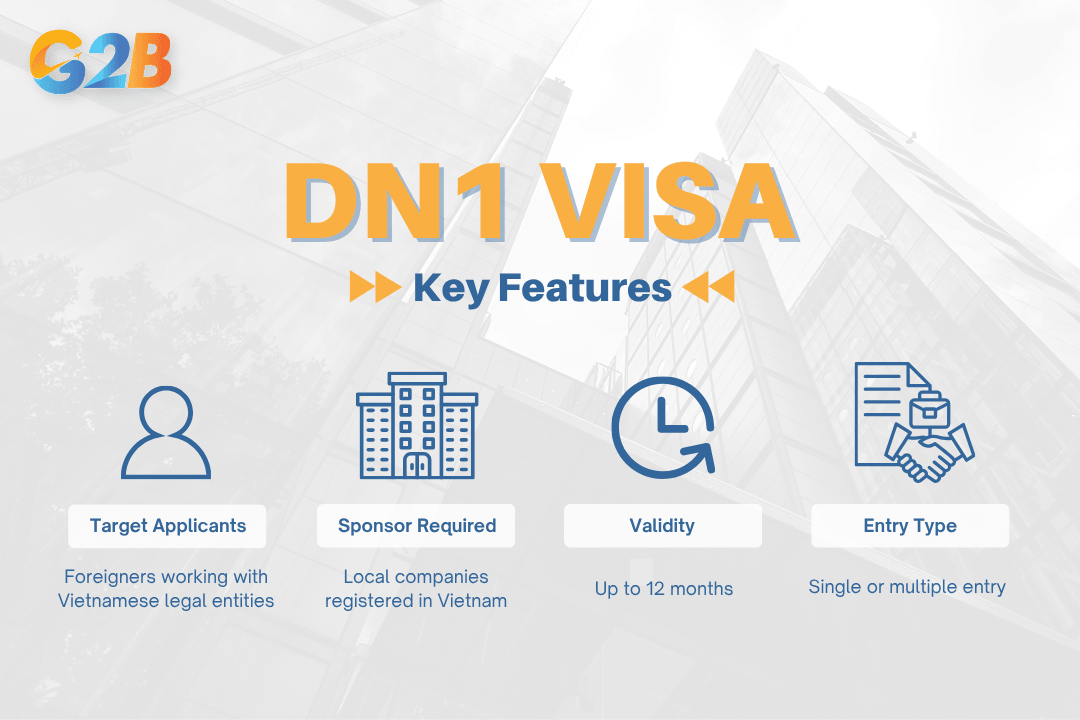
Key features of the DN1 visa in Vietnam
Who qualifies for a DN1 visa in Vietnam?
Foreigners qualify for a DN1 visa when they plan to work with legal entities established under Vietnamese law. The applicant needs official sponsorship from a locally registered company to receive visa approval. The DN1 visa allows foreigners to perform various business activities alongside Vietnamese partners. Sponsoring companies must prove a legitimate business relationship with the foreign applicant. The immigration authority evaluates the purpose of the visit before granting approval.
Examples of qualified applicants include:
- Foreign investors meeting with a Vietnamese company to discuss funding
- Corporate partners visiting a Vietnamese enterprise to sign trade agreements
- Independent consultants working with local firms to provide technical expertise
- International buyers inspecting manufacturing facilities owned by domestic corporations
What organizations can sponsor a DN1 visa?
Organizations that can sponsor a DN1 visa include Vietnamese limited liability companies, joint-stock companies, state-owned enterprises, and locally registered representative offices. These entities must possess valid business registration certificates issued by Vietnamese authorities. Vietnamese immigration regulations require the sponsor to hold legal status within the country. The sponsoring organization takes full legal responsibility for the foreigner during their stay. The sponsor must update their digital signature and company seal with the immigration department before submitting any visa requests.
Eligible domestic sponsors include:
- Vietnamese limited liability companies (LLC) operating in local commerce
- Vietnamese joint-stock companies managing domestic operations
- Vietnamese state-owned enterprises handling government-backed projects
- Vietnamese representative offices registered in Vietnam acting on behalf of domestic parent companies
How long is a DN1 visa valid?
A DN1 visa is valid for up to 12 months. The Vietnam Immigration Department determines the exact duration based on the applicant's stated business purpose and the official request submitted by the local sponsor. Vietnamese authorities issue business visas with varying validity periods to match specific commercial needs. Short-term meetings typically require a one-month or three-month visa. Long-term consulting projects may justify a six-month or twelve-month visa. The sponsoring company must provide a clear itinerary to justify longer validity requests.
| Attribute | DN1 Visa |
|---|---|
| Maximum validity | Up to 12 months |
| Entry type | Single or multiple entry |
| Purpose | Business meetings, cooperation, and investment discussion |
| Work permit required | Yes, if engaging in paid work |
What is a DN2 visa in Vietnam?
A DN2 visa in Vietnam is a business visa issued to foreigners who enter the country to work with foreign organizations. A foreign enterprise with a legal presence in Vietnam must sponsor this specific visa category. The Vietnamese government created the DN2 visa to accommodate the large influx of foreign direct investment. International corporations frequently send staff, trainers, and executives to oversee their local branches. This visa streamlines the entry process for global organizations operating within Vietnamese borders. It separates domestic enterprise interactions from international corporate operations.
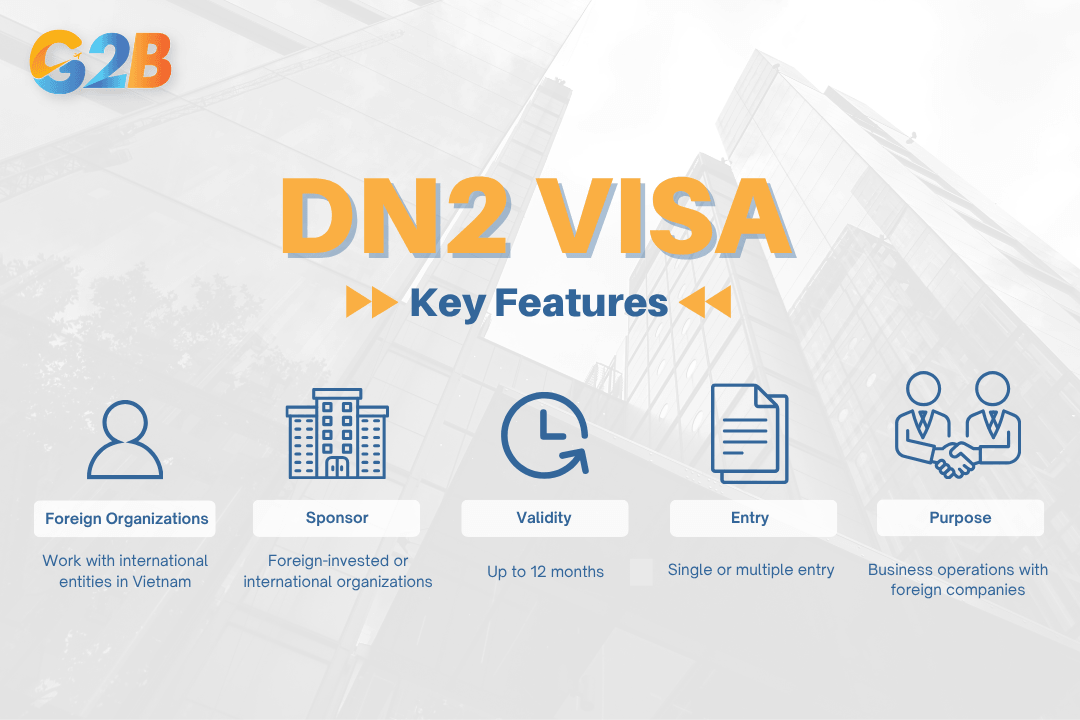
Key features of the DN2 visa in Vietnam
Who qualifies for a DN2 visa in Vietnam?
Individuals qualify for a DN2 visa if they conduct business with international entities located in Vietnam. Foreign employees, corporate partners, and non-governmental organization consultants usually apply for this visa type. The DN2 visa allows foreigners to collaborate smoothly with foreign-owned operations. Sponsorship requires the host enterprise to maintain an active legal and financial presence in Vietnam. The applicant must demonstrate a direct operational link to the foreign sponsor.
Examples of qualified applicants include:
- Foreign employees visiting an international company’s Vietnam office for training.
- Business partners meeting a foreign-invested enterprise (FDI company) to review supply chains.
- Specialist consultants working with an international NGO office on community projects.
- Regional managers inspect the operations of their multinational branches.
What organizations can sponsor a DN2 visa?
Organizations eligible to sponsor a DN2 visa include foreign-invested enterprises, international organizations, foreign non-governmental organizations, and representative offices of foreign corporations operating in Vietnam. Sponsors must present specific investment licenses or operational permits to the immigration department. Foreign-invested enterprises play a major role in the Vietnamese economy, and the government regulates their foreign workforce strictly. These organizations must prove their ongoing active status in Vietnam to act as visa sponsors.
Eligible international sponsors include:
- Foreign-invested enterprises (FDI companies) operating in the manufacturing or service sectors in Vietnam.
- International organizations managing cross-border initiatives with Vietnamese operations.
- Foreign NGOs registered in Vietnam are conducting approved charitable or development programs.
- Representative offices of foreign corporations handling market research and local liaison tasks.
How long is a DN2 visa valid?
A DN2 visa remains valid for a maximum period of 12 months. Immigration authorities issue single-entry or multiple-entry visas depending on the specific business travel requirements of the foreign organization. The validity period aligns with the projected timeline of the foreigner's business activities. Foreign branch managers often require multiple-entry visas to travel between Vietnam and their home headquarters. Short-term foreign trainers may only need a single-entry, one-month visa.
| Attribute | DN2 Visa |
|---|---|
| Maximum validity | Up to 12 months |
| Entry type | Single or multiple entry |
| Purpose | Business activities with foreign entities |
| Work permit required | Yes for employment |
What are the key differences between a DN1 and DN2 visa?
The key differences between a DN1 and DN2 visa involve the sponsor type and the primary business relationship. DN1 visas involve local Vietnamese enterprises, while DN2 visas involve foreign entities operating in Vietnam. Both visas operate under the exact same legal framework provided by the Vietnam Immigration Law. They share the same processing procedures, maximum validity periods, and entry restrictions. The critical difference lies entirely in the corporate documentation provided by the host organization. A local Vietnamese sponsor provides a standard enterprise registration certificate. A foreign sponsor provides an investment registration certificate or a foreign NGO permit.
| Feature | DN1 Visa | DN2 Visa |
|---|---|---|
| Sponsor type | Vietnamese company | Foreign organization in Vietnam |
| Business relationship | With local Vietnamese enterprises | With foreign entities operating in Vietnam |
| Typical users | Investors, partners, consultants | Foreign staff visiting regional offices |
| Legal basis | Vietnam Immigration Law | Vietnam Immigration Law |
| Maximum validity | Up to 12 months | Up to 12 months |
How do you apply for a DN1 or DN2 visa?
You apply for a DN1 or DN2 visa by having a sponsoring company submit a formal visa request to the Vietnam Immigration Department. The applicant subsequently receives an official visa approval letter to collect the physical visa. The application process relies entirely on corporate sponsorship. Foreign nationals cannot apply for DN1 or DN2 visas independently. The host organization initiates the process from within Vietnam. Once the government approves the request, the foreigner uses the official approval documentation to board their flight and claim the visa stamp upon arrival or at an embassy.
What documents are required for a DN1 or DN2 visa?
Required documents for a DN1 or DN2 visa include a passport valid for at least six months, a visa approval letter, a sponsorship application form, and the host sponsor's business registration documents. The sponsoring organization must prepare a comprehensive legal dossier. The government rejects applications containing expired passports or incomplete company profiles. The host company must ensure all corporate signatures and company seals match government records exactly. Applicants and sponsors usually provide:
- Ensure the foreigner's passport remains valid for 6+ months beyond the planned entry date.
- Obtain the official visa approval letter from the Vietnamese sponsor.
- Complete the standard sponsorship application form (NA5 or NA6 via immigration portal) with company stamps.
- Submit the certified business registration documents of the sponsor to the immigration portal.
- Fill out the entry visa form (Form NA1) and attach passport-sized photographs.
What is the application process for a DN1 or DN2 visa?
The application process requires the sponsor to submit documents directly to the Vietnam Immigration Department. The immigration authority then issues an approval letter, allowing the foreigner to collect the visa upon entry. Processing a business visa involves coordinated steps between the host company, the government, and the foreign traveler. Processing times usually take between three to five working days. Required steps include:
- Submit the formal visa application by the Vietnamese sponsor to the Vietnam Immigration Department.
- Wait for the immigration authority to process the documents and issue the visa approval letter.
- Send the digital copy of the approval letter to the foreign applicant via email.
- Print the approval letter before traveling to the destination.
- Receive the physical visa stamp at a Vietnamese embassy/consulate or an airport visa-on-arrival counter.
- Present the documents to the immigration officer to stamp the DN1 or DN2 visa into the passport.
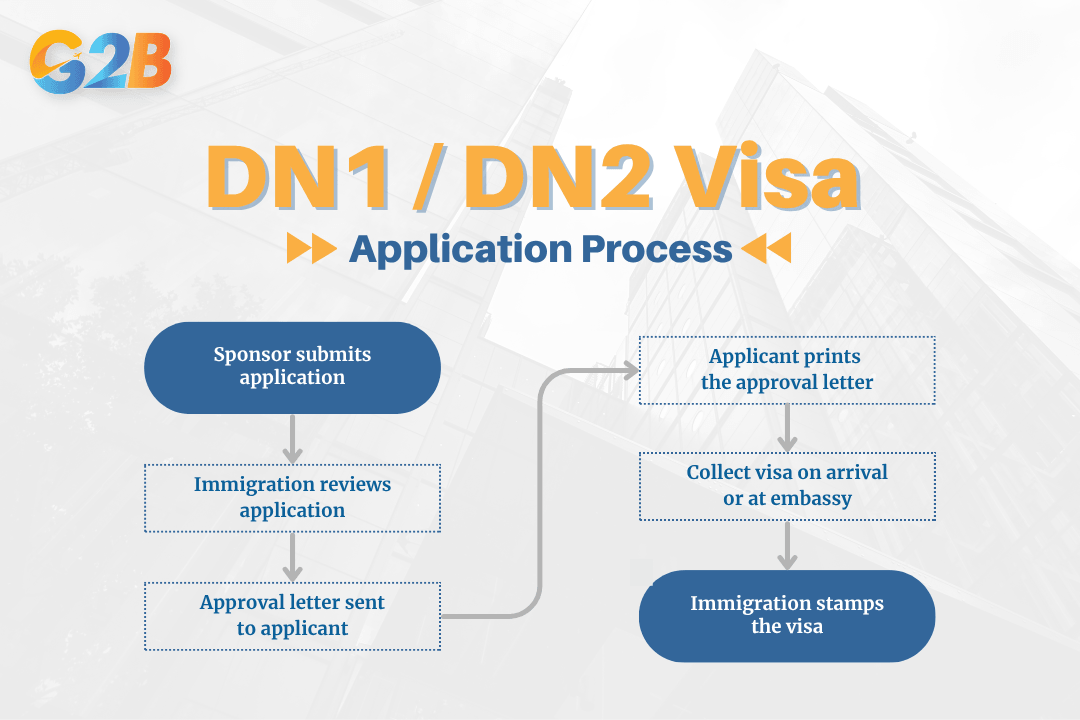
The 06-step application process for a DN1 & DN2 visa
When should you choose a DN1 or DN2 visa?
You should choose a DN1 or DN2 visa based entirely on the legal nationality of your sponsoring company. A local Vietnamese firm requires a DN1 visa application, whereas an international firm requires a DN2 visa application. Selecting the correct visa category prevents entry denials and legal complications. The host organization determines the visa type. The foreign traveler simply provides their passport details to the sponsor. Business travelers must communicate clearly with their local contacts to confirm the exact legal status of the host company before initiating the visa process.
When should foreigners choose a DN1 visa?
Foreigners should choose a DN1 visa when they plan to visit a Vietnamese-owned company, negotiate with local business partners, or attend investment meetings with domestic firms. The DN1 visa fits scenarios where the primary commercial target is a local entity. Foreign entrepreneurs seeking domestic suppliers, IT outsourcing partners, or local agricultural exporters rely on this visa. The local company uses its domestic tax code and registration documents to facilitate the foreigner's entry. Choose a DN1 visa when:
- Visiting a Vietnamese-owned company to inspect manufacturing processes
- Meeting local business partners to draft commercial distribution contracts
- Attending investment negotiations with domestic firms to discuss joint ventures
When should foreigners choose a DN2 visa?
Foreigners should choose a DN2 visa when visiting foreign-invested companies in Vietnam, working with international non-governmental organizations, or conducting meetings with foreign corporate branches. The DN2 visa serves multinational operations. When a global corporation sends auditors, technical engineers, or regional directors to its Vietnamese branch, the local branch sponsors the DN2 visa. The foreign-invested enterprise utilizes its specific investment licenses to prove its international status to the immigration department.
Choose a DN2 visa when:
- Visiting foreign-invested companies in Vietnam to perform internal corporate audits
- Working with international organizations or NGOs to deploy funded development projects
- Conducting meetings with foreign corporate branches in Vietnam to align global business strategies
Frequently asked questions about DN1 and DN2 visas
Foreigners frequently ask questions regarding work authorization, visa extensions, business formation rules, and entry limits associated with DN1 and DN2 visas. Understanding these regulations ensures legal compliance. Business travelers must follow local laws strictly. Visa violations result in fines, deportations, or entry bans. The Vietnam Immigration Department maintains rigorous checks on foreign activities. Travelers must know the limitations of their business visas before engaging in complex commercial transactions or long-term employment.
Is a DN1 or DN2 visa a work visa?
No, a DN1 or DN2 visa is a business visa, not a work visa. Foreign employees must obtain an official work permit and a temporary residence card to perform long-term paid employment in Vietnam. The Vietnamese government prohibits foreigners from receiving salaries from local entities using only a business visa. DN1 and DN2 visas support unpaid commercial activities like attending meetings, signing contracts, and observing operations. If a foreign national intends to sign an employment contract and earn income in Vietnam, the sponsoring company must apply for a formal work permit through the Department of Labor, Invalids, and Social Affairs.
Can foreigners extend a DN1 or DN2 visa?
Yes, foreigners can extend a DN1 or DN2 visa. Sponsoring organizations must submit a formal visa extension request to the Vietnamese immigration authorities before the current visa expires. The local or foreign sponsor handles the entire extension process. The immigration department requires proof that the foreigner still needs to conduct business in the country. Extensions usually grant an additional up to six months per extension. If the business relationship ends, the foreigner must exit the country. Vietnamese immigration authorities also allow visa conversions into work visas or investor visas through the sponsoring organization.
Can DN1 or DN2 visa holders open a business in Vietnam?
No, DN1 or DN2 visa holders cannot directly open a business in Vietnam under this specific visa class. Foreign investors must apply for specific DT investor visas to establish companies legally. While foreigners can use a DN1 or DN2 visa to explore the market and meet consultants, the actual act of acting as a legal representative requires a different visa status. Investors must apply for DT investor visas such as DT1, DT2, DT3, or DT4, depending on their total capital contribution.
Does a DN1 or DN2 visa allow multiple entries?
Yes, a DN1 or DN2 visa allows multiple entries if the sponsoring organization requests it. Vietnamese immigration authorities issue both single-entry and multiple-entry options based on the applicant's travel needs. A single-entry visa allows the foreigner to enter Vietnam once. If they leave, the visa becomes invalid immediately. A multiple-entry visa allows the foreigner to exit and re-enter Vietnam freely during the visa's validity period. Regional managers who travel frequently between Vietnam and neighboring Southeast Asian countries highly prefer the multiple-entry option. The sponsor must pay a higher government stamping fee for a multiple-entry visa. Understanding the Vietnam business visa system allows foreign professionals to conduct commercial operations legally and efficiently. The DN1 visa facilitates direct business activities with Vietnamese companies, promoting local enterprise partnerships. The DN2 visa enables seamless business activities with foreign organizations operating in Vietnam, supporting multinational corporate structures. Both visas support short-term commercial activities, corporate meetings, strategic partnerships, and complex project discussions.
Foreign travelers must align their visa choice with the legal status of their host organization. Proper documentation, timely sponsor applications, and adherence to immigration laws guarantee successful business trips. Engaging with professional consulting services ensures accurate application submissions and prevents unnecessary border delays. Standardizing your approach to Vietnamese immigration processes secures continuous market access and strengthens international business relations.
Ready to work or stay in Vietnam? Contact G2B today for a consultation on Work permit/TRC/Business visa services in Vietnam. Our team will guide you through the procedures and required documents to help ensure a smooth and compliant application process.
