





 Delaware (USA)
  Vietnam
  Singapore
  Hong Kong
  United Kingdom
 Flexible manufacturing systems (FMS) offer a powerful solution for businesses to enhance agility and efficiency in a fast-paced market. In an era where consumer demands shift rapidly and product life cycles are shorter than ever, the ability to adapt production quickly and cost-effectively is no longer a luxury but a necessity. This guide will explore everything from the core definition and components of FMS to its real-world applications and a step-by-step implementation plan.
This article outlines the key aspects of flexible manufacturing systems (FMS) to help businesses and investors gain a clearer understanding of this advanced production approach. We specialize in company formation and do not provide engineering or technical consulting services. For technical implementation or system integration matters, please consult a qualified engineer or relevant expert.
What is a flexible manufacturing system?
A flexible manufacturing system (FMS) is a highly automated and adaptable production method that integrates computer-controlled machines, automated material handling systems, and sophisticated software to manufacture a variety of products efficiently. The primary purpose of an FMS is to combine the high efficiency of mass production with the high flexibility of custom manufacturing, allowing for the production of small batches of different products with minimal downtime for changeovers.
The core concept behind FMS is its ability to adapt to changes in product design, production volume, and process sequences with minimal human intervention. This automated production method is designed to handle fluctuations in customer demand and supply chain priorities seamlessly. FMS integrates several key technologies, such as Computer Numerical Control (CNC) machines, industrial robots, automated guided vehicles (AGVs), and centralized control software. This integration allows a single system to produce a wide variety of parts or products, making it a cornerstone of modern, agile manufacturing and a key component of the Industry 4.0 revolution.
How flexible manufacturing systems work?
A flexible manufacturing system operates through a highly coordinated and automated process, orchestrated by a central computer system. This "central nervous system" manages the entire production flow, from initial design to the final product, ensuring efficiency and adaptability at every stage. The operational flow can be broken down into the following steps:
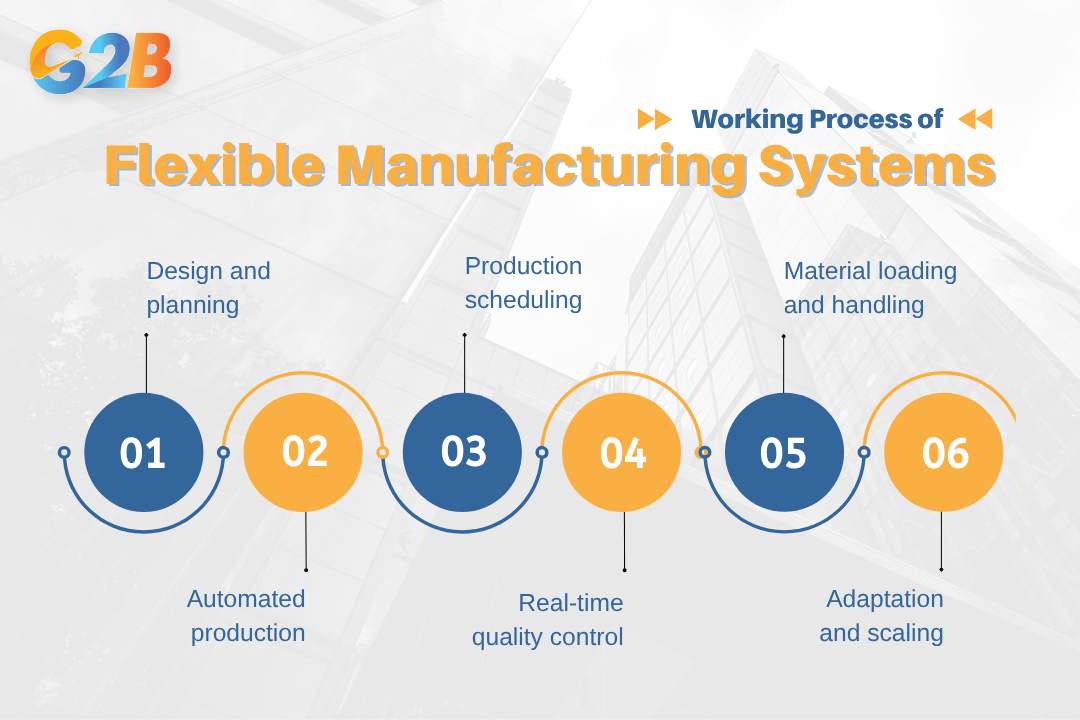
The operational flow can be broken down into the following steps
- Design and planning: The process begins when engineers create detailed product models using Computer-Aided Design (CAD) and Computer-Aided Manufacturing (CAM) software. This data, which includes manufacturing parameters and instructions, is fed into the FMS control system.
- Production scheduling: The central control system analyzes the production requirements and schedules tasks accordingly (You can learn more about Gantt chart). It assigns jobs to specific workstations and optimizes the workflow to make the most efficient use of resources and minimize downtime.
- Material loading and handling: Raw materials are introduced into the system, either manually or via automated equipment. The automated material handling system, which can include conveyors, Automated Guided Vehicles (AGVs), and robotic arms, then transports these materials between workstations according to the production schedule.
- Automated production: CNC machines, robots, and other automated workstations perform the necessary manufacturing processes, such as machining, assembly, and inspection, based on the programmed instructions. The material handling system seamlessly moves the work-in-progress parts from one station to the next.
- Real-time quality control: Throughout the production process, integrated sensors and inspection systems monitor product quality in real time. Any deviations from the specified standards are immediately flagged, allowing for prompt corrective action. This ensures that final products consistently meet high-quality benchmarks.
- Adaptation and scaling: One of the key features of an FMS is its ability to adapt quickly to changes. If a product design is modified or production volumes need to be adjusted, the system can be reprogrammed with minimal physical changes, allowing for rapid and efficient scaling of operations.
Core components of a flexible manufacturing system
A flexible manufacturing system is comprised of several interconnected components that work in harmony to deliver its signature adaptability and efficiency. These core elements can be grouped into four main categories: Workstations, material handling systems, the computer control system, and the human element.
Workstations
Workstations are where the physical processing of materials takes place. These stations are equipped with a variety of computer-controlled machines and robotics to perform specific tasks with high precision. Workstations consist of various processing stations, such as Computer Numerical Control (CNC) machines, robotic assembly systems, and quality inspection stations. CNC machines are fundamental to FMS, performing tasks like cutting, drilling, and milling, while robotic systems handle assembly, welding, and other complex manipulations.
Automated material handling and storage system
This component acts as the circulatory system of the FMS, responsible for the movement and storage of raw materials, work-in-progress, and finished products. Its seamless operation is crucial for maintaining a continuous and efficient production flow. Key technologies in this system include automated guided vehicles (AGVs), conveyors, and automated storage and retrieval systems (AS/RS). AGVs and conveyors transport materials between workstations, while AS/RS solutions manage the efficient storage and retrieval of parts, minimizing manual labor and reducing handling times.
Central control computer
The central control computer is the brain of the flexible manufacturing system. This powerful system, often supported by a network of smaller computers at individual workstations, oversees and coordinates every aspect of the manufacturing process. Its responsibilities include production scheduling, traffic control for the material handling system, data collection, and real-time monitoring of all operations. This centralized control allows for dynamic adjustments to production schedules and immediate responses to any issues that may arise, such as machine malfunctions.
Human expertise
While FMS is highly automated, skilled personnel are still essential for its successful operation. The human element is critical for overseeing the system, performing maintenance, and troubleshooting complex problems. Managers and operators are responsible for programming the system, making strategic decisions, and ensuring that the FMS runs smoothly and efficiently. Their expertise is vital for optimizing system performance and adapting to new production requirements.
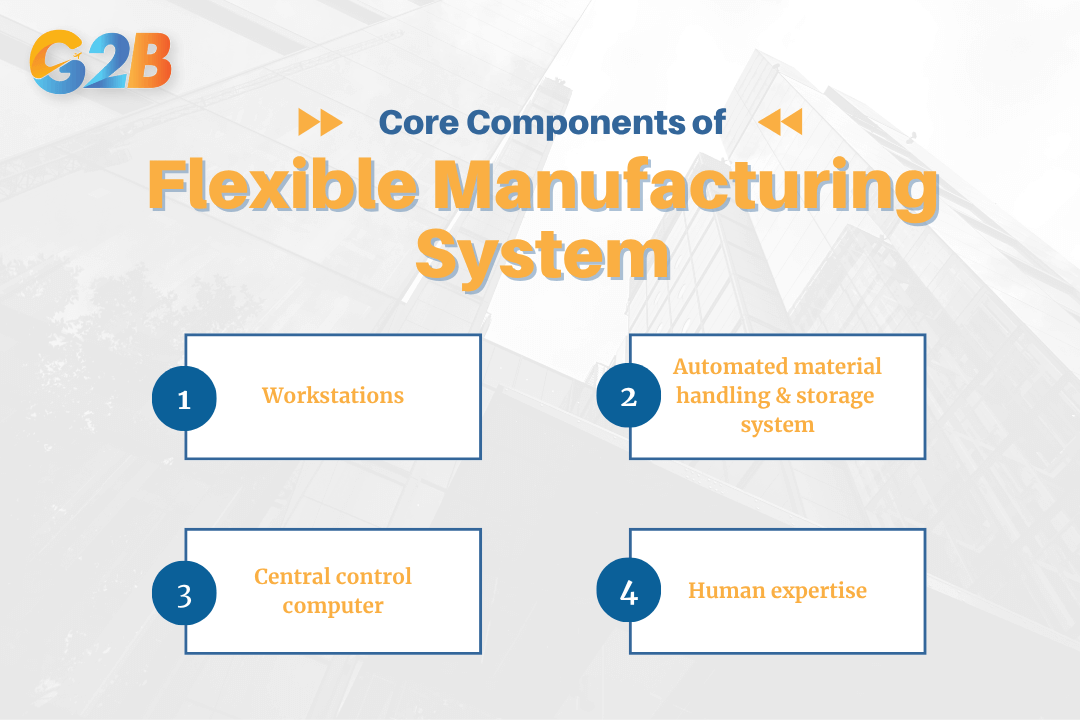
Core components of a flexible manufacturing system
Types of FMS
Flexible manufacturing systems can be categorized based on their level of flexibility and the variety of parts they can produce. Understanding the different types of FMS can help businesses identify the system that best suits their specific production needs.
- Sequential FMS: This type of FMS processes parts in a predetermined sequence, moving them from one workstation to the next in a specific order. It is similar to a flexible transfer line and is well-suited for predictable production demands where transitions between different product types are smooth and automated.
- Random FMS: A Random FMS offers a high degree of flexibility, capable of producing a random mix of different products simultaneously, but also capable of dynamically altering production routing and sequences to optimize workflow based on real-time conditions. The system can dynamically adjust the processing order based on immediate needs, making it ideal for industries with fluctuating demand and a high variety of custom parts.
- Dedicated FMS: Designed for the long-term, high-volume production of a limited range of products, a Dedicated FMS focuses on efficiency and consistency. It provides less flexibility than a Random or Modular system but greater stability for repetitive manufacturing, is commonly used in industries like aerospace and medical device manufacturing where stable demand for a specific set of parts exists.
- Engineered FMS: This is a custom-designed system built to manufacture a single, highly specialized part with extreme precision and at high volume. An Engineered FMS is common in the automotive industry for producing critical components continuously over long periods.
- Modular FMS: Representing the most advanced and versatile type of FMS, a Modular FMS allows operators to seamlessly switch between engineered, dedicated, sequential, and random modes based on current production requirements. This adaptability makes it highly valuable for companies that produce a diverse range of products in varying quantities.
Advantages of implementing an FMS
Implementing a flexible manufacturing system can provide a significant competitive advantage by transforming a company's production capabilities. The benefits extend across various aspects of the manufacturing process, from productivity and cost savings to quality and market responsiveness.
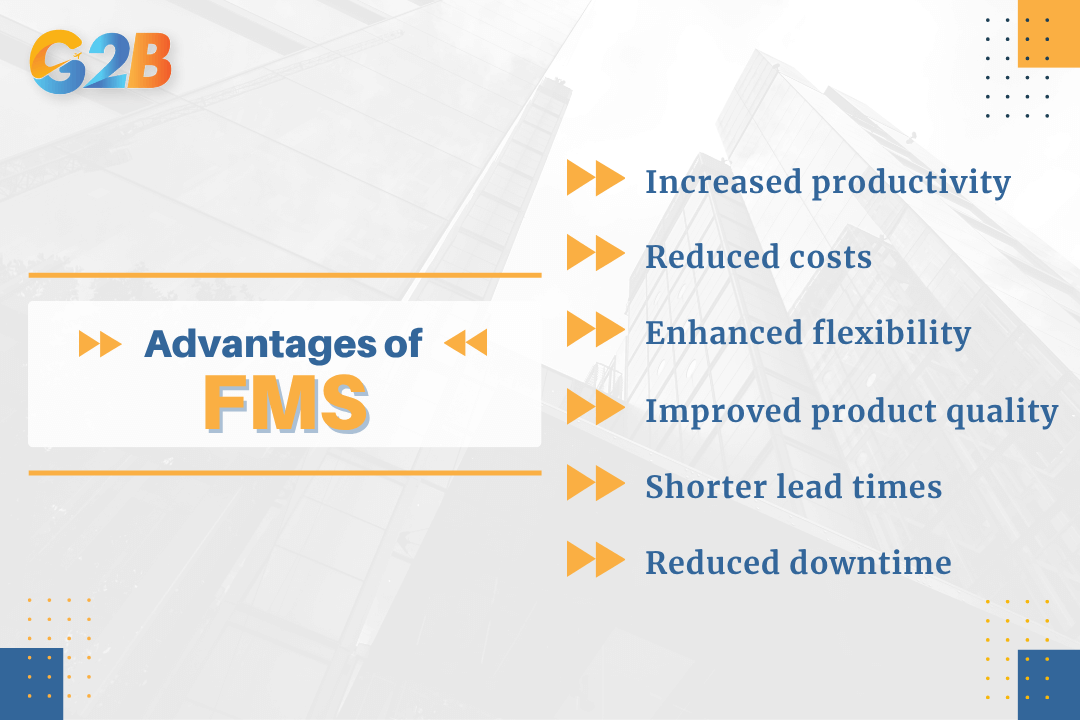
Implementing a flexible manufacturing system can provide a significant competitive advantage
- Increased productivity and efficiency: By minimizing setup times and enabling rapid changeovers, FMS significantly boosts productivity. Automation allows these systems to operate 24/7 with minimal human intervention, leading to higher output and faster turnaround times.
- Reduced costs: FMS reduces labor costs through automation and minimizes material waste through efficient resource utilization. Although the initial investment is high, the long-term savings from reduced operational costs, lower error rates, and decreased waste can be substantial.
- Enhanced flexibility: The primary advantage of FMS is its inherent flexibility. It allows manufacturers to handle a wide variety of products and production volumes, respond quickly to market changes, and introduce new products with minimal disruption. Additionally, FMS can reduce inventory levels and support product customization or personalization at scale.
- Improved product quality: Automation and precise computer control minimize the risk of human error, resulting in more consistent and higher-quality products. Real-time monitoring and quality control systems detect and correct defects immediately, further enhancing the overall quality of the output.
- Shorter lead times: The combination of automated processes, reduced setup times, and efficient scheduling dramatically shortens production lead times. This allows companies to deliver products to customers faster, improving satisfaction and competitiveness.
- Reduced downtime: An FMS is designed to adapt to changes and potential disruptions. For example, if one machine requires maintenance, the system can reroute production to other available machines, minimizing downtime and keeping the production line running. Beyond rerouting, robust contingency measures including redundancy and predictive maintenance further reduce operational interruptions.
Disadvantages and challenges of FMS
While the benefits of a flexible manufacturing system are compelling, it is also a significant undertaking with potential drawbacks and challenges that businesses must carefully consider. A balanced view is essential for making an informed strategic decision.
- High initial investment: The upfront cost for the machinery, software, and system integration required for an FMS can be substantial, making it a critical long-term strategic decision for businesses. This high initial capital expenditure can be a significant barrier, especially for smaller companies.
- Complexity of implementation: Implementing an FMS is a complex process that requires meticulous planning, design, and integration with existing systems. This complexity can lead to longer implementation times, potential production disruptions, and unforeseen challenges.
- Need for skilled labor: Although FMS reduces the need for manual labor on the production line, it requires a highly skilled workforce of engineers, programmers, and technicians to operate, maintain, and troubleshoot the sophisticated automated systems. Finding and retaining talent with the necessary expertise can be a challenge.
- Vulnerability to breakdowns: The interconnected nature of an FMS means that a breakdown in one part of the system can potentially halt the entire production line. This vulnerability requires not only robust maintenance plans and contingency strategies but also comprehensive cybersecurity measures to protect against system failures and data breaches.
Applications of flexible manufacturing systems across industries
The versatility and efficiency of flexible manufacturing systems have led to their adoption across a wide range of industries, each leveraging the technology to meet unique production demands and gain a competitive edge.
- Automotive industry: In the automotive sector, FMS allows for the production of different car models and components on the same assembly line, responding quickly to market trends. This flexibility is crucial for managing the vast number of variations in modern vehicles and for introducing new models without the need for a complete production line overhaul.
- Aerospace industry: The aerospace industry relies on FMS for the high-precision manufacturing of complex components. FMS enables the efficient production of parts with tight tolerances and the ability to adapt to varying specifications, which is essential for ensuring the safety and performance of aircraft.
- Electronics industry: The fast-paced electronics industry benefits greatly from the adaptability of FMS. It allows manufacturers to rapidly switch between producing different devices, such as smartphones, tablets, and wearables, and to accommodate the frequent design changes characteristic of this sector.
- Medical device industry: FMS is used in the medical device industry to produce a wide array of products, from surgical instruments to specialized implants. The system's precision and ability to handle diverse product lines efficiently are critical for meeting the stringent quality standards of this field.
- Consumer goods: In the consumer goods sector, FMS helps manufacturers respond swiftly to changing market trends and consumer preferences. It facilitates the production of a variety of goods and enables the customization and personalization of products to meet individual customer demands.
How to successfully implement a flexible manufacturing system
Successfully implementing a flexible manufacturing system requires a structured and strategic approach. It is a transformative project that impacts technology, processes, and people. Following a clear framework can help ensure a smooth transition and maximize the return on investment.
- Assess your needs: Begin by analyzing your current production processes to identify bottlenecks, inefficiencies, and areas where flexibility is most needed. Clearly define your goals for implementing an FMS, whether it's reducing lead times, increasing product variety, or improving overall efficiency.
- Plan your implementation: Develop a detailed implementation plan that outlines the project scope, timeline, budget, and key milestones. This plan should include a thorough risk assessment and strategies for mitigating potential challenges. A phased approach, starting with a smaller pilot project, can often be beneficial.
- Choose the right technology: Select the appropriate FMS components, including CNC machines, robotics, and material handling systems, that align with your specific production requirements. Ensure that the chosen software for controlling and monitoring the system can integrate seamlessly with your existing enterprise resource planning (ERP) and manufacturing execution systems (MES).
- Train your team: Invest in comprehensive training for your operators, engineers, and managers. Your team must be proficient in operating the new equipment and understand the principles of FMS to leverage its full potential. Open communication and change management are crucial to foster a supportive and confident workforce.
- Start small and scale: Consider starting with a flexible manufacturing cell (FMC), which is a smaller, less complex version of an FMS, typically consisting of two or three machines. This allows you to test the system, refine processes, and gain experience before scaling up to a full FMS implementation.
- Monitor and optimize: Once the FMS is operational, continuously monitor its performance using key metrics. Use the data collected by the system to identify areas for improvement and optimize processes for even greater efficiency and productivity.
A flexible manufacturing system represents a strategic investment in the future of your production capabilities. By embracing this technology, businesses can achieve a powerful combination of efficiency, agility, and quality that is essential for thriving in today's dynamic market. For those looking to register a company in Vietnam, adopting advanced manufacturing solutions like FMS can provide a strong competitive edge from the very beginning.
