





 Delaware (USA)
  Vietnam
  Singapore
  Hong Kong
  United Kingdom
 Choosing between an Independent Contractor and a Sole Proprietorship is a crucial decision for professionals seeking greater autonomy. Both options offer flexibility, but they differ significantly in terms of legal structure, tax obligations, and business operations. Understanding these distinctions is essential to selecting the path that best supports your professional objectives and financial strategy. This G2B’s guide outlines the key differences to help you make an informed, strategic choice.
What is an Independent Contractor?
An Independent Contractor is a self-employed individual who provides services to clients or businesses under specific contractual agreements, which may be on a project basis or longer-term arrangements. Unlike traditional employees, independent contractors maintain control over how their work is performed while delivering results according to client specifications. This arrangement is characterized by temporary or project-based relationships where the contractor uses their own tools, sets their own schedule, and is responsible for their own taxes and benefits. Independent contractors operate under service agreements that define scope, deliverables, and payment terms for each engagement.
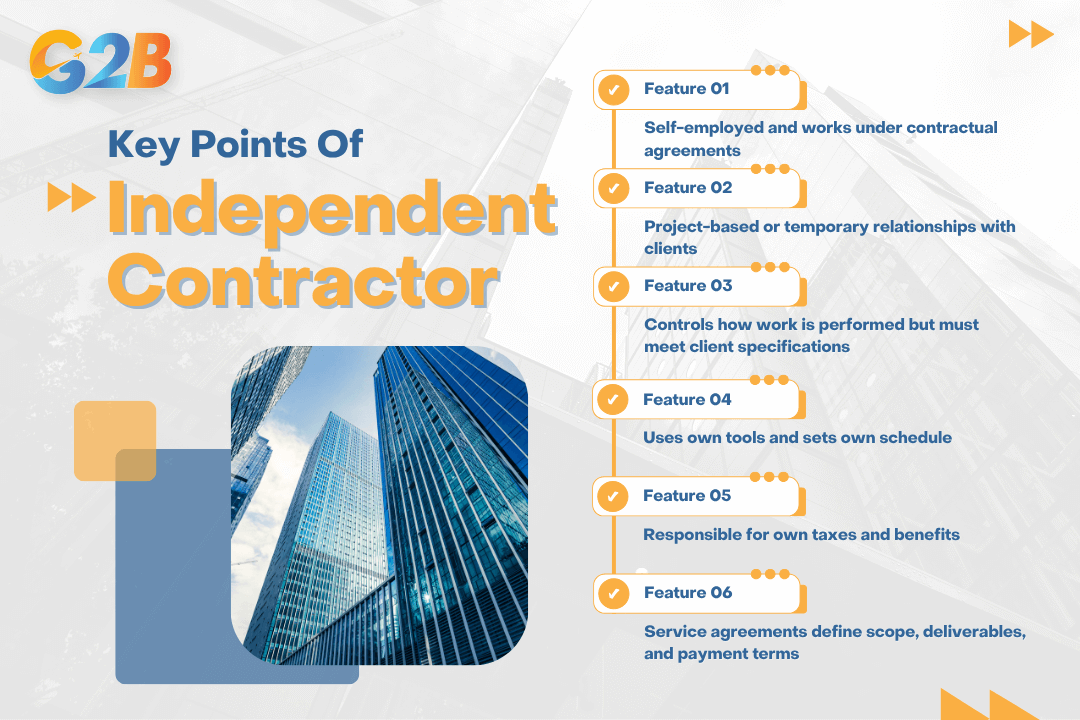
Several defining characteristics of an Independent Contractor are important to evaluate
What is a Sole Proprietorship?
A Sole Proprietorship is the simplest form of business entity where a single individual owns and operates the entire business. In this structure, there is no legal distinction between the business and the owner, meaning the owner has unlimited personal liability for all debts, obligations, and legal claims against the business.
This business form allows for multiple revenue streams through various products or services and provides maximum flexibility in operations. The owner can hire employees, establish ongoing customer relationships, and build a brand around their business identity. However, before deciding on this business structure, consider consulting with us - G2B is an expert in incorporation in Delaware, to explore whether a more secure and scalable option might be right for you.
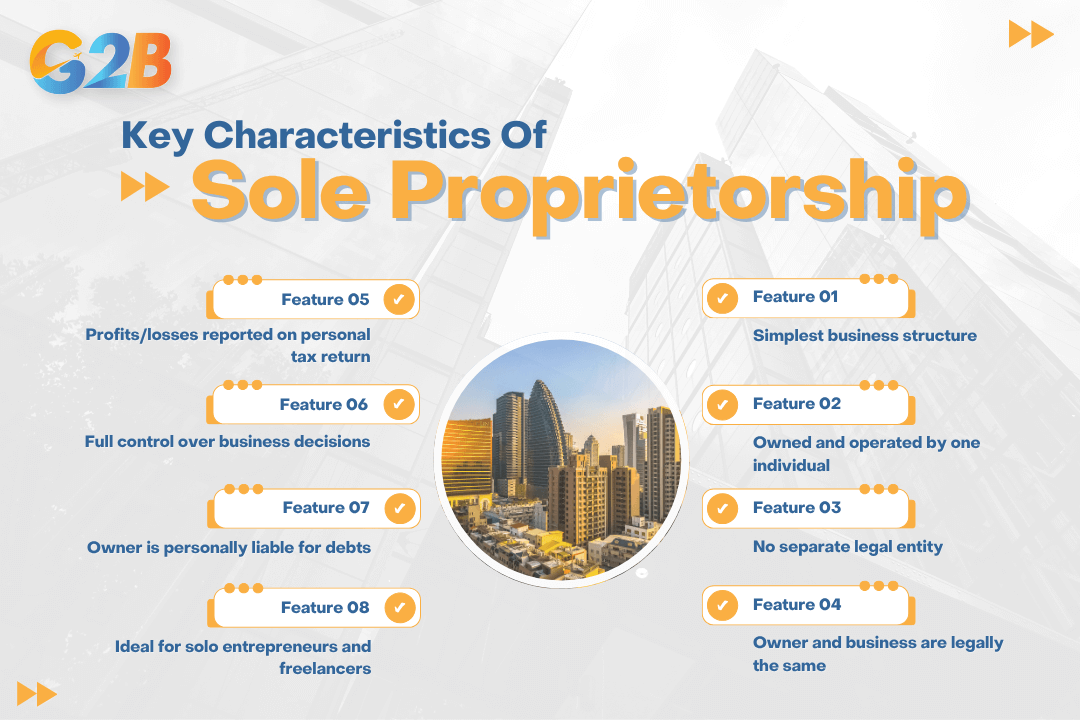
A Sole Proprietorship is one of the simplest form of business entity
Key differences between Sole Proprietorship & Independent Contractor
While both arrangements offer self-employment opportunities, they differ significantly in their legal structure, operational approach, and business model. Understanding these distinctions will help you choose the path that best aligns with your professional goals.
1. Legal structure and business model
Sole Proprietorship:
- Functions as a legally recognized business entity
- The owner is personally responsible for all business activities
- Can offer multiple products or services under one business umbrella
- Establishes a formal business identity with potential for branding and marketing
Independent Contractor:
- Not a separate legal entity but rather a contractual relationship
- Refers to how services are provided to clients on a per-project basis
- Works under specific service agreements for defined tasks or projects
- Operates primarily through client contracts rather than as a standalone business
2. Income generation and service delivery
Sole Proprietorship:
- Can have multiple income sources and revenue streams
- Sells products or services directly to customers without formal contracts
- May develop ongoing relationships with repeat customers
- Has the flexibility to expand into different business areas or markets
Independent Contractor:
- Earns income through specific contracts with clearly defined terms
- Carries out tasks or projects as agreed with clients
- Works under contractual agreements that govern payment and deliverables
- Income is typically tied to the completion of specific projects or milestones
3. Taxation and income reporting
Sole Proprietorship:
- Owner tracks and reports all business income on their personal tax return
- Files Schedule C (Profit or Loss from Business) with their individual tax return
- Pays self-employment taxes on all business profits
- Generally does not receive 1099 forms from clients as they operate as a business entity
Independent Contractor:
- Receives Form 1099-NEC from clients if earnings exceed $600 per client
- Must report all contract income and pay self-employment taxes accordingly
- Files tax returns based on multiple 1099 forms from different clients
- May need to make quarterly estimated tax payments based on contract income
4. Legal liability and risk
Sole Proprietorship:
- The owner has unlimited personal liability for all business obligations
- Personal assets may be at risk if the business faces legal or financial issues
- Responsible for all business debts, contracts, and potential lawsuits
- May require comprehensive business insurance to protect personal assets
Independent Contractor:
- Personally responsible for the quality of their work and professional conduct
- Not liable for clients' business debts or obligations, but may be liable for negligence or contract breaches
- Often carries professional liability insurance to minimize work-related risks
- Limited liability exposure compared to business owners
5. Control and independence
Sole Proprietorship:
- Full control over all business operations and strategic decisions
- Complete autonomy in choosing products, services, pricing, and management
- Can hire employees and delegate responsibilities as the business grows
- Ability to build and develop the business according to personal vision
Independent Contractor:
- Maintains control over how work is performed and when it's completed
- Must comply with client instructions and project specifications outlined in contracts
- Limited to the scope of work defined in each contractual agreement
- Less control over long-term business direction compared to business owners
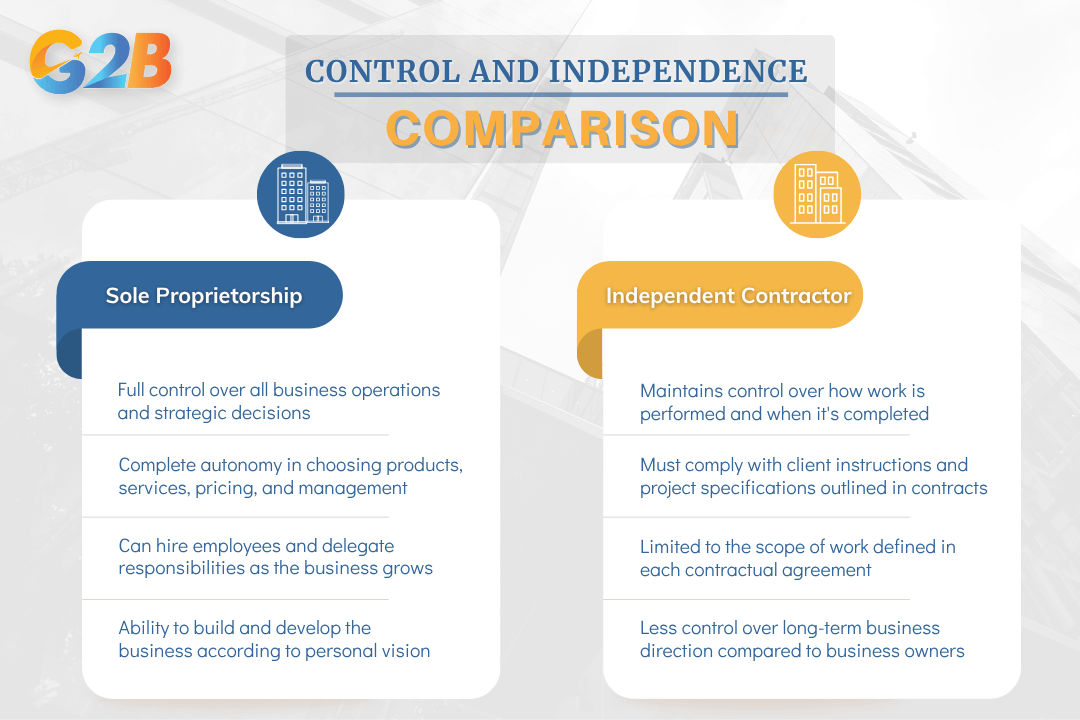
Understanding the level of control in each work arrangement
6. Key advantages and limitations
| Criteria | Sole Proprietorship | Independent Contractor |
|---|---|---|
| Legal status | Recognized business entity, unlimited liability | Not a separate entity, based on service contracts |
| Income | Can generate revenue from various products/services | Income derived from specific service contracts |
| Tax reporting | Report business income on a personal tax return | Receives 1099, reports income per contract terms |
| Legal liability | The owner is fully liable for all business obligations | Personally liable for own work only |
| Control | Full operational control | Work control within the scope of client contracts |
| Risk level | Higher risk due to unlimited liability | Lower risk; liability insurance is common |
Sole Proprietorship or Independent Contractor - Which is right for you?
The choice between becoming an Independent Contractor or establishing a Sole Proprietorship depends on your long-term goals, risk tolerance, and preferred working style. Choose Sole Proprietorship when you want full ownership and control over a business, plan to operate long-term with diverse products or services, and are willing to take on full legal and tax responsibility for building a comprehensive business entity. Choose an Independent Contractor when you prefer working on short-term contracts or specialized service projects, want flexibility without managing a full business entity, and prefer to reduce legal exposure to client-related liabilities and debt while maintaining professional independence.
Both Independent Contractor and Sole Proprietorship arrangements offer unique advantages for self-employed individuals, but they serve different purposes and career goals. Independent Contractor status provides flexibility and reduced liability for project-based work, while Sole Proprietorship offers the foundation for building a comprehensive business with multiple revenue streams. Whatever path you choose, ensure you understand the legal, financial, and operational implications to make the most of your self-employment opportunity.
