




 Delaware (USA)
  Vietnam
  Singapore
  Hong Kong
  United Kingdom
 Environmental Impact Assessment (EIA) is a systematic process used to evaluate the potential environmental effects of a proposed project before it is approved or implemented. It helps authorities, investors, and stakeholders understand possible impacts on ecosystems, communities, and natural resources, ensuring that development is carried out in a responsible and sustainable manner. This article explains the definition of Environmental Impact Assessment (EIA) and outlines the key steps involved in the Environmental Impact Assessment process.
This article highlights the key aspects of environmental impact assessment in Vietnam to help businesses better understand the requirements and process. We specialize in Vietnam incorporation service and do not provide legal representation or environmental litigation advisory services.
What is Environmental Impact Assessment (EIA)?
Environmental Impact Assessment (EIA) is a process that evaluates the impacts of development projects on the natural and social environment before implementation. It aims to minimize environmental risks and support project approval decisions. This assessment is a very important part of modern planning. Builders cannot start a large project without this study. The study shows how the project changes the local area. The EIA report provides a clear picture of the future. It tells the government if the project is safe. If the project is not safe, the government can stop it. This process creates a safe environment for everyone.
Components of Environmental Impact Assessment
Environmental Impact Assessment includes several main parts. Each part looks at a different detail of the project. These parts help experts understand the whole situation:
- Analysis of environmental impacts: Experts test the air, water, and soil. They look for possible pollution. They measure how much damage the project might cause to nature.
- Assessment of social impacts: Experts talk to local people. They study how the project changes human lives. They look at local jobs, health, and homes.
- Proposal of mitigation measures: Experts create solutions for the problems. They design ways to stop the pollution. These solutions reduce the negative effects of the project.
- Development of an environmental management plan: Experts write a rulebook for the company. The company must follow this plan during construction. This plan ensures long-term safety.
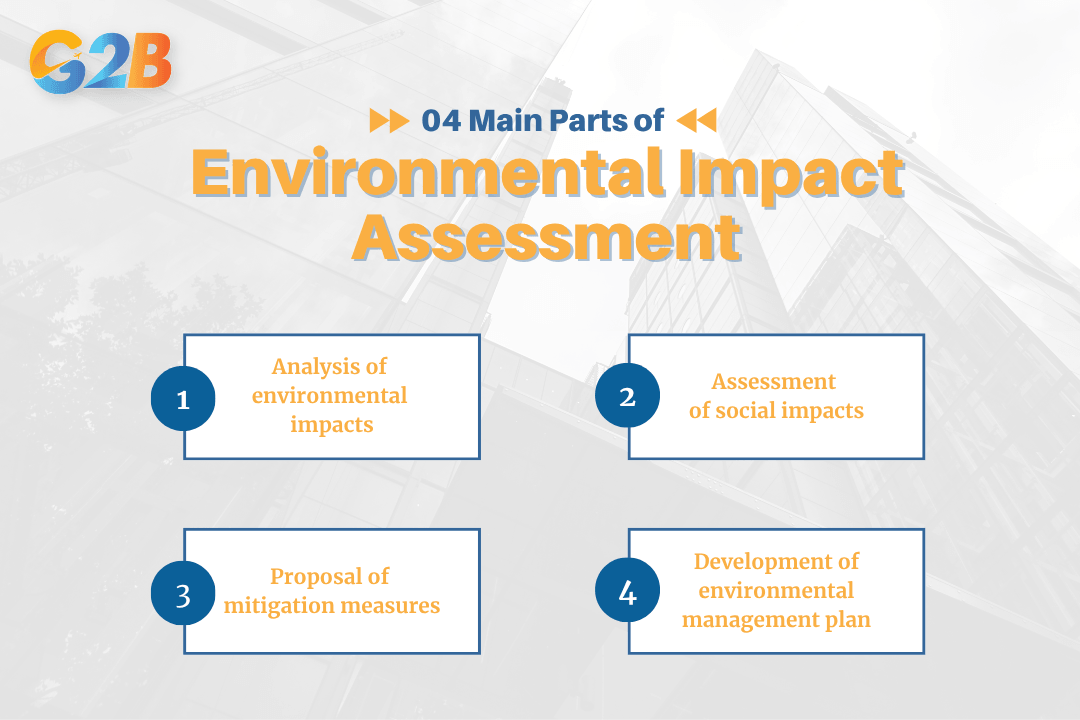
Environmental Impact Assessment includes several main parts
Example of Environmental Impact Assessment
Different projects create different impacts on the environment. Each project needs specific solutions to fix these problems. Below is a table that shows examples of projects, their impacts, and the solutions.
| Project | Environmental impact | Mitigation measures |
|---|---|---|
| Power plant | Emissions, heat waste | Air filtration systems |
| Highway project | Deforestation, noise | Ecological corridors |
| Industrial park | Water pollution | Wastewater treatment system |
A power plant produces a lot of energy. However, it also creates dirty smoke and heat waste. The company must install air filtration systems to clean the smoke. This action protects the air quality. A highway project needs a lot of land. Builders cut down many trees, which causes deforestation. The cars also create a loud noise. The builders must plant new trees and build ecological corridors for animals. An industrial park has many big factories. These factories use chemicals and create water pollution. The park must build a strong wastewater treatment system. This system cleans the dirty water before it goes into the river.
What are the objectives of Environmental Impact Assessment?
Environmental Impact Assessment helps identify, predict, and mitigate the negative impacts of projects on the environment. The main goal is to protect nature while allowing human progress. This assessment stops problems before they happen. It saves money for the company and the government. Fixing a problem later is very expensive. Finding the problem early is much cheaper and easier. The EIA process brings experts, citizens, and governments together. They discuss the project openly. This open discussion creates better results for society.
Main objectives of EIA
The Environmental Impact Assessment has 4 main objectives. These objectives guide the entire study. They ensure the project is safe and legal:
- Identify environmental risks: Experts find dangers early in the project development. A risk can be toxic chemicals in the soil. The team highlights these risks in their report.
- Evaluate impacts before project approval: The government reads the evaluation before saying yes to the project. They look at all the positive and negative effects. They compare the benefits and the damages.
- Propose mitigation solutions: The assessment provides clear answers to the problems. This is called impact mitigation. The company uses these solutions to change their design.
- Support decisions of regulatory authorities: Government agencies need facts to make rules. The EIA gives them scientific data. They use this data to write permits and licenses.
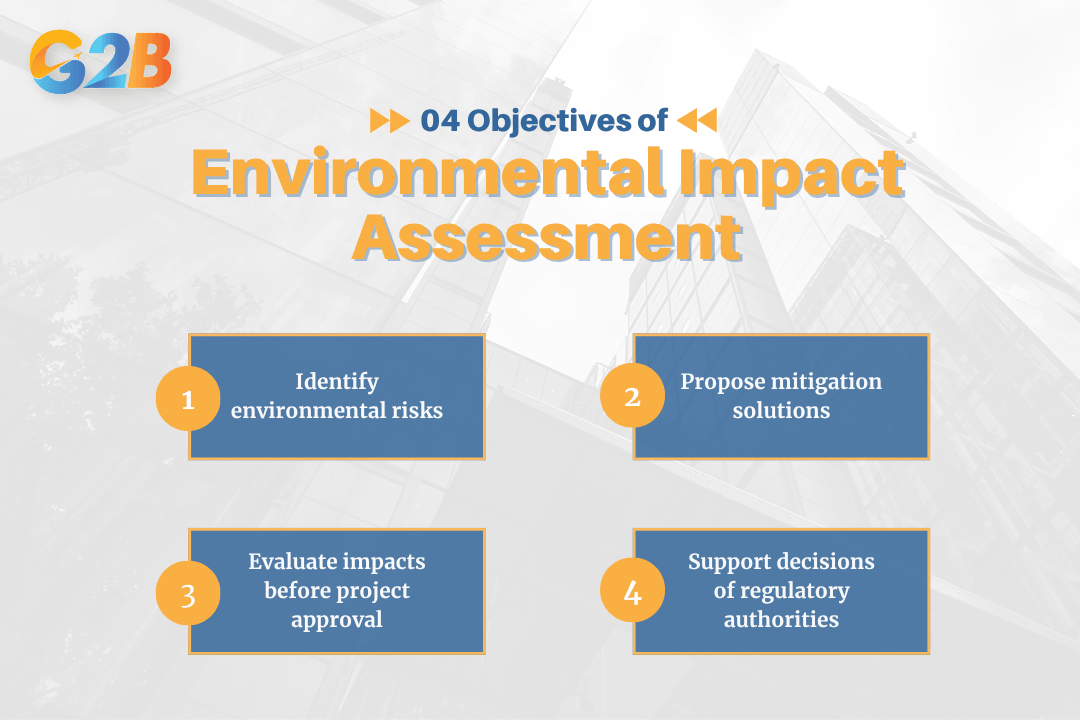
The Environmental Impact Assessment has 4 main objectives
Benefits of Environmental Impact Assessment
Conducting an EIA brings many great benefits to society. It protects the earth for future generations. It also makes businesses more responsible.
- Protect ecosystems: The process saves forests, rivers, and oceans. It protects the homes of wild animals. It stops the loss of important plant species.
- Reduce community conflicts: Sometimes, local people do not want a new factory near their homes. The EIA allows them to share their worries. The company listens to the people and changes the plan.
- Support sustainable development: Sustainable development means growing the economy without destroying nature. The EIA balances money and nature. It ensures we have resources for tomorrow.
- Increase project transparency: Transparency means everyone knows the truth. The EIA report is public. Any person can read the report and understand the project.
What steps are included in the Environmental Impact Assessment process?
The Environmental Impact Assessment typically includes 6 key steps in Vietnam's environmental management process (per Decree 08/2022/ND-CP). These steps follow a strict logical order. Experts must complete one step before starting the next step. Following these steps ensures a high-quality report. The government checks every step carefully. If a company skips a step, the government will reject the project. The step-by-step method organizes a very complex study. It helps scientists focus on the right details.
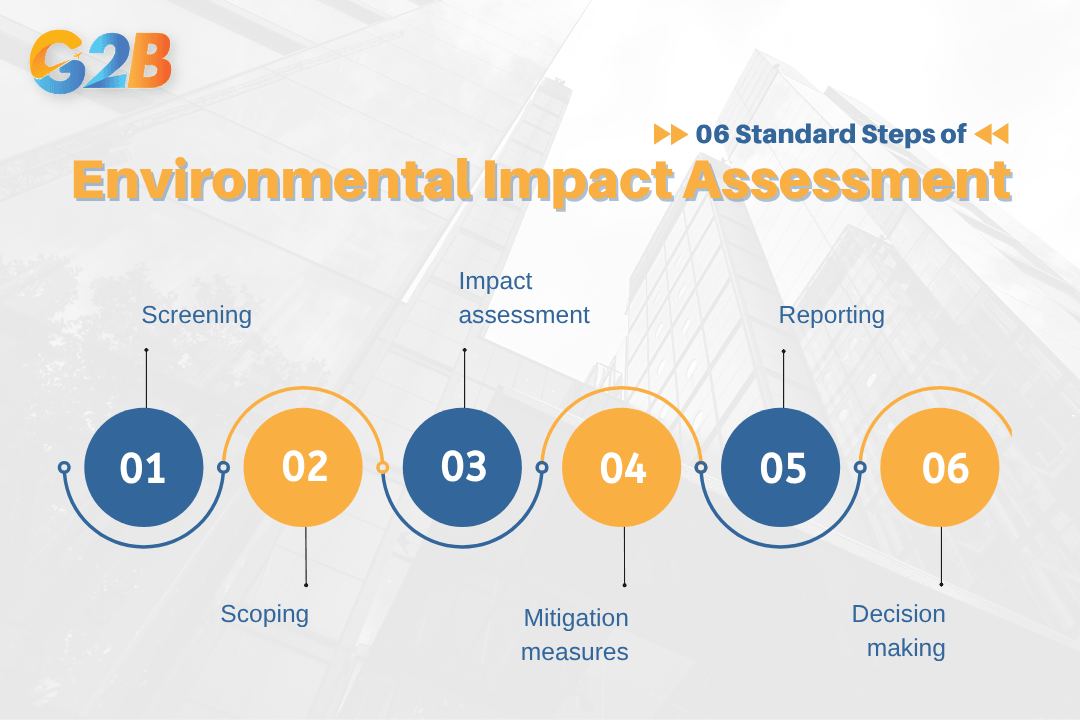
There are six standard steps of the EIA process
1. Screening - project screening
Project screening determines whether the project requires an EIA. This is the very first step. Not every project needs a big environmental study. Small projects usually do not need an EIA. For example, building one small house does not require this assessment. The impacts are too small to cause big problems. Large projects always need an EIA. For example, building a huge dam requires a full assessment. The government uses a special list to decide. If the project is on the list, the company must start the EIA process.
2. Scoping - determining the assessment scope
Scoping identifies the environmental factors to be analyzed. The study area can be very large. Experts must define the exact limits of the study. During scoping, experts decide what to test. They choose to test the air, the water, or the soil. They also decide how far the study will go. For example, they might study a river for 10 kilometers. Scoping saves time and money. It stops experts from studying unnecessary things. They create a clear plan for the rest of the assessment.
3. Impact assessment - impact analysis
Impact analysis measures the exact changes the project will cause. Scientists spend a lot of time on this step. They visit the project site and collect real data.
- Assess air: Scientists use machines to test the air quality. They check the current dust levels. They calculate how much smoke the new project will add.
- Assess water: Experts collect water from local rivers and lakes. They test the water in a laboratory. They want to know if the project will poison the drinking water.
- Assess biodiversity: Biologists walk through the forests. They count the birds, bugs, and animals. They map the plants in the area. They check if any rare animals live there.
This step produces a lot of scientific data. Experts use computers to predict the future. They build models to show how pollution will move in the wind or water.
4. Mitigation measures - proposing mitigation measures
Proposing mitigation measures means finding ways to fix the predicted problems. Experts cannot just report the bad news. They must offer clear solutions to mitigate the impact. Companies use different methods to fix environmental problems.
- Treatment technologies: A factory can install new filters. These filters catch the dangerous chemicals. The company can also build a water cleaning station.
- Project design modifications: Sometimes, the company must change the whole design. They might move the building away from a river. They might use a different type of building material.
These measures become legally binding. The company must promise to use these solutions. If they break the promise, the government will punish them.
5. Reporting - EIA report
Reporting involves writing down all the findings. The team prepares an Environmental Impact Assessment report. This document is usually very long and detailed. The report includes all the test results. It explains the project plan clearly. It lists all the proposed mitigation measures. It also includes maps and charts to help readers understand. The experts must write the report clearly. Non-scientists will read this report. The local community and government leaders need to understand the facts easily.
6. Decision making - project approval
Decision-making is the final official step before construction begins. Authorities approve or reject the project based on the report. Government leaders hold meetings to discuss the EIA. The government reviews all the data. They check if the company followed the law. They read the comments from the local community. They decide if the benefits are bigger than the risks. If the project is safe, the authorities give a permit. The company can start building. If the project is dangerous, authorities reject it. The company must change their plan and try again.
Monitoring tracks post-implementation impacts after the project starts. The EIA process does not end when construction begins. Environmental monitoring has continued for many years. Experts visit the site regularly. They track the actual impacts of the project. They test the air and water again. They compare the new data with the old predictions. If they find new pollution, they report it. The company must fix the new problem immediately. Ongoing monitoring ensures strict environmental protection.
What impacts does Environmental Impact Assessment evaluate?
EIA studies analyze multiple types of environmental impacts to understand the full picture. A big project touches many parts of the world. It changes nature, human life, and the economy. Experts divide the impacts into three main categories. These categories are natural, social, and economic impacts. Evaluating all three areas ensures a fair and complete assessment. By looking at all sides, the government makes better choices. A project might be good for the economy but bad for nature. The EIA helps balance these different effects.
Natural environmental impacts
Natural environmental impacts are changes to the physical earth. This is the most famous part of the EIA. It looks directly at nature and biology:
- Air pollution: Projects release dust and toxic gases. Cars, trucks, and factories make the air dirty. This pollution travels far with the wind. The EIA measures these dirty gases.
- Water pollution: Factories drop chemicals into rivers. Rain washes dirt from construction sites into lakes. This ruins the water for fish and humans. The EIA creates rules to stop this.
- Soil pollution: Dangerous liquids can spill on the ground. These liquids sink deep into the earth. They destroy the soil quality. Plants cannot grow in poisoned soil.
- Biodiversity degradation: Projects destroy natural habitats. Trees are cut down. Animals lose their homes and their food. The EIA protects important biological areas from destruction.
Social impacts
Social impacts are changes to human communities. People live near project sites. The EIA must protect these people and their daily lives:
- Population relocation: Sometimes, a project needs the land where people live. A new dam might flood a whole village. The government must move the population to a new place safely.
- Livelihood changes: A project can change how people make money. If a river is polluted, fishermen lose their jobs. The EIA studies these livelihood changes to protect local workers.
- Public health impacts: Bad air and bad water make people sick. High noise levels cause stress and hearing loss. The EIA ensures the project does not hurt public health.
Economic impacts
Economic impacts refer to changes in money and business. Projects usually bring money to an area. However, they can also cause hidden costs:
- Job creation: Big projects need many workers. They hire local people for construction. Later, they hire people to run the factory. This job creation helps the local economy grow.
- Infrastructure development: Companies often build new roads to reach their project. They might upgrade the local power grid. This new infrastructure helps the whole town.
- Environmental costs: Fixing pollution costs a lot of money. If a project ruins a fishing area, the town loses money. The EIA calculates these environmental costs carefully.
The role of Environmental Impact Assessment in sustainable development
Environmental Impact Assessment supports balancing economic development with environmental protection. This balance is the true definition of sustainable development. We must build new things, but we must also protect the earth. EIA connects business goals with green goals. It proves that companies can make money without destroying the planet. It introduces new green technologies to old industries. Governments around the world use EIA to reach global climate goals. It is a powerful tool for positive change. It plays a huge role in both private business and public law.
Role in project management
EIA is a very useful tool for business managers. Good managers use the assessment to improve their plans. It is a key part of successful project development.
- Reduce legal risks: Breaking environmental laws is very expensive. Companies pay huge fines for pollution. The EIA helps companies obey the law and avoid these fines.
- Increase sustainability: The assessment pushes companies to use less energy and less water. It encourages recycling and waste reduction. This makes the project highly sustainable.
- Optimize project design: Experts might find a better way to build the project. They might suggest using solar power instead of coal. These changes optimize the design and save money long-term.
Role in environmental policy
EIA shapes how governments rule their countries. It gives lawmakers real facts and scientific evidence. They use this evidence to write better national policies.
- Support development planning: Cities use EIA data to plan new zones. They decide where to put industrial parks. They decide where to build green parks for citizens.
- Provide scientific data: The government collects data from hundreds of EIA reports. They use this data to understand national pollution levels. This data helps them fight climate change.
- Increase community participation: The EIA process requires public meetings. It forces the government to listen to normal people. This increases trust between the citizens and the state.
Environmental Impact Assessment regulations in Vietnam
Environmental Impact Assessment is regulated under the Vietnam Environmental Protection Law. Vietnam has strict rules to protect its beautiful nature. The government takes environmental management very seriously. Every company established in Vietnam must check these rules before starting a project. Provincial Departments of Natural Resources and Environment (DONRE) approve most local projects, while the Ministry of Natural Resources and Environment (MONRE) manages the national-level system. They read the reports and issue the permits. The law changes sometimes to become better. Companies must follow the newest rules. Below are the main documents and project types regulated in Vietnam.
Relevant legal documents
The government uses specific documents to control the EIA process. These laws explain every step in detail. They explain the rights and duties of the business owners.
- Environmental Protection Law 2020: This is the primary law. It outlines the basic rules for all environmental activities in the country. It defines what an EIA is legally.
- Decree 08/2022/ND-CP: This decree gives detailed instructions. It tells companies exactly how to format their reports. It lists the penalties for breaking the rules.
- Circulars guiding EIA implementation: The Ministry writes circulars to explain the decree. These documents provide technical numbers. For example, they define exactly how much dust is allowed in the air.
Projects required to conduct EIA
The Vietnamese government lists specific projects that must do an EIA. These are usually large projects with high environmental risk. Small shops do not need to do this.
- Industrial factories: Factories that make chemicals, clothes, or steel must do an EIA. These factories create a lot of dangerous waste. They use heavy machines and strong chemicals.
- Energy projects: Coal power plants and large wind farms require an assessment. Building a big dam for hydropower changes the whole river. The government studies these energy projects very deeply.
- Large infrastructure projects: Building a new airport needs an EIA. Expanding a national highway needs an EIA. These large infrastructure projects take huge amounts of land and affect many people.
Frequently asked questions about Environmental Impact Assessment
People often have questions about the EIA process. It can seem confusing at first. This section provides simple answers to common questions. Understanding these answers helps you grasp the full concept of environmental management. Students, business owners, and citizens ask these questions often.
How is Environmental Impact Assessment different from an environmental audit?
An Environmental Impact Assessment happens before the project starts, while an Environmental Audit happens after the project is running. They have different goals. An EIA tries to guess the future. An audit checks the present reality. Both are important tools for environmental protection.
| Criteria | EIA (Environmental Impact Assessment) | Environmental audit |
|---|---|---|
| Timing | Before project implementation | After the project operation |
| Objective | Predict impacts | Check compliance |
Before a company builds a factory, they do an EIA. They predict how much water they will use. They predict how much smoke they will make. Five years later, the factory is running. The government orders an Environmental Audit. The auditor checks the actual water use. The auditor checks if the factory is following the old EIA rules.
Who conducts Environmental Impact Assessment?
Specialized professionals conduct the Environmental Impact Assessment. A normal business manager cannot write this report. It requires deep scientific knowledge:
- Environmental consulting companies: Many businesses hire a private consulting company. These companies have teams of scientists. They do all the testing and write the final report.
- Environmental experts: Projects need specific experts. They need biologists for the animals. They need chemists for the water. They need engineers for the noise.
- Research institutions: Sometimes, large national projects use university researchers. These institutions have advanced laboratories. They provide very accurate scientific data.
How much does an EIA cost?
The cost of an EIA depends heavily on the project size. There is no single price for an assessment. It can cost a little, or it can cost a lot. Companies must pay for the scientists, the lab tests, and the public meetings. This is a normal cost of project development. The cost depends on three main factors.
- Project scale: A big project costs more to study. A 100-kilometre highway requires a lot of testing. A small local road requires very little testing.
- Study scope: If experts must test the air, water, soil, and social impacts, the price goes up. Testing for rare chemicals in a laboratory is very expensive.
- Legal requirements: Different countries have different rules. Strict rules require more detailed reports. More detail requires more work hours from the experts.
Well-conducted Environmental Impact Assessment creates a framework for responsible planning and informed project management. Through transparent evaluation, stakeholder engagement, and practical mitigation strategies, EIA helps projects anticipate challenges early and adapt to environmental considerations throughout their lifecycle. Understanding this process allows investors, developers, and organizations to approach new projects with greater confidence while aligning with modern sustainability standards.
